
The workplace is changing. Within the last five years or so, we’ve seen the office environment become more fluid and agile. The new workplace is an open environment and that’s largely made possible by technology. Technology is driving mobility. The tech-enabled mobile worker is free to migrate within the office, or even work from home when appropriate. With technology changing where and how we work, it follows that workplace designs must attune to an increasingly mobile workforce. This is somewhat disruptive; it’s different from the office we’re accustomed to with its assigned seating and private offices for those at a certain level within the hierarchy. In today’s workplace structure, that system has collapsed.
Workplace professionals should look to the consumer sector for boosting engagement
More and more businesses are recognizing the power of the workplace experience to drive employee performance and engagement. Global brand Airbnb, for example, has now renamed its head of human resources as “chief employee experience officer.” This is good news for workplace design and management professionals. We are well placed to capitalize on this shift in business opinion, but if we want to make a tangible impact, we need to bring practical solutions to the table. First and foremost, these need to be backed up by research. There have been few studies specifically into what makes a healthy and productive work environment. However, there are a number of research projects that examine how a human being’s surroundings impact their mood and behavior, and in particular how consumer environments shape customers’ perception of and engagement with a brand. As workplace professionals, we can learn a great deal from this consumer research and this is why workplace design and management teams should look towards consumer-facing industries for inspiration.
A new age of reason for workplace design and management
The enduring struggle to improve the working conditions and performance of people through the design and management of their workplaces has more than a whiff of the Enlightenment of the Seventeenth and Eighteenth Centuries about it. The Enlightenment marked a new era in which the old superstitions and dogmas were to be overthrown by pure reason. This intellectual development was seen by its proponents as enough to convince the world of the ways in which we could improve the human condition. It’s a battle that was won in some ways but which continues to this day, as you can tell from the work of the most prominent modern day evangelists of pure reason such as Richard Dawkins, Ben Goldacre, Sam Harris and the late Christopher Hitchens and the enduring ability of people to believe palpable nonsense. You can see the same appeal to reason as firms and facilities managers make the case for a progressive approach to workplace design and management.
Designing Corporate Real Estate Resilience
As strategists and designers of interior environments, there are many factors to juggle on each project at any given time. Yet space is a resource just like people, and money and Real Estate and Facilities (RE&F) teams can develop skills currently leveraged by technology, political science, and economics to keep up with future Corporate Real Estate (CRE) demands. However, even the best team may not be able to fully realize its potential with a traditional CRE structure and process and may look to innovative systems outside our industry that can respond to any level of change.
Open-plan offices were devised by Satan in the deepest caverns of hell
In case you still needed persuading that open-plan offices were devised by Satan himself in one of the deepest caverns of hell, the Harvard Business Review delves into new research showing just how frustrating people find them – and just how paltry, on the other side of the scale, are the benefits they bring. Using data from surveys of 42,700 American office workers, researchers Jungsoo Kim and Richard de Dear conclude that it’s not other people’s mess that bothers us the most, nor lack of personal space, nor even noise level per se, so much as a “lack of sound privacy” – hearing other people’s conversations, and perhaps equally crucially, knowing that other people can hear yours.
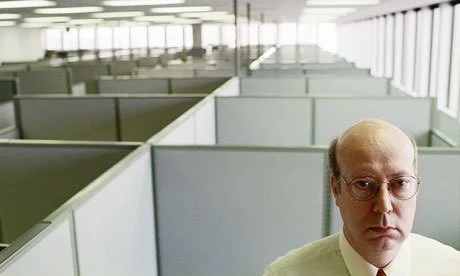
Anyone who’s experienced the paralysing self-consciousness of trying to conduct a sensitive phone call in the knowledge that four or five colleagues can follow every word won't be surprised by the results: almost 60% of cubicle workers and half of all those in fully open-plan offices cited lack of sound privacy as a frustration, making it the most prevalent annoyance by far. That cubicle-dwellers are even more likely to be bothered than their “partition-less” colleagues suggests it’s even worse when you can’t see who’s talking – or who might be listening in.
Seven ways to create downtime space in the workplace
When the going gets busy, taking a break might seem like the antithesis of what it takes to wrap up.
But whether it’s a five-minute diversion that boosts focus, or a 17-minute coffee break that improves performance, mental downtime can increase productivity and replenish energy during demanding workdays. Companies that provide a space for this are more likely to reap the benefits.
“Disengaging from work gives people the ability to think more inventively,” says John Symes, Director at JLL’s workplace strategy team.
While some companies favour breakout areas – designed for employees to think and work differently, such as tech company Epic’s treehouse conference room or Box’s indoor swings – break rooms should let staff get away from all things job-related.
Getting the workplace ready for the technology revolution
Advances in computer power, the explosion in smartphones and faster and near ubiquitous connectivity is connecting more devices and more people to the Internet. All of this is resulting in an explosion of data, which gives businesses unparalleled insight into their customers, powering machine learning and artificial intelligence.
Your Office Has a Microbiome, and It Might Make You Sick
I WORKED FOR a number of years, like many people, in an office building with windows that did not open. For the first time in my life, a slight soreness tingled in my throat almost every day. Each time a denizen of that floor got a cold, it decimated at least a third of the floor’s employees. For the next week or two, a swath of cubicles would sit empty. I took to avoiding pressing the water cooler button with a bare hand.
For the sake of energy efficiency, more and more buildings are sealed off completely to the outside world, relying on mechanical ventilation for airflow. But little science has been done to explain how our architectural choices are changing the world of microbes that live inside these buildings—and human health. If I wanted to test whether it was really my office getting me sick (or figure out strategies to avoid it), I wouldn’t have much to go on.
Furniture Makers Prepare: As Gen Z Enters the Office, More Change is Coming
As millennials continue to progress in their careers, the workplace conversation is already turning - designers are starting to plan for a new crop of young workers with divergent needs: Generation Z. With the first of this generation less than a year into their careers, the workplace community is mostly guessing. We are still figuring out how changes driven by the Millennial generation take form in physical space. That said, furniture makers, prepare: as Gen Z enters the office, more change is on the horizon. So, who is Generation Z and what types of offices will they need to succeed ... and, perhaps more importantly, how will these changes continue to impact the contract furniture industry? We spoke with several industry veterans to explore this topic.
Why Using Social Media Platforms at Work Will Soon Be Okay Everywhere
A decade in, we’ve grown so comfortable with social media platforms that it’s almost socially acceptable to blatantly browse them at work (though it might be difficult to argue their professional utility unless you work in a marketing role). In fact, the creative director of the magazine I edit messages me on Facebook more often than he sends me emails.
For the most part, that’s great. Facebook Messenger is well integrated into my life, works great on my Android phone, and is easy to use on my laptop. That said, the system’s not without its faults: Sometimes, he’ll catch me in the middle of writing a story, asking for a status update—which, as a writer, can sometimes throw me off. Other times, I’ll forget a detail he mentions in our conversation, and things get tricky when I need to reference something he said but can’t search for it with the same precision compared to Gmail. As a result of the social media platform’s universality, the line between messages best delivered through email and those that are appropriate for a friendly chat is quickly thinning. The result? An always-on mentality that causes meaning to dissipate.
Workspace 4.0 – A revolution in the workplace
Desk, computer, telephone – the classic office workstation is gathering a thick layer of dust. Working in the age of the fourth industrial revolution means having numerous devices, various applications and several data sources that can be accessed through different identities anytime, anywhere via the cloud. There is demand for new concepts that can cope with the growing variety of devices, whilst increasing productivity and motivation among employees at the same time. The future belongs to the “one workspace” concept.
TOP #10 WORKPLACE FALLACIES
In reality only 34 percent of all employee interaction occurs in a planned way, the vast majority occurs ad-hoc and spontaneously (most often around someone’s desk). Sorting things out as and when they arise improves productivity. This fact reinforces the need to focus more on those spaces that allow people to interact with others spontaneously rather than just design spaces for planned interaction.
ARE THERE ZOMBIES IN YOUR WORKPLACE?
Workplaces across the globe are suffering through a zombie apocalypse. These zombies don’t have ghoulish features or torn clothing, they look just like you or me. You can recognize these real-life-zombies by their mindless march throughout the day. They fixate on reaching the end of the workday as though it was a feast of brains.
Telltale signs of these zombie workers include their consistent lack of motivation to go above and beyond their basic job role and a disinterest in innovation or new ideas. Most frightening of all, you can see in them the most quintessential zombie characteristic – their ability to infect others. Their lack of morale and active disengagement in workplace culture can spread across the workforce like a pandemic. In a recent global study by Deloitte, “culture and engagement” was rated the number one challenge affecting businesses in the world. The menace is real!
Traditional office environments are a breeding ground for this worker zombie epidemic. At Perkins+Will, we understand that work environments and workplace culture play a vital role in promoting and enhancing workplace engagement, banishing office zombies. The shift from traditional work environments to high-performance workplaces is the cure to this epidemic.
Workplace Confidential: An Inside Look at Design Offices Across LA
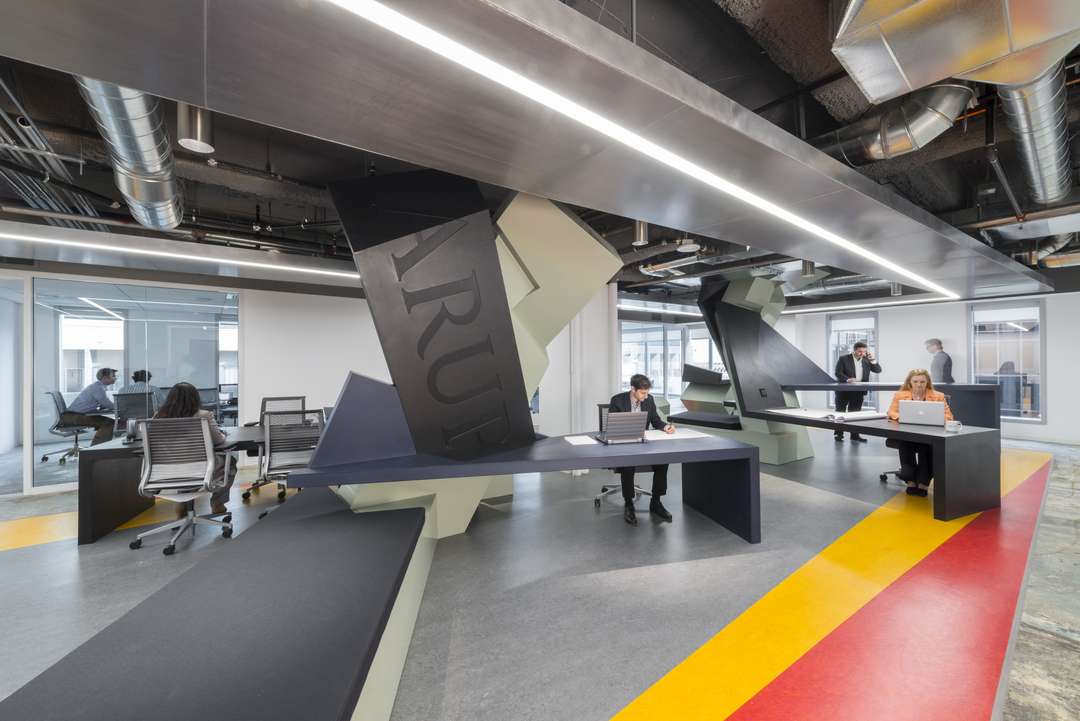
Great design offices stand out. Reflecting a firm’s character and process, these spaces serve as a framework for building new ideas. While they may be housed within simple, rectilinear forms, design studios are organized to support analysis and encourage creative ideation. Few cities represent the diversity of design offices like Los Angeles. As a place where progressive forms and spatial multiplicity coexist, the City of Angels is filled with widely different studio designs and layouts. Though they can be hermetic in nature, these projects provide room for experimentation and promote critical engagement.
Building off our two recent articles that examined multi-unit housing and residential projects, the following collection explores office designs across Los Angeles. Built specifically for architects, designers and engineers, these projects are formed as creative workplaces. From model-making spaces and varied height workstations to collaboration rooms, the projects were created to showcase design. Each were made with forms and programs that reveal company culture while reimagining ways of working. Join us as we take an inside look at some of LA’s most dynamic design offices.
Google: Hacking the box
As well as sorting out our online world, Google has played a big part in changing the way we think about workspace – not least as an early adopter of the office slide. Now, with Project Jack, its unassuming modular meeting room concept, the tech giant is starting another stealth revolution in the office.
Even to the “civilian” outside the world of workplace, Google has long been a byword for the next big thing. Its latest development in interiors can be big or small, enclosed or open, and comes in a range of colour, texture and finish options that would make Henry Ford turn in his grave. It’s a deceptively simple modular meeting room concept called Project Jack and is one of the central components of Google’s King’s Cross headquarters at 6 Pancras Square in London – with the potential to make an impact not just on the tech giant’s locations around the world but also to have further-reaching implications for office design in other industries.
Augmented And Virtual Reality Fuel The Future Workplace
Sustainable competitive advantage requires relentless adaptation in the way a company serves its clients and its employees. Too often, companies place employee workflows and experiences on the back burner. It’s difficult to create an innovative workplace if a company’s employees are using tools designed in the 1980s.
Successful companies know the best way to serve their customers is to provide market leading workplace experiences that execute on three fronts – culture, process, and technology. What’s often forgotten is how technology can play a vital role in cultural enablement.
Staples Business Advantage and Metropolis Magazine Reveal Winners of “Tomorrow’s Workplace” Design Competition
If you think your workplace won’t change much in the next five years, think again. Winners of the “Tomorrow’s Workplace” design competition from Staples Business Advantage and Metropolis magazine forecast that in 2021, the workplace may include inflatable pods set up in urban parks, or young professionals working alongside active retirees in a setting that resembles a small town more than an office building.
PODCAST - Design Project Phases: Design
In a series demystifying the project process, radioIA host Russell Manthy explores the second design project phase with Principal and Design Director John Hopkins.
Beware the great apex fallacy of workplace design
Of all the memes and narratives that corrupt public discourse about workplace design, the most pernicious is the one that suggests there is a linear evolution to some grand end point called the Office of the Future. There is a natural human inclination to buy this sort of idea, fed by an assumption that what we find most interesting, aspirational and hence what we read and talk about forms a goal. Read any style magazine and you’ll see the same process at work in every facet of our lives. This is why so many people are quick to consume and then regurgitate the idea that what we see happening in the world’s great tech palaces and creative offices represents the apogees of design to which the rest of us must one day succumb. It rests on misguided assumptions about what really goes on in such offices and what these assumptions mean for firms in other sectors. It is the great apex fallacy of workplace design and it is one we must constantly challenge.
Managed By Q inks deal with Staples
Managed By Q, the office management platform for products and services, has today inked a new deal with Staples.
As part of the partnership. Staples customers will now have access to Managed By Q’s full suite of services, including IT specialists, handyman, cleaning services and even workplace yoga.
The idea here is two-fold: Staples’ small- and medium-sized business clients will now have access to a digital set of tools to let them do things like hire a handyman or order regular cleaning services, while Managed By Q will have the benefit of being offered to Staples’ massive client base.
Managed By Q launched back in 2014 with the idea of bringing on-demand services to office space. The team installed a iPad loaded with Managed By Q software into every office of its clients, and through the iPad they could order office products and schedule services.