
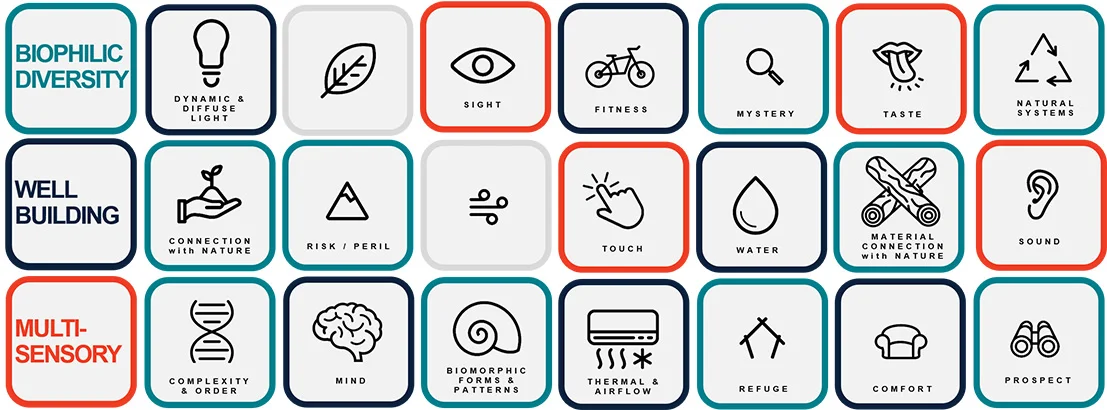
Every time you enter a space, a rush of information about it is delivered to your brain through your senses. What does the space look like? What sounds are coming from it? What does it smell like? Is it hot or chilly, humid or dry? We humans are full-body sensors, and our feelers are out at every waking moment, helping us understand the places we go..
How To Create Office Space That Truly Encourages Collaboration
“Collaboration” as a buzzword is getting as old as “value engineering”; however, the inherent concept is increasing in importance.
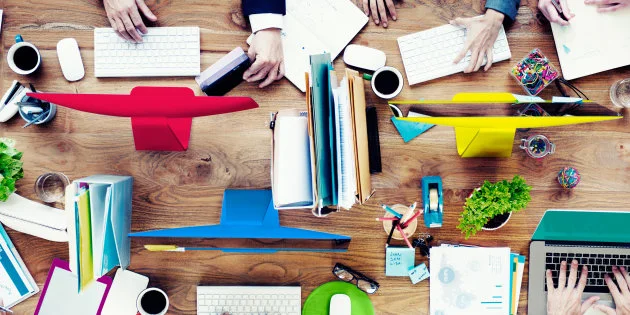
Encourage a collaborative culture by focusing on food and activities that will bring people together, and create a space to house those two amenities. You can spend a lot of money or a little money; the results will be the same – a more engaged and relational workforce.
Is Your Company Ready For The Workplace Of The Future?
No one can deny that technology is transforming nearly every aspect of the workplace. It’s helping ease communication across distributed teams, improve the physical aspects of workplaces, and increasing productivity.
However, in order to adapt and continue to thrive in these ever-changing conditions, companies must stay one step ahead of the trends for success both in the short-term and the long-term.
Are Businesses Taking 'Collaborative' Workspaces Too Far?
It's been billed by big business as a way to inspire a new generation of networking, productive team-players working side by side (albeit in a smaller office), but a new study shows that desk sharing can have a negative impact on an employee's productivity and make them feel less appreciated.
The study published this month in Science Direct surveyed 1,000 Australian employees who work in shared work environments, ranging from open plan office spaces through to, at the extreme end, staff who hot desk -- where staff have no permanent space, arriving each day and setting up at an available desk.
Office taxonomy and how we should celebrate the diverse office ecosystem
It is perhaps the most common misconception of evolutionary theory that all animals are somehow evolving towards something perfect. This notion is perhaps best summed up when a sceptic asks: “If we have evolved from monkeys, why are there still monkeys?” The lesser of the two problems with this is its solipsistic assumption that humans are the pinnacles of life and that, if evolution were true, all species would eventually evolve into people. The bigger (and related) issue is that the question overlooks the fact that each species is already pretty much perfectly adapted to whatever environmental niche it inhabits at any particular time. It is only when that niche changes that the organism has to adapt to its changing surroundings and conditions, which is why many species continue to thrive almost unchanged over thousands or even millions of years. They have no need to evolve into a human or anything else.
JLL's Future of Work Enables Workplace Transformation
JLL introduced the Future of Work, its unique outlook on the changing world of work and its impact on the next generation of corporate real estate. The model is designed to highlight areas that companies should address to navigate these seismic shifts in the market: human experience, digital drive, continuous innovation, operational excellence and financial management.
Why You Should Think Like a Designer
It's more important than ever today, when the problems facing our world are so complicated that overcoming them may require multiple solutions, all deployed at once. Design thinking starts by challenging people to be empathetic -- to put themselves in the end-user's shoes. Solutions aren't imposed from on high; they come from the bottom up.
Peering Into The Future Of Work: A New Model
Corporate real estate has assumed a far greater importance for today’s companies. Instead of just cutting costs, companies need a fully-realized workplace strategy to attract and retain employees, says JLL.
Tech 10: Cool Products To Transform The Modern Workplace Into A Mobile One
The modern workplace is a mobile workplace, now that being "on the job" increasingly equates to being "on the go." For solution providers, there are multitudes of options to consider when it comes to potential mobility solutions for customers. Laptops and 2-in-1 tablets are serving as key business devices in many workplaces, while smartphones with new capabilities -- and even wearable devices -- are playing a bigger role in the enterprise. To give a sense of what's out there, we've rounded up 10 of the latest cool products in mobility that solution providers should know about.
Problems with noise at work? A lot of it is in our heads
When it comes to working in an office, hell really can be other people. Many staff can have enormous difficulties coming to terms with the sounds that form the backdrop to their working day, especially if they work in open plan areas. The problem of noise at work is particularly acute right now because most UK employees now work in open plan offices and at workstations that are on average about 20 percent smaller than they were ten years or so ago. Yet, on the face of it, the business case for working in open plan offices is pretty clear cut. Not only is it more conducive to communication and less bound by ideas of that great contemporary no-no that we call ‘status’, open plan workstations not only take up around half the space of cellular offices, the costs of fitting out a cellular office are around 25 per cent higher than an equivalent open plan space. It’s no surprise that the open plan is the default model for most workplaces in many countries.
Are Phone Booths Coming Back?
Anyone who has worked in an office can relate to the many distractions fellow colleagues can produce. From loud conversations to pungent wafts of lunch foods, coworkers are often real roadblocks to productivity (you might even be experiencing it at your desk right now). Indeed, a study from researchers at the University of Sydney found that office noise was cited as the most frustrating aspect of the work environment by about 50 percent of employees in open offices. What's more, Oxford Economics—an independent global advisory firm—found that 53 percent of office employees complain that workplace noise reduces their satisfaction and productivity.
Workplace Surveillance Is Being Positioned As The New Office ‘Perk”
Alice describes her office as a “panopticon” — a structure built for total surveillance. Your office may be one, too. Whether through “voluntary” corporate wellness programs, smart badges that record voices and GPS locations, or surveillance apps in their mobile phones and personal computers, Americans are offering up more and more personal data at work. Most of them don’t have much idea of where that data goes, or how it will be used — and there aren’t that many limits on what employers can find out about their employees, or what they can do with the data. The more people who opt in now, the harder it will be to opt out in the future.
Want to Make Employees Happy? Make Your Office Like a Co-Working Space
With more people working remotely than ever before, and an uptick in gig-type occupations, coworking spaces have emerged as a popular and cost-effective option for businesses and the part-time, full-time and contract workers they employ. In an effort to tap into the global talent pool, more and more large companies are providing access to coworking spaces around the world. In fact, the number of coworking spaces worldwide has increased by 1,000 percent in the last five years.
BEAN BAGS AND SLIDES: WHAT IS THE MOST PRODUCTIVE WORKPLACE ENVIRONMENT?
“A really poor aesthetic working environment can have an negative effect on employees psychologically, because it conveys indirectly to the individual that the organisation doesn’t care about them. It says that they are just ‘worker bees’ or disposable assets,” Sir Cary Cooper, professor of organisational psychology and health at Alliance Manchester Business School, says.
Remote workers are NOT watching daytime TV in their pajamas
Want to make employees work better together? Let them work separately, from home.
It may sound counter-intuitive, but employees are apt to work more efficiently and collaboratively when operating remotely, a new study released Tuesday by video and voice collaboration technology company Polycom, Inc. and Human Resources executive network and research firm Future Workplace found. Modern employees are expressing a growing need for flexible workplaces, the survey of more than 24,000 workers concluded. Some 62% of people are already taking advantage of flexible working practices and 98% say “anywhere working” has a positive impact on productivity.
Green Offices May Be the Key to Productivity—and Employee Health
What really improves employee performance? Better accessibility and technology? Streamlined communication? Great company perks? While those things certainly don’t hurt, environmental features, like lighting and air quality, may play a bigger role than you ever imagined. A number of recent studies confirm that conventional office design could be slowly crushing employee productivity from within—and that “greening” spaces with selective materials and health-conscious decor could be the key to eliminating production lag.
How the physical space you spend time in every day affects your brain
The modern office is no longer a grey room and some cubicles. It’s a mix of hot-desking, open plan layouts and co-working spaces. Flexible working, “jelly bean working” and virtual offices. With so many new trends and alternatives, deciphering what is the best option for you and your business can be a difficult task.
Over three quarters of workers prefer traditional employment to the gig economy
Much has been written about the inexorable rise of the gig economy. However, a new survey from jobsite Glassdoor, claims that only 13 per cent of workers across all employment types would even consider this route for future employment, and the vast majority of employees (76 percent) feel more secure sticking to permanent employment in 2017. As with any work arrangement, using temporary or “gig” workers has both benefits and drawbacks when set against traditional employment. The survey suggests that the major perceived benefit is flexibility, both for job seekers and employers. When asked the question, “What do you think would be the biggest advantage of working in the gig economy?”, most (35 percent) of employees selected “flexible working”, followed by “better work-life balance” (11 per cent) and the ability to “be my own boss” (10 percent). Furthermore, 39 percent of female employees feel that the biggest advantage of working in the gig economy would be the flexible working, compared to just 31 percent of men. However, 73 percent of women also reported they already enjoy a good work-life balance in their current roles.
Workplace design must change to combat "epidemic" stress levels says UNStudio founder
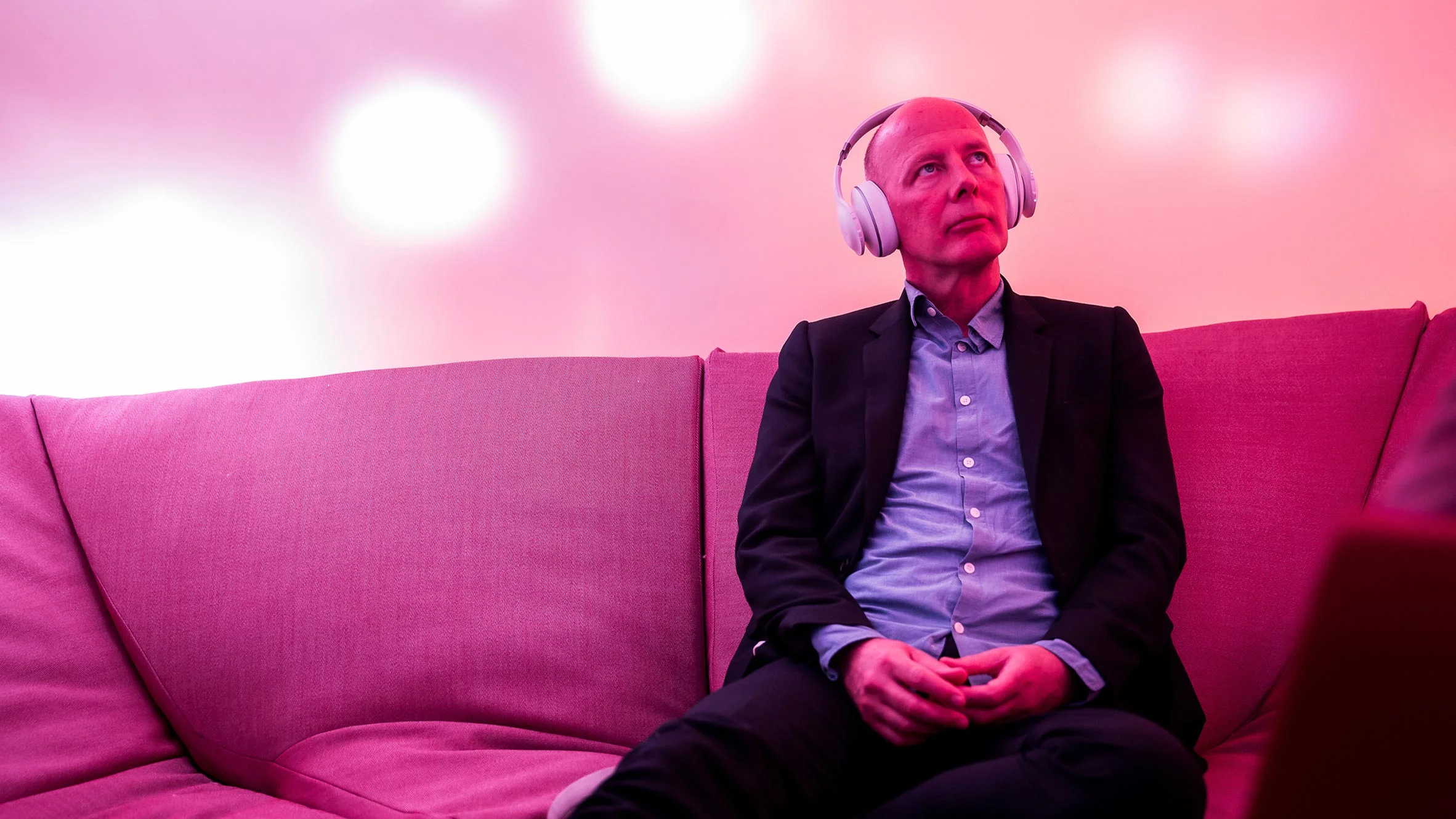
Secluded pods that allow office workers to meditate, smash things or scream will be commonplace in two years time says UNStudio founder Ben van Berkel, after research found that stress-related illness costs the US economy $300 billion a year.
The Dutch architect claims that many big companies will install breakout pods in their workplaces in the near future to combat the "epidemic" levels of stress experienced by office workers all around the globe.
MOBILE TECH BRINGS OFFICE WORKERS OUTSIDE
The trend that has made mobile technology as vital for many people as food and water has vast societal implications—far too many to consider in a modest blog post. What we’d like to take a brief look at is the freedom mobile tech gives office workers to take their work outside.