
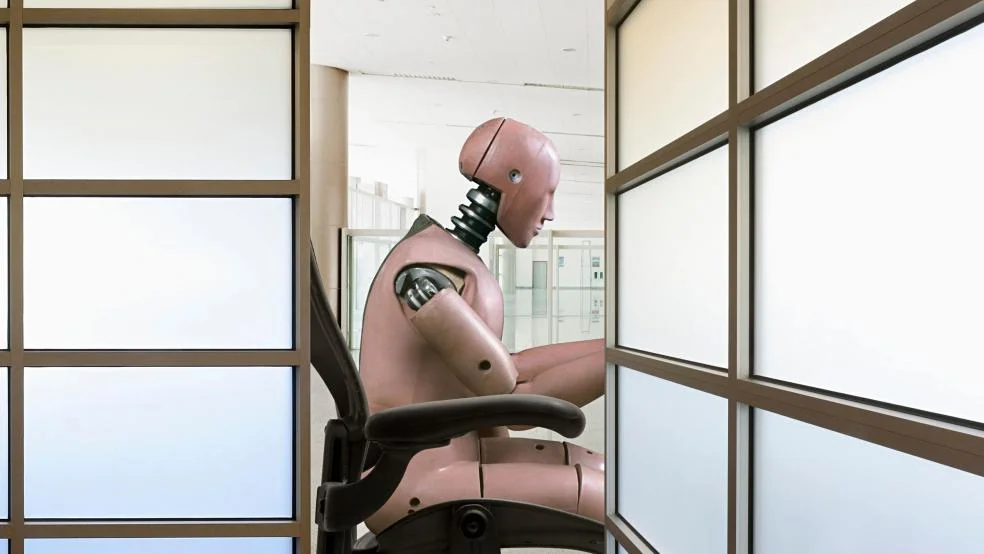
Very few organisations are ready to manage a workforce where the latest technologies and people work side by side. Just 13 percent of UK companies are ready to respond to digital disruption and create “the organisation of the future”; despite 88 per cent believing this has become a priority. This is according to the 2017 Deloitte Global Human Capital Trends survey, which tracks the top trends shaping the agenda for HR and business leaders. However, while UK companies believe they are ill-prepared for the change brought by digital disruption, this has not stopped many of them from embracing disruptive technologies. 42 per cent report that they have adopted robotics, cognitive and artificial intelligence (AI) technologies within all or parts of their workforce. Another 42 per cent are running pilots in certain areas of their organisation. But only 16 per cent say they are ready to manage a workforce with people, robots and AI working side by side.
Breather wants to save you from unwanted office distractions with the Nope button
In what is clearly a marketing ploy from workspace rental service Breather, the company is launching a Chrome plug-in called the “Nope Button.”
The idea here, according to the company, is to help people avoid distractions in the office, even if they can’t reserve a private Breather to get some alone time. With open work spaces becoming the standard in startup offices (and elsewhere), it can be really easy to get pulled into a thousand different conversations over the course of the work day.
The Nope Button aims to save you from that.
HOW TO ESTABLISH BETTER GUIDELINES FOR REMOTE WORKERS
The number of companies with partial or entire workforces working remotely is increasing steadily, with some predicting that, by 2020, 50 percent of employees will work from a location other than their organization’s office. This growth in remote work can be tied to a variety of factors ranging from rapidly evolving technology to shifting managerial mindset. This flexibility is an incentive for both employers and employees. It decreases real estate cost and increases employee productivity, health, and well-being. Organizations who offer remote work options are able to attract workers outside of their primary market and retain employees who must move to support a spouse’s career, care for aging parents, or any other number of reasons.
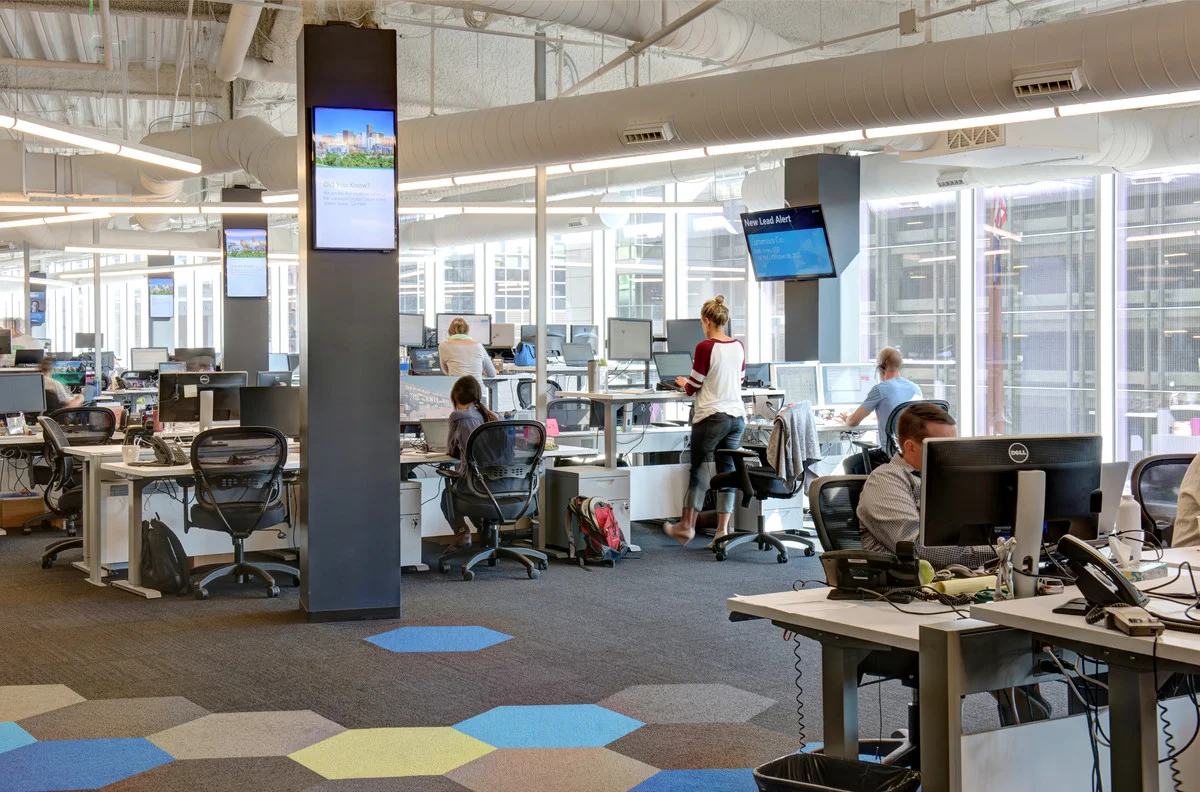
Some Offices Designing Ways to Help Employees Move More
Several years ago, Jonathan Webb was thinking about how “active design” could improve the workplace. He meant it as a way to describe restructuring a workspace to promote the people inside to adopt healthier habits. A nonprofit called the Center for Active Design already uses the term to describe utilizing architecture and urban planning to improve public health.
MatchOffice Survey: Workspace Users Want Prime Location and Fitness Centers
The survey, which gathered responses from 1,080 tenants in 24 countries, found that larger clients and companies are increasingly looking at flexible workspace solutions as desirable and viable.
This didn’t come as much of a surprise to us, following the increase in popularity of corporate coworking and knowing that companies like Spotify, Pandora, and HSBC moved their operations to flexible workspace options in 2016.
How To Channel Your Rage Into Something Constructive At Work
With career pressure, relationships, and even the future of the country causing stress, there’s likely a lot of people with frazzled nerves in your workplace. And when people are feeling stressed or overwhelmed, it’s easier for anger to take hold. Many people struggle with anger because it’s an emotion "we’re not supposed to feel," says Stacy Tye-Williams, an assistant professor of communication studies at Iowa State University. "We’re supposed to tamp that down, but then it builds and builds until we blow our top," she says.
Why Do Offices Still Exist?
In today's connected world, most employees can work anywhere they have an internet connection. Thanks to cloud technology, email, and video conferencing, more and more workers are choosing flexible schedules where they can work from home, a coffee shop, or a co-working location. So what's the point of offices, and why do they still exist? Offices traditionally served as a place for people to get their work done, but an office isn't required for that anymore. However, no matter how connected and mobile we get, offices aren't going anywhere
Employee Engagement: A Core Business Strategy
Successful business leaders realize that having engaged employees is not an HR program, but a core business strategy. We know that companies with engaged employees outperform those with less engaged employees. Yet, according to Gallup, a staggering 87 percent of employees worldwide are not engaged.
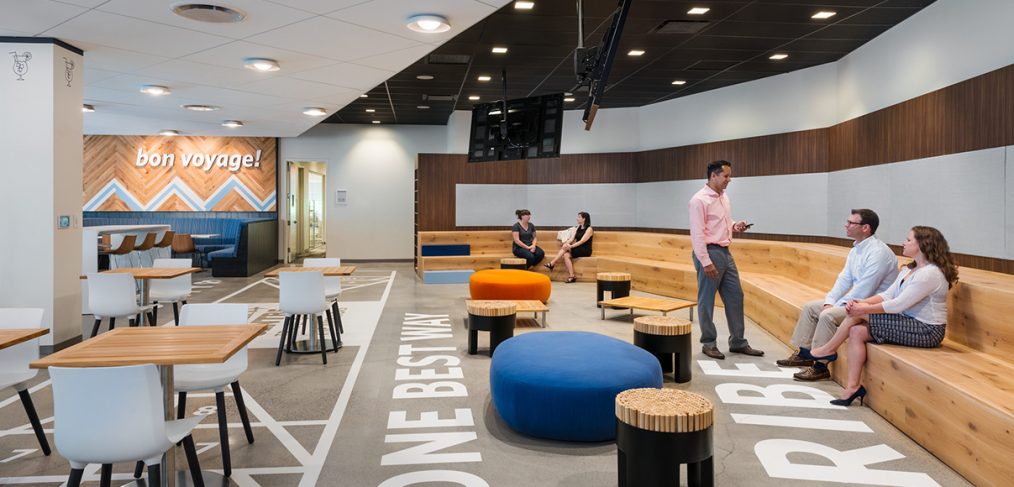
The case for designing offices more like bars
Why do we strike up more spontaneous conversations with people in bars than we do in the workplace? The answer isn’t alcohol—it’s the eye height you engage with people at.
In bars, the counter and stools are placed at a height that puts those sitting and standing at the same eye-level. The height of the counter and matching stools is so well established at between 40 to 42 inches that it’s known as “bar height.” Eliminating this 12-inch difference naturally engineers conversations between strangers who are now both sitting and standing face-to-face. That 12-inch difference makes casual conversations much more likely to happen. (And not just because you’re two glasses of wine into your evening.)
By this logic, in order to facilitate communication and collaboration, we should make our workplaces more like bars. Without the drinking.
State of American workplace? Too much ennui hurts U.S. productivity
Despite U.S. business managers' best efforts, the vast majority of U.S. workers are disengaged or indifferent. That workplace ennui comes at a price for U.S. productivity — economic output per person — a fundamental workforce measure that peaked in the 1950s and 1960s. Productivity growth has been declining since then, U.S. Labor Department data show, despite the rise of such remarkable technologies as the Internet, the laptop and the smartphone, all intended to help people work smarter and faster.
All Work and No Play: Designing for Passion in the Workplace
As a child, my mother would tell me, “Finish your work first, then you can play.” The idea that work is a task to complete before life can happen has colored my academic and professional life. It’s a widespread concept that cripples creativity and drains the joy from work by severing the connection between passion and productivity. As we design for the workplace, we begin to question the concept of work, as well as our attitudes and beliefs about it. To continue to evolve workplace design, we must return to the core of our practice, with a willingness to examine, challenge, redefine and broaden our perceptions of work.
While there is general consensus that the most successful people love what they do, it’s easy to fall into the trap of designing for single-purpose, machine-like employees. I have had clients who monitor employee trips to the restroom because they see it as lost productivity. I have had clients who are more concerned about maintaining their hierarchy than elevating their people.
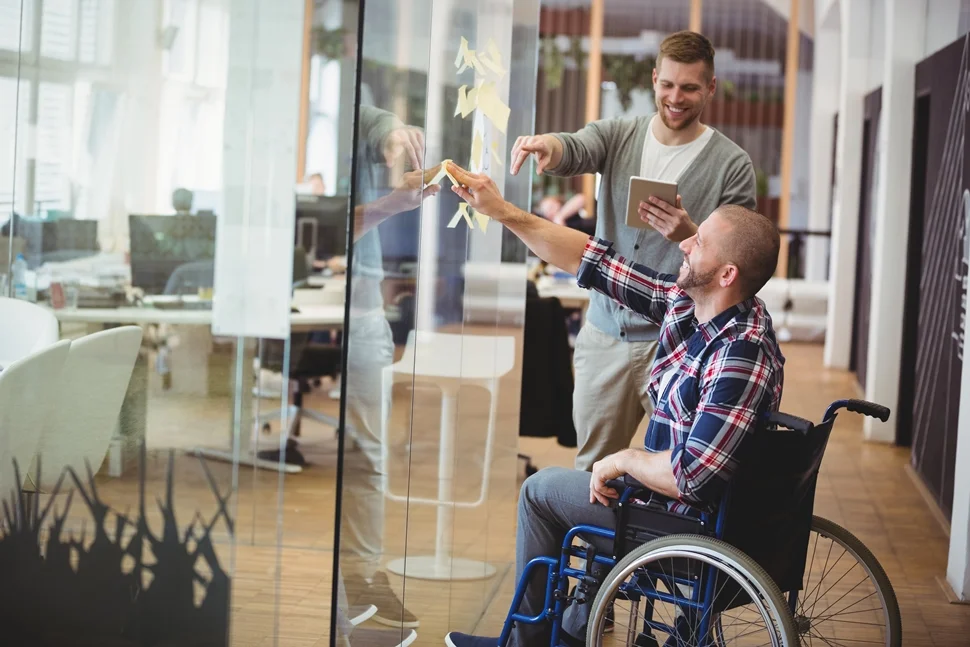
How can inclusive design create a welcoming workplace?
How many of your colleagues that you work with on a daily basis have a disability? Chances are it’s more than you think.
As many as one in three professionals in the U.S. has some form of disability, whether it be a visual impairment or mobility issue, and most of them simply make do with what their offices have to offer.
Fortunately, many employers go above and beyond the requirements of the landmark Americans with Disabilities Act (ADA) by leveraging inclusive design.
Examples of inclusive design in the workplace can include door handles that are levers rather than knobs, flat-panel light switches rather than the traditional toggle switches, large-print labeling and instructions for equipment, wide doorways and hallways and spacious alcoves with turning space.
Why Are People Searching for Better Places to Work?
A new Gallup State of the American Workplace report is garnering headlines for this finding: The most engaged employees are people who work away from the office three to four days a week. But, it’s another conclusion from Gallup that should be resonating with leaders around the world. If organizations want to compete today they should consider giving their people greater flexibility, autonomy and care for the holistic wellbeing of employees.
“Organizations have nowhere to hide,” writes Gallup. “They have to adapt to the needs of the modern workforce, or they will find themselves struggling to attract and keep great employees and therefore customers.”
What does it take to provide an attractive work environment? As mobile work increases and people are working anywhere at anytime, we know people are seeking out new ways to get work done. So, the real question is: Is your work environment adapting to keep up or are people leaving the office to get work done?
The Importance of Working Environments
Look around you—do you have a cubicle, standing desk, or are you reading this on a mobile device? As the boundaries between “living to work, and working to live” stretch, working environments are changing fast to keep up.
Just like clothes and music, office settings go in and out of style. Depending on when you entered the workforce (and your industry), you may have had a traditional office, a nook, cubicle, or the kind of communal work spaces associated with contemporary start-ups.
Dystopian office tech uses sensors to track workers’ every move
In the fully developed “smart office,” the boss is always watching. Already, hundreds of companies have embedded sensors in workspaces, lamps, cubicles, and computers to track the activities of workers. One such company, The Boston Consulting Group, is even piloting a program where employees’ badges contain a microphone and location sensor to monitor how office layout impacts communication, according to Bloomberg.
To many, the idea that managers can measure the amount of time you spend at your desk or the minutes in-between conversations with colleagues feels overly invasive. But it’s all entirely legal. “Employers can do any kind of monitoring they want in the workplace that doesn’t involve the bathroom,” said Lewis Maltby, president of the National Workrights Institute, in an interview with Bloomberg. That is, as long as all the data collected is anonymized.
Survey On Workplace Wellness Points To Productivity
A recent survey of corporate real estate executives at large corporations conducted by CoreNet Global and CBRE Group, Inc. found that when a company focuses on employee health and wellness, workers report increases in engagement, retention rates increase, and absenteeism declines. The survey saw responses from 211 senior level executives in the corporate real estate profession: 66% were corporate real estate end-users (occupiers), 25% were in technology firms, and 23% were in financial services firms. Eighty-nine percent of the firms represented in the survey reported that they are focused on health and wellness initiatives.
Digital workplace is ineffective without workers’ technical empowerment
Shifting digital dynamics are reshaping the way organisations operate and are recasting the traditional route to business success, claims new research into the rise of the digital workplace. Ricoh’s new report into digital workplace trends produced in partnership with polling company Censuswide, argues that the latest technology strategies are rendered useless without proper commitment to skills training and the empowerment of those workers who will be making use of it. It advises that businesses need to work on improving the workforce’s digital dexterity by creating an office culture fit for sharing ideas and skills across social, video and digital platforms. The report identifies digital skills training as a key differentiator for employees seeking a new job. Over a third of UK office workers (37 per cent) say they would move jobs to a company which offered better digital skills in the workplace. Likewise a modest 18 per cent of respondents rated their skills as ‘excellent’ whilst 51 per cent said ‘good’ and 30 per cent considered themselves ‘average.’
The six workplace trends you can’t ignore
The 2017 Employee Engagement Report, released by leading employee engagement platform Tinypulse, identified six workplace trends that every L&D professional should know about.
When it comes to turnover, oftentimes, leaders will look at tangible factors such as compensation or even benefits. But there’s something to be said about the intangible impacts an organisation’s culture has on employee sentiment.
A positive work culture breeds happy employees. In return, those happy employees are more likely to stick around for the long haul and even refer other great talent to the organisation.
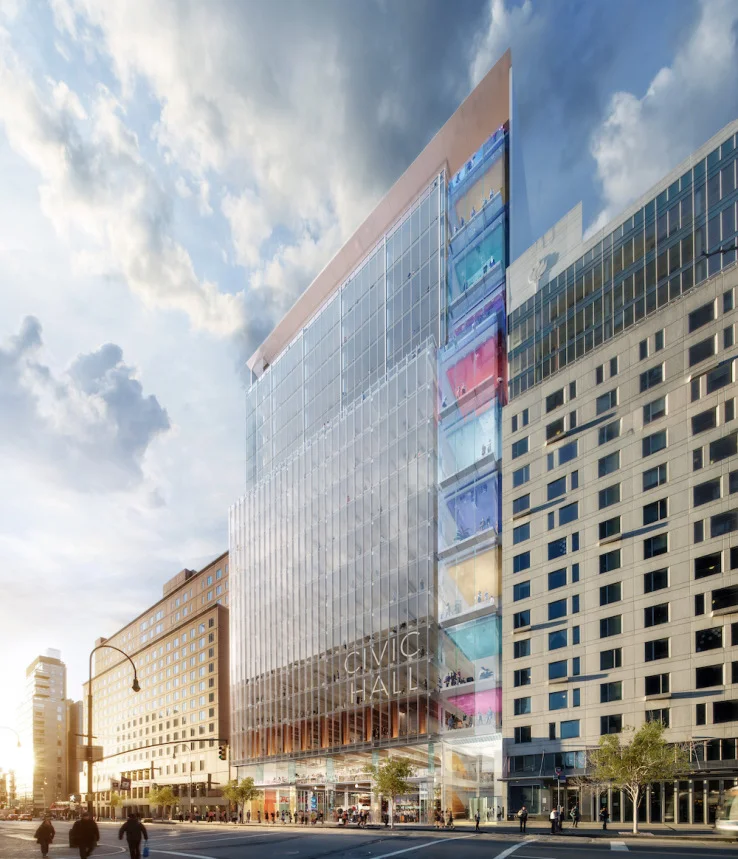
NYC Mayor Bill de Blasio shows off designs for planned tech hub
New York City Mayor Bill de Blasio and his team have revealed the designs for the 250,000-square foot Union Square Tech Hub.
The hub, which was first announced in December, will include 58,000 square feet of “fluid space” for startups and a 36,500-square foot tech training center. (Partners in the training program include the New York City Foundation for Computer Science Education, General Assembly, Per Scholas, FedCap, Code to Work and Coalition for Queens.)
The anchor tenant will be Civic Hall — a 1,000-member work and event space that focuses on what founder and CEO Andrew Rasiej said is “the idea that technology can be used to support the public good.
De Blasio unveiled the designs at an event this afternoon at the New York City headquarters of adtech company AppNexus, where he also talked about his hopes for the space.
KI Graphic: Why Active Design?
To learn more about the principles of Active Design and how to get your workplace moving, download KI's guide, "Understanding Active Design: The Rise of Human Sustainability".