
Working Life

These Simple Workplace Design Changes Can Help Your Company’s Bottom Line

These Simple Workplace Design Changes Can Help Your Company’s Bottom Line

It’s no secret that a well-designed workplace is a more pleasant environment to spend work hours than one that is poorly planned and decorated. However, spiffier digs could also have an impact on your company’s financial health.

A new survey by the International Interior Design Association (IIDA) found a correlation between office design and the bottom line. The survey queried 1,206 full-time U.S. employees at companies of various sizes. More than half are in managerial or professional level positions who spend most of their working time in an office leased or owned by their employer. Respondents to the survey exhibited attitudes that suggest there is a strong correlation between good office design and retention. 

Snacks Make All the Difference: Why Free Food is a Great Workplace Perk

Snacks Make All the Difference: Why Free Food is a Great Workplace Perk

When it comes to boosting employee morale, finding small ways to make the day a bit more pleasant, fun, and less stressful can go a long way. That’s why office perks are a big deal at today’s top companies—and among the most appetizing are boatloads of free snacks.

Don’t worry—you don’t need to hire a celebrity chef and create gourmet meals on-site. However, stocking a bountiful snack pantry, setting up a coffee bar, or having free lunch Fridays just might feed your employees’ workplace devotion, and end up offering a pretty healthy return on your investment. According to a Glassdoor survey, younger workers aged 18-34 (89 percent) and 35-44 (84 percent) said they actually prefer benefits or perks to pay raises. And of the perks listed, 19 percent mentioned free lunch.

When you consider that only 22 percent of offices provide free snacks and beverages, it’s an easy and fairly low-cost way to stand out from your competitors.

Via huffingtonpost.com >

The office of the future will be a tiny house

The office of the future will be a tiny house

It used to be that if you went to IIDEX, the big office interior design show, you saw office interiors. Herman Miller, Steelcase, Teknion, all the big guns would be out with their latest. Teknion, which is based in Toronto, would take up a couple of thousand square feet. It is nice stuff, but it seems that where the trend among those of us who work at home is to have an office, it seems that everyone who is at the office is going to look like they are working from home on the dining room table.

Via treehugger.com >

The Importance of ‘Place’ in the Workplace: An Evolution

The Importance of ‘Place’ in the Workplace: An Evolution

A sense of place is a long-standing concept. At a grand scale, this has manifest in walled cities and specific architectural traditions. This parallels rituals, traditional garb and dress, and regional cuisines in defining cultures. With the exception of a few very high-level executives, this desire to develop a sense of place seemed to have been lost at the end of the last century in corporate culture. Recently however, we’ve seen a shift: more, and more, companies are emphasizing the importance of creating a meaningful sense of place in the office environment for all of their employees.

Via gensleron.com >

Tech Trends of 2016: Leaving a Local Fingerprint

Tech Trends of 2016: Leaving a Local Fingerprint

Tech companies are making a conscious effort to create more personal and meaningful ties to the communities they serve, are a part of, and recruit from. For many companies, the focus has shifted from their global ‘footprint’ to their local ‘fingerprint’ (the specific impacts that can be made within their own communities) proving that, when aligned in the right way, business and community aren’t mutually exclusive.

According to the America’s Charities 2015 Snapshot study, 86 percent of companies believe that employees expect them to provide opportunities to engage in the community. And, according to Gensler’s 2016 U.S. Workplace Survey, finding meaning and purpose in the workplace is important across all generations.

Via gensleron.com >

Stranger than we can imagine: the future of work and place in the 21st Century

Stranger than we can imagine: the future of work and place in the 21st Century

However much we know about the forces we expect to come into play in our time and however much we understand the various social, commercial, legislative, cultural and economic parameters we expect to direct them, most predictions of the future tend to come out as refractions or extrapolations of the present. This is a fact tacitly acknowledged by George Orwell’s title for 1984, written in 1948, and is always the pinch of salt we can apply to science fiction and most of the predictions we come across. This is the fundamental reason why a typical report or feature looking to explore the future of work and workplaces invariably produces a hyped-up office of the present. This has sufficed to some degree up till now because the major driving force of change – technology – has developed in linear ways. Its major driver since Gordon Moore produced his eponymous law in 1965 has been miniaturisation. If we can expect computing power to double every 18 months, as More predicted, we at least have a degree of certainty about technological disruption. Of course, this has already had a profound effect on the way we work and the way we use buildings. So too has the secondary prime technological driver of the early 21st Century, the digitisation of the past and present.

Via workplaceinsight.net >

The Authentic Workplace: Aligning Work and Personal Values

The Authentic Workplace: Aligning Work and Personal Values

With the current war for talent in full blaze, your organizational culture has become a critical retention tool. We have worked on hundreds of organizational culture projects for 20+ years and observed the strongest cultures directly connect work and personal values. This enables employees to align with both sets of values without having to be a different person at work than they are at home, ultimately living and working authentically.

Via inc.com >

Study highlights the main causes of workplace disruption and irritation

Study highlights the main causes of workplace disruption and irritation

New research released by Samsung Electronics claims that UK small business workers are losing 5.5 hours a week because of workplace disruptions and irritations. Unsurprisingly, technology issues caused the most lost time, at an average of 27 minutes a day (or just over two hours per week). Crashing computers (92 percent) and slow internet (92 percent) were the two biggest technology factors annoying small business workers, closely followed by no access to emails (85 percent). Distractions caused by co-workers caused 22 minutes a day of downtime (just under two hours per week). Moaning (which annoys 84 percent of small business workers), eating loudly or messily (83 percent) and interruptions while talking (80 percent) were the biggest irritations. General office issues contributed 19 minutes a day (1.5 hours a week) in lost time. Being too hot or too cold (82 percent), uncomfortable seating (81 percent) and a messy workplace (80 percent) were the top frustrations.

Via workplaceinsight.net >

Humanscale Partners with Huffington’s Thrive Global

Humanscale Partners with Huffington’s Thrive Global

Humanscale is proud to announce a new partnership with Thrive Global, Arianna Huffington’s new and groundbreaking venture . Thrive Global takes a multi-tiered approach to ending the epidemic of stress and burnout, with mutually reinforcing core elements that include: corporate trainings with leading partners; a media platform designed to be the global hub for the conversation about well-being and productivity; and an e-commerce platform that offers top technology and well-being products. “We are a company deeply rooted in science and dedicated to helping people go from knowing what to do to bring more well-being into their lives to actually doing it,” says Huffington. “I am so excited about the amazing collection of products, services and technologies we’re featuring at Thrive Global that will help people improve their well-being and productivity and lead healthier and more joyful lives.” Humanscale and Thrive Global will work together on new initiatives to advance wellness at work in 2017, starting with Humanscale’s participation in Thrive Global’s pop-up shop in New York City.

Visit www.thriveglobal.com to see more on Humanscale’s partnership with Thrive Global.

IFMA World Workplace Trends

IFMA World Workplace Trends

The IFMA World Workplace Conference, one of the leading conferences for discussion and trends for the work environment, took place this past October and several CannonDesign team members were able to attend/or present. Now, a month removed from IFMA World Workplace, several key trends from the conference remain of key focus for organizations and the industry.

Via cannondesign.com >

Co-napping: A New Way to Recharge Your Workday

Co-napping: A New Way to Recharge Your Workday

The National Sleep Foundation’s Sleep Health Index cites that Americans sleep an average of 7 hours, 36 minutes each night, with a typical start to the weekday around 6:38 a.m. While that’s within recommended number of hours per night, one-third report their sleep quality as fair or poor. Fellow Americans, we are tired.

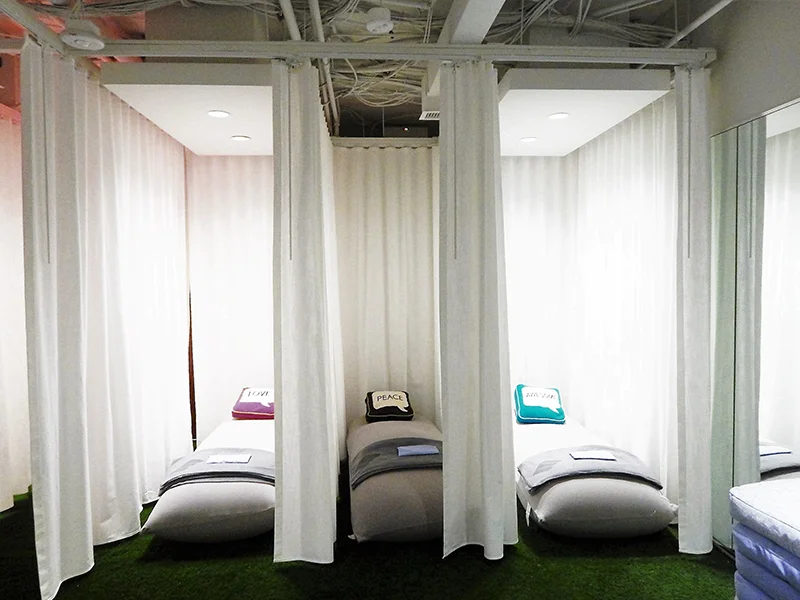
Enter Recharj, a Washington, D.C.-based “sanctuary from the stress and constant noise of the outside world,” according to the Washington Post, where you can book an individual sleep pod – what Recharj calls a “cocoon” – for your 20-minute power nap. Want to relax but not snooze? Enjoy a 20-minute meditation class instead, and don’t forget to network as you recharge with complimentary tea and water.

Powernaps has emerged as a leader in “in-house managed napping solutions” to big corporate names like Nike, Google, Deloitte and more, consulting with the nation’s top sleep therapists to develop power napping strategies and equipment. Whether they bring a pod to you, or you stop by one of their studios strategically located in metro areas, the company says “power napping not only makes your employees smile, it will make them 42% more productive.”

Via naiop.org >

Why you can't afford to ignore Nature in the Workplace

Why you can't afford to ignore Nature in the Workplace

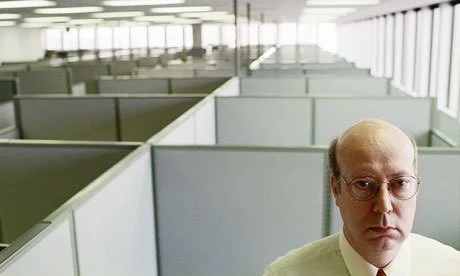
Love your job, but hate your office? For many of us, our physical workplace can be dark, depressing, bland and even dysfunctional. Windowless cubicle farms and airless open-plan floors can kill motivation and take a toll on worker performance, possibly even their health.

But a refreshing trend is taking root in workplace design: nature. 

There’s a growing body of evidence showing that workplaces that incorporate natural elements, such as plants, light, colours and shapes, have noticeable — and measurable — benefits for both companies and their employees.

Via bbc.com >

Why every office should scrap its clean desk policy

Why every office should scrap its clean desk policy

Economist Tim Harford writes about a fascinating experiment to identify the most productive and inspiring office setup

The 5S system of management — Sort, Straighten, Shine, Standardize and Sustain — has long stood for efficiency through tidiness and uniformity. It began in precision manufacturing spaces; clutter was discouraged because it might cause errors and delays, as were distracting personal effects. But 5S has somehow bled from car assembly lines, operating theaters and semiconductor manufacturing plants, where it might make sense, to the office cubicle, where it does not.

Management gurus today sing the praises of the “lean office.” But in this vision, one can see a very simple mistake being made. It fails to realize that what makes a space comfortable and pleasant — and, to turn to the concerns of modern business, inspiring and productive — is not a sleek shell or a tastefully designed interior. Indeed, it may have very little to do with how a building looks at all.

Via ideas.ted.com >

Workplace professionals should look to the consumer sector for boosting engagement

Workplace professionals should look to the consumer sector for boosting engagement

More and more businesses are recognizing the power of the workplace experience to drive employee performance and engagement. Global brand Airbnb, for example, has now renamed its head of human resources as “chief employee experience officer.” This is good news for workplace design and management professionals. We are well placed to capitalize on this shift in business opinion, but if we want to make a tangible impact, we need to bring practical solutions to the table. First and foremost, these need to be backed up by research. There have been few studies specifically into what makes a healthy and productive work environment. However, there are a number of research projects that examine how a human being’s surroundings impact their mood and behavior, and in particular how consumer environments shape customers’ perception of and engagement with a brand. As workplace professionals, we can learn a great deal from this consumer research and this is why workplace design and management teams should look towards consumer-facing industries for inspiration.

Via workplaceinsight.net >

A new age of reason for workplace design and management

A new age of reason for workplace design and management

The enduring struggle to improve the working conditions and performance of people through the design and management of their workplaces has more than a whiff of the Enlightenment of the Seventeenth and Eighteenth Centuries about it. The Enlightenment marked a new era in which the old superstitions and dogmas were to be overthrown by pure reason. This intellectual development was seen by its proponents as enough to convince the world of the ways in which we could improve the human condition. It’s a battle that was won in some ways but which continues to this day, as you can tell from the work of the most prominent modern day evangelists of pure reason such as Richard Dawkins, Ben Goldacre, Sam Harris and the late Christopher Hitchens and the enduring ability of people to believe palpable nonsense. You can see the same appeal to reason as firms and facilities managers make the case for a progressive approach to workplace design and management.

Via workplaceinsight.net >

Open-plan offices were devised by Satan in the deepest caverns of hell

Open-plan offices were devised by Satan in the deepest caverns of hell

In case you still needed persuading that open-plan offices were devised by Satan himself in one of the deepest caverns of hell, the Harvard Business Review delves into new research showing just how frustrating people find them – and just how paltry, on the other side of the scale, are the benefits they bring. Using data from surveys of 42,700 American office workers, researchers Jungsoo Kim and Richard de Dear conclude that it’s not other people’s mess that bothers us the most, nor lack of personal space, nor even noise level per se, so much as a “lack of sound privacy” – hearing other people’s conversations, and perhaps equally crucially, knowing that other people can hear yours. 

Anyone who’s experienced the paralysing self-consciousness of trying to conduct a sensitive phone call in the knowledge that four or five colleagues can follow every word won't be surprised by the results: almost 60% of cubicle workers and half of all those in fully open-plan offices cited lack of sound privacy as a frustration, making it the most prevalent annoyance by far. That cubicle-dwellers are even more likely to be bothered than their “partition-less” colleagues suggests it’s even worse when you can’t see who’s talking – or who might be listening in. 

Via theguardian.com >

Seven ways to create downtime space in the workplace

Seven ways to create downtime space in the workplace

When the going gets busy, taking a break might seem like the antithesis of what it takes to wrap up.

But whether it’s a five-minute diversion that boosts focus, or a 17-minute coffee break that improves performancemental downtime can increase productivity and replenish energy during demanding workdays. Companies that provide a space for this are more likely to reap the benefits.

“Disengaging from work gives people the ability to think more inventively,” says John Symes, Director at JLL’s workplace strategy team.

While some companies favour breakout areas – designed for employees to think and work differently, such as tech company Epic’s treehouse conference room or Box’s indoor swings – break rooms should let staff get away from all things job-related.

Via jllrealviews.com >

Getting the workplace ready for the technology revolution

Getting the workplace ready for the technology revolution

Advances in computer power, the explosion in smartphones and faster and near ubiquitous connectivity is connecting more devices and more people to the Internet. All of this is resulting in an explosion of data, which gives businesses unparalleled insight into their customers, powering machine learning and artificial intelligence.

Via cbi.org.uk >

Your Office Has a Microbiome, and It Might Make You Sick

Your Office Has a Microbiome, and It Might Make You Sick

I WORKED FOR a number of years, like many people, in an office building with windows that did not open. For the first time in my life, a slight soreness tingled in my throat almost every day. Each time a denizen of that floor got a cold, it decimated at least a third of the floor’s employees. For the next week or two, a swath of cubicles would sit empty. I took to avoiding pressing the water cooler button with a bare hand.

For the sake of energy efficiency, more and more buildings are sealed off completely to the outside world, relying on mechanical ventilation for airflow. But little science has been done to explain how our architectural choices are changing the world of microbes that live inside these buildings—and human health. If I wanted to test whether it was really my office getting me sick (or figure out strategies to avoid it), I wouldn’t have much to go on.

Via wired.com >