Workplace

The case for designing offices more like bars

The case for designing offices more like bars

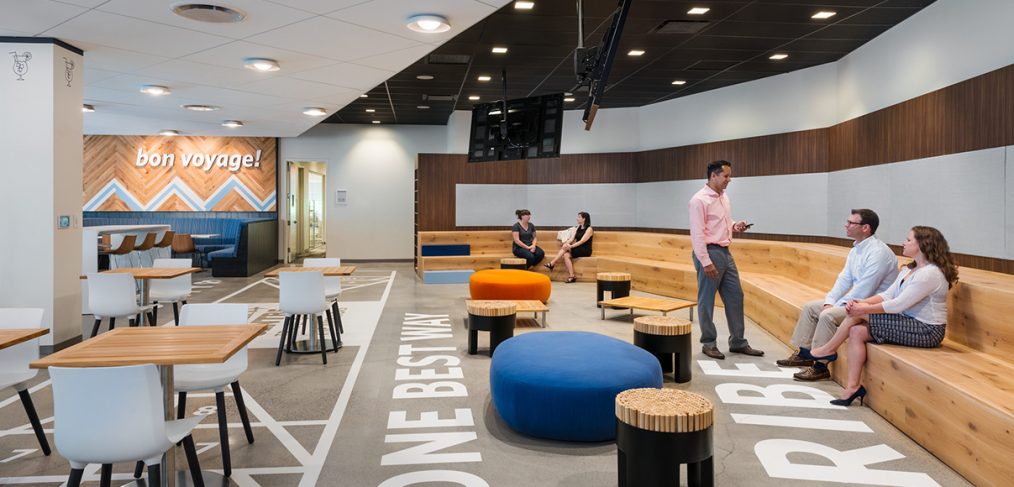
Why do we strike up more spontaneous conversations with people in bars than we do in the workplace? The answer isn’t alcohol—it’s the eye height you engage with people at.

In bars, the counter and stools are placed at a height that puts those sitting and standing at the same eye-level. The height of the counter and matching stools is so well established at between 40 to 42 inches that it’s known as “bar height.” Eliminating this 12-inch difference naturally engineers conversations between strangers who are now both sitting and standing face-to-face. That 12-inch difference makes casual conversations much more likely to happen. (And not just because you’re two glasses of wine into your evening.)

By this logic, in order to facilitate communication and collaboration, we should make our workplaces more like bars. Without the drinking.
Via qz.com

All Work and No Play: Designing for Passion in the Workplace

All Work and No Play: Designing for Passion in the Workplace

As a child, my mother would tell me, “Finish your work first, then you can play.” The idea that work is a task to complete before life can happen has colored my academic and professional life. It’s a widespread concept that cripples creativity and drains the joy from work by severing the connection between passion and productivity. As we design for the workplace, we begin to question the concept of work, as well as our attitudes and beliefs about it. To continue to evolve workplace design, we must return to the core of our practice, with a willingness to examine, challenge, redefine and broaden our perceptions of work.

While there is general consensus that the most successful people love what they do, it’s easy to fall into the trap of designing for single-purpose, machine-like employees. I have had clients who monitor employee trips to the restroom because they see it as lost productivity. I have had clients who are more concerned about maintaining their hierarchy than elevating their people.

Via callisonrtkl.com 

How can inclusive design create a welcoming workplace?

How can inclusive design create a welcoming workplace?

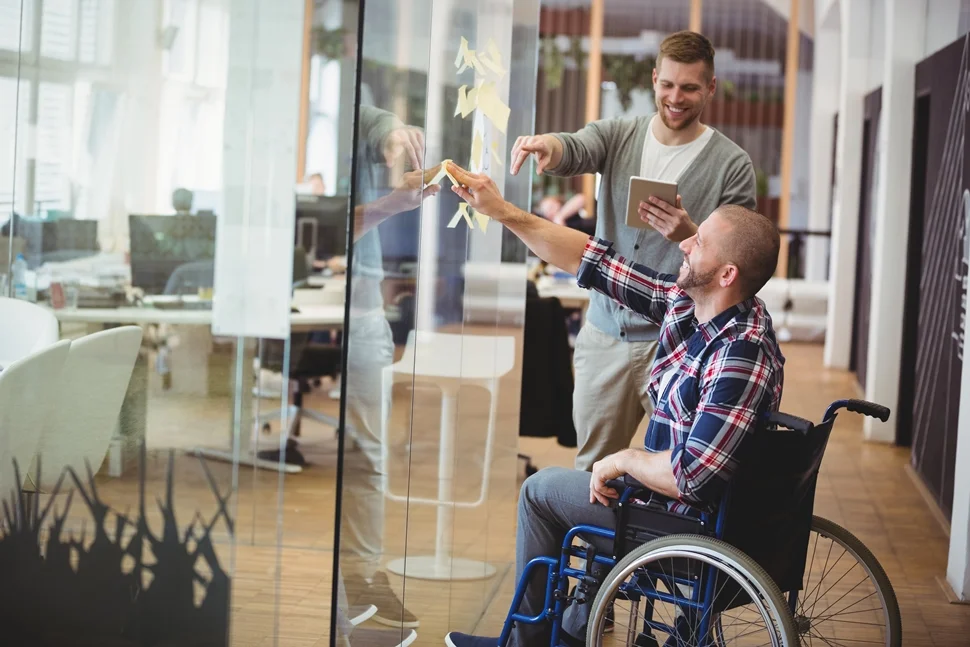
How many of your colleagues that you work with on a daily basis have a disability? Chances are it’s more than you think.

As many as one in three professionals in the U.S. has some form of disability, whether it be a visual impairment or mobility issue, and most of them simply make do with what their offices have to offer.

Fortunately, many employers go above and beyond the requirements of the landmark Americans with Disabilities Act (ADA) by leveraging inclusive design.

Examples of inclusive design in the workplace can include door handles that are levers rather than knobs, flat-panel light switches rather than the traditional toggle switches, large-print labeling and instructions for equipment, wide doorways and hallways and spacious alcoves with turning space.

Via jllrealviews.com 

Why Are People Searching for Better Places to Work?

Why Are People Searching for Better Places to Work?

A new Gallup State of the American Workplace report is garnering headlines for this finding: The most engaged employees are people who work away from the office three to four days a week. But, it’s another conclusion from Gallup that should be resonating with leaders around the world. If organizations want to compete today they should consider giving their people greater flexibility, autonomy and care for the holistic wellbeing of employees.

“Organizations have nowhere to hide,” writes Gallup. “They have to adapt to the needs of the modern workforce, or they will find themselves struggling to attract and keep great employees and therefore customers.”

What does it take to provide an attractive work environment? As mobile work increases and people are working anywhere at anytime, we know people are seeking out new ways to get work done. So, the real question is: Is your work environment adapting to keep up or are people leaving the office to get work done?

Via steelcase.com

The Importance of Working Environments

The Importance of Working Environments

Look around you—do you have a cubicle, standing desk, or are you reading this on a mobile device?  As the boundaries between “living to work, and working to live” stretch, working environments are changing fast to keep up.

Just like clothes and music, office settings go in and out of style.  Depending on when you entered the workforce (and your industry), you may have had a traditional office, a nook, cubicle, or the kind of communal work spaces associated with contemporary start-ups.

Via brightmove.com 

Dystopian office tech uses sensors to track workers’ every move

Dystopian office tech uses sensors to track workers’ every move

In the fully developed “smart office,” the boss is always watching. Already, hundreds of companies have embedded sensors in workspaces, lamps, cubicles, and computers to track the activities of workers. One such company, The Boston Consulting Group, is even piloting a program where employees’ badges contain a microphone and location sensor to monitor how office layout impacts communication, according to Bloomberg.

To many, the idea that managers can measure the amount of time you spend at your desk or the minutes in-between conversations with colleagues feels overly invasive. But it’s all entirely legal. “Employers can do any kind of monitoring they want in the workplace that doesn’t involve the bathroom,” said Lewis Maltby, president of the National Workrights Institute, in an interview with Bloomberg. That is, as long as all the data collected is anonymized.

Via curbed.com 

Digital workplace is ineffective without workers’ technical empowerment

Digital workplace is ineffective without workers’ technical empowerment

Shifting digital dynamics are reshaping the way organisations operate and are recasting the traditional route to business success, claims new research into the rise of the digital workplace. Ricoh’s new report into digital workplace trends produced in partnership with polling company Censuswide, argues that the latest technology strategies are rendered useless without proper commitment to skills training and the empowerment of those workers who will be making use of it. It advises that businesses need to work on improving the workforce’s digital dexterity by creating an office culture fit for sharing ideas and skills across social, video and digital platforms. The report identifies digital skills training as a key differentiator for employees seeking a new job. Over a third of UK office workers (37 per cent) say they would move jobs to a company which offered better digital skills in the workplace. Likewise a modest 18 per cent of respondents rated their skills as ‘excellent’ whilst 51 per cent said ‘good’ and 30 per cent considered themselves ‘average.’

Via workplaceinsight.net 

The six workplace trends you can’t ignore

The six workplace trends you can’t ignore

The 2017 Employee Engagement Report, released by leading employee engagement platform Tinypulse, identified six workplace trends that every L&D professional should know about.

When it comes to turnover, oftentimes, leaders will look at tangible factors such as compensation or even benefits. But there’s something to be said about the intangible impacts an organisation’s culture has on employee sentiment.

A positive work culture breeds happy employees. In return, those happy employees are more likely to stick around for the long haul and even refer other great talent to the organisation.

Via idphub.com 

Staying on top of change: Five ways to futureproof the workplace

Staying on top of change: Five ways to futureproof the workplace

Change is coming to workplace as advancing technology and data driven insights fuel new ways of working.

Both companies and their real estate will have to adapt. In fact, a workplace designed on today’s needs and assumptions could be redundant in little more than a decade, according to JLL’s Workspace, reworked report.

“Size and scale no longer guarantee success,” says Tom Carroll, Head of EMEA Corporate Research at JLL. “The companies that survive the changes set to take place will be those who successfully manage this uncertainty and seize the opportunities created by disruption. Leading firms are already identifying ways to use technology to transform the products and services they provide, the structure of their operations and the ways in which they compete.

Via jllrealviews.com 

NYC Mayor Bill de Blasio shows off designs for planned tech hub

NYC Mayor Bill de Blasio shows off designs for planned tech hub

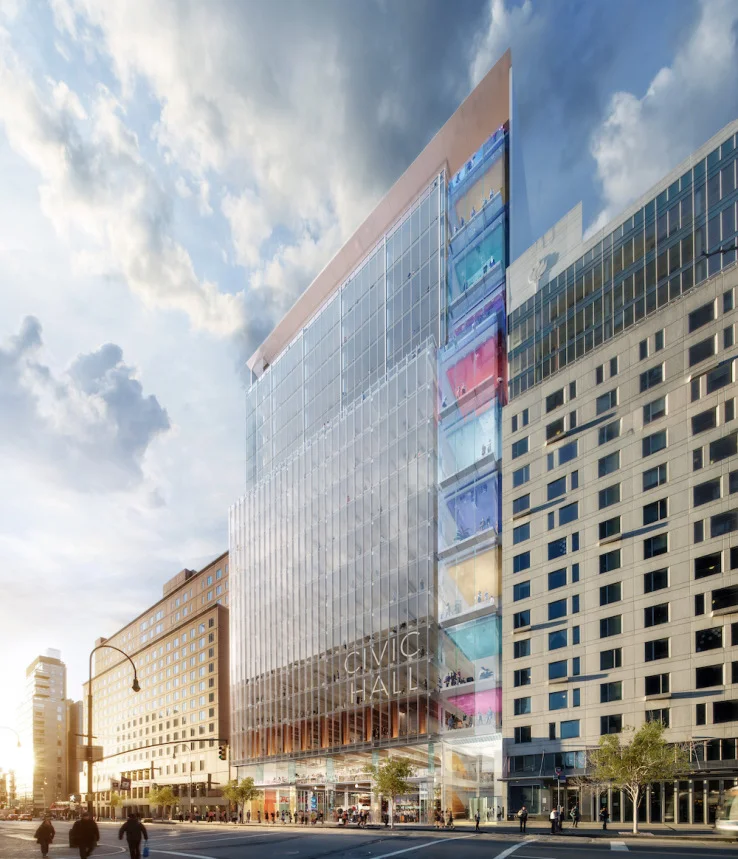
New York City Mayor Bill de Blasio and his team have revealed the designs for the 250,000-square foot Union Square Tech Hub.

The hub, which was first announced in December, will include 58,000 square feet of “fluid space” for startups and a 36,500-square foot tech training center. (Partners in the training program include the New York City Foundation for Computer Science Education, General Assembly, Per Scholas, FedCap, Code to Work and Coalition for Queens.)

The anchor tenant will be Civic Hall — a 1,000-member work and event space that focuses on what founder and CEO Andrew Rasiej said is “the idea that technology can be used to support the public good.

De Blasio unveiled the designs at an event this afternoon at the New York City headquarters of adtech company AppNexus, where he also talked about his hopes for the space.

Via techcrunch.com 

Five ways the workplace will change in the future

Five ways the workplace will change in the future

A workplace where people and robots collaborate, employees’ personal brands are bigger than their employers’ and the office is a destination for wellness are just some of the emerging trends which are set to transform the way we work and how leaders direct their businesses over the next 25 years, according to the findings of the Global Workplace Trends report by Sodexo.

The global services provider has interviewed some of the world’s biggest thinkers and investigated emerging trends and academic research to uncover the trends that will impact the nature of the workforce and influence future leaders.

Via fmj.co.uk 

How Remote Work Is Changing And What It Means For Your Future

How Remote Work Is Changing And What It Means For Your Future

Remote work has been a small part of the employment landscape throughout history. Thanks to the internet, those opportunities are now abundant, spurring many new companies to successfully connect solopreneurs to work projects. Some provide a general marketplace and others focus on specific disciplines; 99designs, for example, matches design projects with graphic designers. Even LinkedIn got in on the act last year with ProFinder – which is designed to link freelancers with leads.

But the new trend that’s exciting me and is growing exponentially is the area of remote work that’s not for freelancers; it’s for employees. There’s no arguing that the 9-to-5, 40-hour work week, with your entire team located near you, is gone. And it’s not coming back. Today, it is more likely that you work on a team where some or even all of your colleagues work remotely.

Via forbes.com

How to Design a Creative Brainstorming Space in the Office

How to Design a Creative Brainstorming Space in the Office

In today’s competitive marketplace, creating a culture of innovation has become more important than ever. While most know the importance of innovating, many struggle to proactively plan for it – especially when it comes to office design. While it’s great to encourage employees to collaborate and brainstorm together, workplaces must provide creative brainstorming spaces where they can effectively innovate.

Collaboration zones provide a natural crossroads for coworkers to meet and share ideas. They can be as informal as a large table in the break room or as formal as a walled conference room. Remember to support those spaces with the necessary tools and flexibility employees need to work together. Ask yourself, “Is the space reconfigurable? Do users have choice and control over how and where they work in the space?”

Via myturnstone.com 

THREE WAYS TO WOO MILLENNIALS TO YOUR WORKPLACE

THREE WAYS TO WOO MILLENNIALS TO YOUR WORKPLACE

A new Deloitte survey shows millennials’ workplace wants have shifted in the last year. Here are the takeaways for associations looking to attract and retain a Gen Y workforce.

What a difference a year can make.

For instance, last year many young professionals said they were planning to say goodbye to their employers. “But, after 12 months of political and social upheaval, those ambitions have been tempered,” said the freshly released Deloitte Millennial Survey 2017.

Via associationsnow.com 

Employees prefer effective workplace technology to wacky office design

Employees prefer effective workplace technology to wacky office design

The majority (79 percent) of workers say reliable and modern technology is more important to them than office aesthetics, while accessories such as ping pong tables, slides, hammocks and wacky office designs may look good in pictures, but they don’t necessarily make employees any happier or productive. The is according to a survey, conducted by storage firm Kiwi Movers, which found that 86 percent of UK adults who work in an office said fun features were of no specific value to their working life, 11 percent said they were nice-to-have and of some value and 3 percent said they were very valuable. The most popular office perks are those offer an immediate tangible benefit to the employee, but even so, as many as 23 percent don’t take advantage every day; while 71 percent overall said they’d like more space in their office and of those, 58 percent believe that could be achieved by removing non-essential items. The research also found that younger workers were more likely on average to take advantage of ‘environmental’ perks like chill out areas and recreational equipment.

Via workplaceinsight.net 

Sitting Is Deadly. Could Banning Chairs Help?

Sitting Is Deadly. Could Banning Chairs Help?

By now the health deficits of sitting all day are so widely studied and well-documented that they're impossible to ignore. Studies show that sitting increases lower back pain, slows our metabolisms, and shortens our life-spans, among a host of other things. Not even daily exercise is enough to offset the damage. What's a health-conscious person to do?

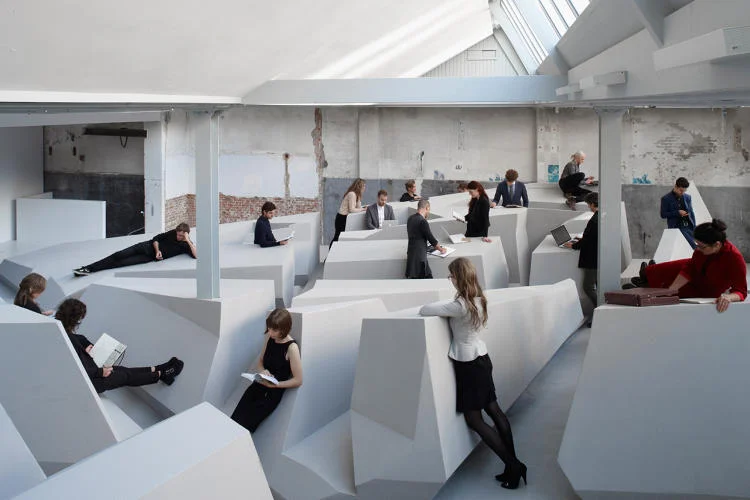
One answer: Eliminate chairs altogether. At the interdisciplinary Dutch design studio RAAAF (Rietveld Architecture-Art-Affordances), brothers and cofounders Ronald and Erik Rietveld have been studying how radically redesigning the workplace and home might affect how sedentary we are. Their installations The End of Sitting, which debuted in 2014, and Breaking Habits, opening at the Mondriaan Fund for Visual Arts in Amsterdam February 16, present chair-free environments that encourage people to get up and move. As Erik puts it, "As long as there are chairs present, people will sit in them habitually."

Via fastcodesign.com 

THE ​HEALTHY ​WORKPLACE: IDEAL OR IDEALISTIC?

THE ​HEALTHY ​WORKPLACE:  IDEAL OR IDEALISTIC?

In the 1950’s and 60’s, employee health was seldom factored into office design. Clerical staff in the central typing pool worked under flickering fluorescent lights and did not enjoy either privacy or access to windows and views. In the coveted corner office, a long day was likely to be fueled by coffee, cigarettes and the infamous 3-martini lunch—and there was no company gym, volleyball court or cocoon-like break room to relieve stress. At the same time, people at work frequently left their desk and walked across the office to deliver a memo, retrieve a file or set up a meeting. Incidental exercise—walking—was routine. And office workers rarely worked more than 10 hours a day. By the end of the 20th century, that was no longer the case. 

Via teknion.com 

The 7 best coworking spaces in New York

The 7 best coworking spaces in New York

A new generation of creative workers expects more than bland ‘business centers’ and sterile ‘serviced office space’ setups. They’d much rather park their laptops at a growing range of shared spaces designed to boost productivity and a sense of community. Powered by new models that integrate the perks of private clubs and services usually reserved for large corporations, New York coworking spaces are flourishing – offering options for every industry, taste, and budget. Here’s our essential guide to where to pull up a chair.

Via thespaces.com 

Rethinking Collaboration in the Next Generation Workplace

Rethinking Collaboration in the Next Generation Workplace

Technology change does not occur in a vacuum, and this is becoming evident as enterprises struggle to realize anticipated results after making costly investments in collaboration solutions. While today’s applications truly are exciting, it’s easy to overlook how important the workplace environment is for their success. The context in which a collaboration solution is deployed really matters, as a holistic approach is needed to ensure that the right technologies are deployed in the right way to meet today’s workplace needs.

Via techzone360.com