Workplace

WELLNESS IN THE MODERN WORKPLACE IS A KEY TREND FOR 2017

WELLNESS IN THE MODERN WORKPLACE IS A KEY TREND FOR 2017

With the new year moving into full swing, the workplace design conversation has largely surrounded trends that will define 2017. As spaces that promote worker wellbeing particularly gain momentum, this month’s news aggregate explores how employee wellness will shape the modern office. 

Via coalesse.com 

LISTEN: “Price of Business” Hosts radioIA’s Russell Manthy

LISTEN: “Price of Business” Hosts radioIA’s Russell Manthy

Understanding your office space is a lot like playing golf; there’s a lot of subtlety to it and there’s a lot that goes into it to do it well.

In commercial real estate, there are two main types of square feet: usable square feet and rentable square feet. Usable square feet is everything inside your office suite, and rentable square feet is everything that you pay rent on, including the building’s common spaces and corridors.

Current workspaces focus a lot more on “we” space than “me” space.  In today’s workplace, individual workspaces are getting smaller and shared workplaces, such as casual meeting areas, lounge areas, cafes, and social zones, are getting larger. This is partially due to team-based education, which is driving the workplace of the future. 

Visit to Listen:

Via interiorarchitects.com

5 INTERIOR ASPECTS TO CONSIDER WHEN DESIGNING HEALTHY BUILDINGS

5 INTERIOR ASPECTS TO CONSIDER WHEN DESIGNING HEALTHY BUILDINGS

The concept of healthy buildings has been a growing priority since awareness of sick building syndrome (SBS) emerged in the 1970s. Designers and architects are increasingly shaping interior environments to improve the health and wellness of building users. Building certification standards, such as the WELL Building Standard, have responded to define pillars and measurements to certify the performance of building facets that impact health and wellness.

Via millikencarpet.com 

'The next wave' of design: Why wellness-minded spaces are on the rise

'The next wave' of design: Why wellness-minded spaces are on the rise

The push to make buildings more sustainable is nothing new, as the industry has largely embraced the growing trend. The U.S. Green Building Council's LEED (Leadership in Energy & Environmental Design) certification system is the most well-known name in the space, as there are more than 59,000 LEED-certified projects totaling 6 billion square feet in 164 countries.

For those up to a more rigorous, holistic endeavor, there is the International Living Future Institute's Living Building Challenge. Candidates navigate requirements such as the incorporation of biophilic components, the building site's impact on neighboring buildings and the environment and its ability to produce as much — or more — energy than it consumes. The cost-savings component of that program has struck a chord with private and public entities alike.

However, another trend related to sustainability is making waves in the industry: wellness. Although less definable than energy-efficient measures, wellness-minded design is growing in popularity as younger generations are pushing for healthier environments in their workplaces and homes.

Via constructiondive.com 

Six Tips To Update Your Workspace For The Office Renaissance

Six Tips To Update Your Workspace For The Office Renaissance

Take a moment and describe what comes to mind when you think of a modern room. Your brain may conjure up images of thin, sleek furniture, and minimalist decor. Now, instead of thinking about the room, turn your thoughts to the modern man or modern woman. He or she may be rushing to the next meeting, all while preparing mental talking points, answering a text message and having a “casual” yet critical off-line conversation with a co-worker. Is your image of a modern room supporting the modern worker?

When designing spaces for today’s employee, the best result is human-centered, a workplace crafted to mentally excite and engage, physically comfort and emotionally support busy workers. Mobile technologies promised workers the ability to be productive on the go. But it’s not enough. Needs for collaboration, team building and individual focus are just a few of the reasons employees are coming back to the office. The elevated importance of the workplace is creating an office renaissance.

Via entrepreneur.com

The office of the future should be defined by the age of its inhabitants. But not in the way you think

The office of the future should be defined by the age of its inhabitants. But not in the way you think

The office of the future is most commonly seen as the habitat of Millennials. But there are all sorts of flaws in this assumption. Apart from the casual stereotyping of a diverse demographic of people, the most glaring is the fact that the workforce is ageing rather than getting younger, and that most offices must now meet the needs of a wider range of age groups than at any time in their history. A new report from Totaljobs seeks to redress the balance in this regard. It suggests that some of the key features of the office of the future will not be slides and ping pong tables but flexible working areas, quiet spaces, spas and private medical rooms. The study claims that the fixation with Millennials means that a large number of older workers now feel that the design of offices does not meet their needs.

The study claims that over a third (35 percent) of workers aged over 45 feel that employers’ provisions for people their age are ‘non-existent’, and almost half believe that workplaces ‘naturally cater towards younger employees’. The research involved interviews with over 2,000 working people over 45. The most pressing concerns identified in the study were health issues (30 percent), being out of touch with technology (27 percent) and being unable to learn new things as quickly (24 percent).

Via workplaceinsight.net 

OMG! WHERE’S MY DESK?

OMG! WHERE’S MY DESK?

OMG! Where’s my desk?

Sound familiar? Maybe the phrase lands a little too close to home for you or someone you know. It does for me because my business is the business of change and how it affects people in the workplace — especially new work environments, most of which are being designed without desks for everyone.

But maybe change is exactly what we need — a little more “OMG!” in our lives to shake us up — so we can force ourselves to take back control and choose where and how we want to work. Maybe having a desk or not having a desk is not the issue. Maybe it has something more to do with our attitude. We see a change coming in people’s perspective and a new freedom of choice, replacing the thought of “losing something”.

For the past six years, Dean Strombom and I have spoken at NeoCon and we have had the fortunate experience of standing room crowds, which is more a testament to the timeliness of the topics and not to our smooth delivery. The topics are messy and require different points of entry: some serious, some humorous, some evidence-based — and all of them require each person listening to consider, Do I have this notion of workplace change right? Even if I do, is it the right thing to do? Should we give up our personal workspace or was it even ours in the first place?

Via workdesign.com [paywall]

HOW DO YOU PROVE A WORKPLACE IS HEALTHY, AND DO WE NEED TO?

HOW DO YOU PROVE A WORKPLACE IS HEALTHY, AND DO WE NEED TO?

Healthy and sustainable construction became a trillion-dollar industry in 2016, and it’s doubling every three years. But while sustainable design is fairly backed by data supporting its impact and ROI, wellness is much more intangible, and workplace experts don’t agree on the so-called proof behind it.

“Anyone who says they can give you specific data proving that a given wellness measure works — I’d be skeptical,” said Nina Charnotskaia, who leads all of CBRE’s workplace research efforts in the Americas.  Ask a room full of architects, developers, workplace strategists or HR heads where well-being fits into the built environment, and you’d be hard pressed to find a single one who thinks wellness isn’t a valuable strategy. But likewise, few believe all wellness practices have tangible benefits. 

Via biznow.com 

What Trump’s Messy Office Reveals About His Leadership Style

What Trump’s Messy Office Reveals About His Leadership Style

One of the most revealing things about a person is their workspace. Not only can a person’s office or desk reveal how they like to work, it can shed light on deep-seated psychological and personality traits, says Colin Ellard, an environmental psychologist and professor of cognitive neuroscience at the University of Waterloo, whose latest book, Places of the Heart, explores how our workspaces and other daily environments affect us and those around us.

"For many of us, other than the room where we sleep, our office is the place where we log more hours than anywhere else, so (it) can be very revealing," says Ellard. And it’s not just whether a person chooses to keep their desk neat or messy that reveals something about them.

Via fastcompany.com

BIOFIT: WHY BIOPHILIC GYMS ARE THE FUTURE

BIOFIT: WHY BIOPHILIC GYMS ARE THE FUTURE

Embracing a new “evolution-friendly fitness method”, Biofit is a nature-inspired biophilic pop-up gym that has opened in London’s Ladbroke Grove.

Designed by award-winning landscape architect Lily Jencks, the Biofit gym features living plants, artificial grass, natural pine essence aromatherapy and hand-made wooden workout equipment. There is nothing digital, electrical or mechanical.

Via globetrendermagazine.com

Designing physical spaces that support the digital workplace brings success

Designing physical spaces that support the digital workplace brings success

n an era where digital workplaces are quickly becoming the norm, organizations which design physical spaces, digital technologies, and social networks specifically focused on enabling more collaborative work, perform above their direct competitors in their respective industries – in employee connectedness and responsive leadership. This is according to research conducted by Nick van der Meulen of Rotterdam School of Management, Erasmus University (RSM) and MIT’s Center for Information Systems Research (CISR). The report assessed on a basis of five indicators, including growth in market share, profit growth and employee satisfaction, and found that trusting employees by giving them autonomy is the key to making a success of the digital workplace. The survey of 313 organizations showed that the high-performing organizations have an integrated and company-wide approach to greater employee connectedness.

Via workplaceinsight.net 

Working From Home Usually Means Longer Hours For Less Money

Working From Home Usually Means Longer Hours For Less Money

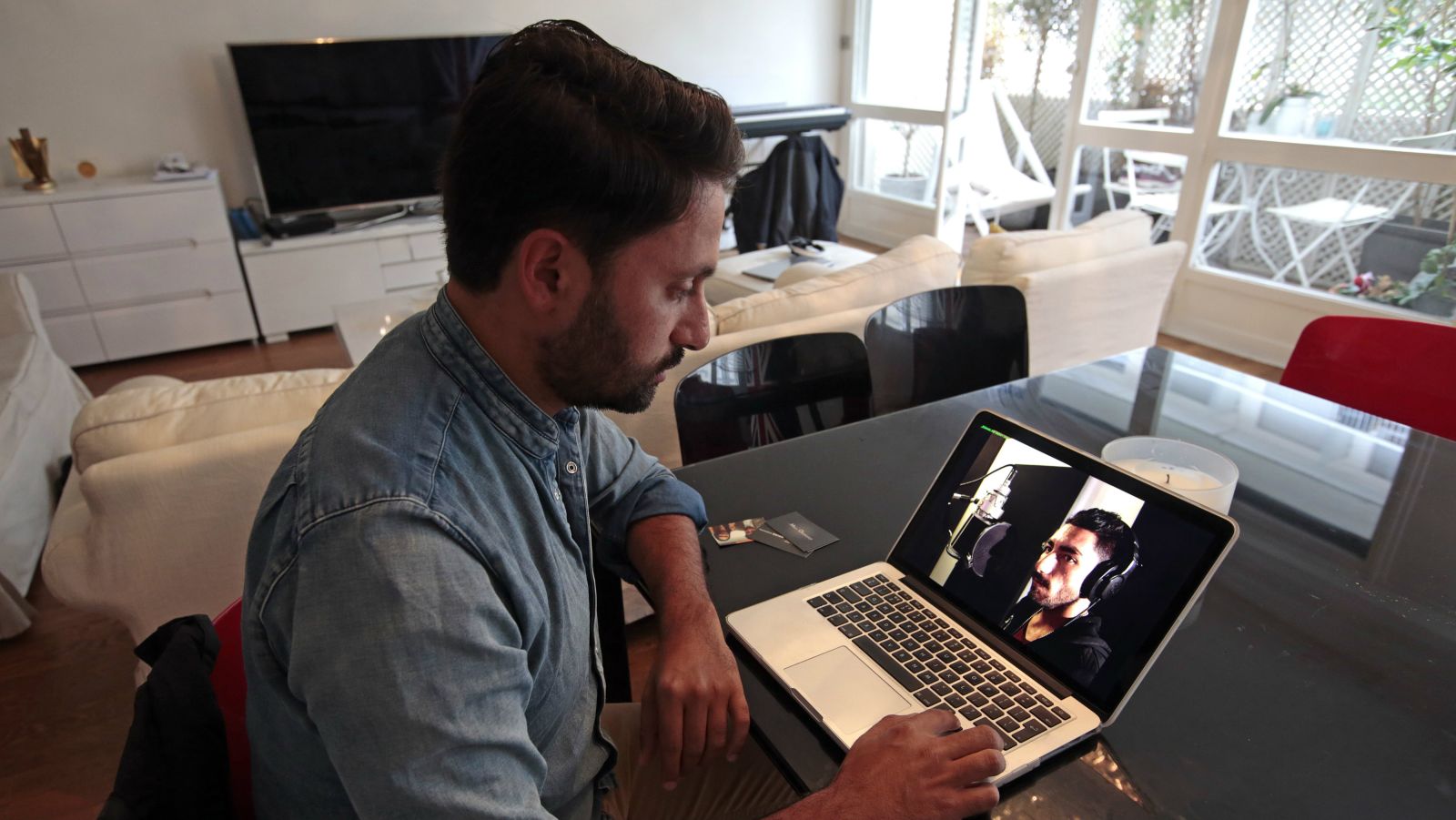
Telecommuting sounds like a dream. Instead of sitting in traffic, you get to spend an extra hour in bed. The coffee is better, you don't have to listen to the inane jabbering of your coworkers, and if you get through your quota of work early, you're done for the day, instead of hanging around wasting time to fill up the remaining hours. And while that may be true for some lucky folks, the reality is quite different, especially when it comes to pay and long hours.

"Rather than enhancing true flexibility in when and where employees work," write the authors of a new study, "the capacity to work from home mostly extends the workday and encroaches into what was formerly home and family time."

The biggest problem with telecommuting is taking work home. That sounds odd when the whole point of remote working is to take your work home, but the problem starts when the usual workday ends. Even if you're forced to hang around at the office until your workaholic boss quits for the day, you know when the workday is over. At home, finding work/life balance is tricky, but what you don't often hear is that those extra hours worked at home often go unpaid.

Via fastcoexist 
Watch: Can Your Workspace Make You a Better Leader?

Watch: Can Your Workspace Make You a Better Leader?

Sara Armbruster, Vice President Strategy, Research and New Business Innovation at Steelcase, spoke at the 8th Global Peter Drucker Forum about the concept of “The Entrepreneurial Society.” She discusses her belief that the workplace itself can help leaders lead better, and, in turn, help others around them succeed.

Via steelcase.com 

Culture Beyond the Cube: Aligning Your Office Design with Your Purpose

Culture Beyond the Cube: Aligning Your Office Design with Your Purpose

When you're trying to align your culture with your purpose, one of the areas that you should consider is the way your office design reflects that alignment. If your work is creative and forward thinking, but your office environment is dull and boring, that sends mixed messages to employees and customers alike.

So how can you align your culture with office design to ensure employee engagement with your purpose and encourage customer engagement with your brand? Start by thinking beyond the cubicle to office designs that suit the cultural values you want to promote.

Via inc.com 

Transitioning to the future of work and the workplace

Transitioning to the future of work and the workplace

Embracing digital culture, tools, and approaches.

A Deloitte survey (sponsored by Facebook) asked C-suite executives for their perspectives on the future of work. Their responses reveal six themes about the future workplace—and six lessons to help leaders ease the transition.

Communication, collaboration, and connectivity are at the core of much of what the C-suite believes will drive the major changes in the future of work. The reason for investing heavily in these aspects of work is the belief they represent hard business benefits for their companies.

Via deloitte.com 

Q+A: Lenovo HQ Features an Ecosystem of Spaces

Q+A: Lenovo HQ Features an Ecosystem of Spaces

This is an installment in Steelcase's series of interviews with architects and designers about this evolution of the workplace. It features Maria Peterson, Senior Interior Project Designer with Perkins+Will. Maria and her team worked with multinational technology company Lenovo to design their new Morrisville, North Carolina headquarters in a seven month timespan. We asked Maria to give 360 the behind-the-scenes story of this project.

Steelcase 360: Perkins+Will believes that workplace design is more than simply delivering a beautiful space. Tell us what you consider when approaching a new project.

Maria: At the end of the day, a newly designed space should be a beautiful space, as you mentioned. However, it also needs to seamlessly support the culture and productivity of the client’s business. Each client is different in how they work, the flexibility they provide their employees and the amenity spaces they want to incorporate.

Read the whole interview at steelcase.com

DEFINING THE FUTURE OF PLACE WITH A REBRAND

DEFINING THE FUTURE OF PLACE WITH A REBRAND

Rebranding by committee sounds like a recipe for madness — and often can be — but for Sasaki, it was the only road we could have taken to arrive at the singular brand identity we revealed in the fall of 2016. It took 16 months from kickoff to launch because of the sheer complexity of the endeavor. For a design firm of 270 people, led by 30 principals, with offices in Boston, Mass. and Shanghai, a practice spanning the globe and eight core disciplines, over 60 years of history, it was no easy feat to collectively define ourselves and our future.

Via workdesign.com 

Cisco's Affordable Spark Board Wants To Change How You Conduct Meetings

Cisco's Affordable Spark Board Wants To Change How You Conduct Meetings

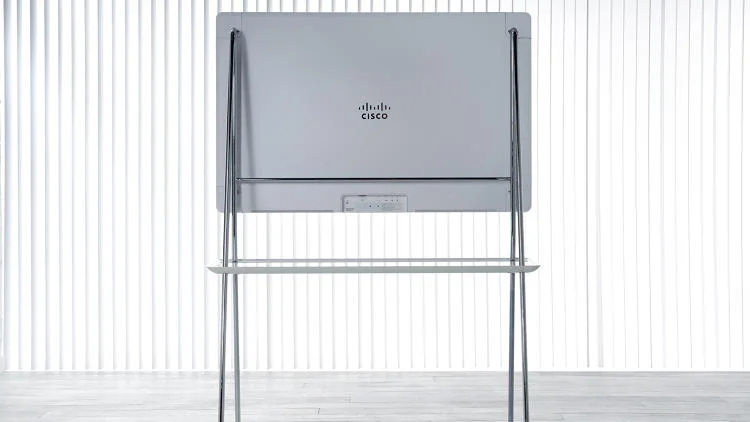
If there’s one point of agreement that can unite workers across different industries, age groups, and countries, it’s this: Meetings suck. Today, Cisco is attempting to change that with a new product called the Spark Board, a $4,990 digital whiteboard and video conferencing system that aims to take some of pain out of teamwork, at a price point that will put it within reach of lots of companies.

Cisco, which is currently the market leader in enterprise collaboration products, earns $5 billion in annual revenue from its existing video-conferencing systems, telephones, and web conferencing and chat products. Its hardware, and products that compete with it, are a big business, but they also come with imposing price tags. It's possible to spend tens of thousands of dollars equipping a room with Cisco video-conferencing equipment; even Microsoft's Surface Hub—itself designed to undercut the cost conventional big-company video conferencing systems—starts at around $9,000. (Google plans to release its own smart whiteboard, the Jamboard, later this year for "under $6,000.")

Via fastcompany.com

If you don’t trust your employees to work remotely, you shouldn’t have hired them in the first place

If you don’t trust your employees to work remotely, you shouldn’t have hired them in the first place

Building software for startups is a huge challenge. Not because writing the software itself is that hard, but most startups have managed to create the least optimal places to do work. In my 10+ years of experience as a software engineer at startups, I cannot trust employers to provide me with an adequate work environment, and this holds me back from doing the best possible work for them. I am an ambitious, driven individual, and I want nothing more than to provide the places I work with my best possible output. I will give whatever company I am working at 110%. Most of the places I have worked have done a great job at preventing me from doing this. That’s why from here on out, I am taking a stand and drawing a line in the sand. Henceforth I will only work in a “remote” arrangement.

Most startups nowadays are obsessed with the open office environment, and it’s nearly impossible to find companies that do not implement this type of layout. They’ll claim it’s because they want an “open and transparent culture,” but if you know anything about the subject, you’ll know this is the worst possible setup for actual work, and doesn’t improve communication or culture. You don’t have to look far to find plenty of research on the subject- and quite frankly, there is simply no debate here. There is no evidence to support the hypothesis that open office layouts foster a more collaborative environment. 

Via QZ.com

3 Incredibly Common Things Making Your Workplace Toxic, According to Science

3 Incredibly Common Things Making Your Workplace Toxic, According to Science

In a perfect world, you would love going to work and get piles of tasks, projects, and deliverables done every day. But often a company's physical environment does little to promote health and productivity. In fact, science has a few things to say about the factors undermining employee well-being, and a few ideas on what you can do to change your workspace for the better.

Via inc.com