Workplace

Workplace Trends That Will Boom in 2017

Workplace Trends That Will Boom in 2017

Looking ahead to 2017, workplace trends stem to a certain degree from this accepted work and workplace flexibility. As companies and workers become more comfortable with alternative ways of working and alternative workspace options, the shift we are likely to see this year is how this flexibility formalizes itself–or so to speak.

As more workers and more companies opt into using serviced workspaces, you need to make sure that your workspace is aligned with current trends, value, and expectations.

Via allwork.space >

Designing space for virtual collaboration in an increasingly untethered world

Designing space for virtual collaboration in an increasingly untethered world

Working with colleagues across different geographies and time zones has become the norm since an increasing number of organisations now integrate and seek collaboration at a global level. Interestingly, according to Cisco, 62 percent of workers now regularly collaborate with people in other countries. These globally integrated enterprises (GIE) aim to draw in the best talent from across the world, delivering maximum innovation and efficiency. The rise of global and distributed teams has been further encouraged by the popularity of remote working, with 71 percent of office workers now choosing greater flexibility to work from various locations instead of travelling to the office everyday . And the trend only looks set to gain pace, with 56 percent of senior leaders in large global companies expecting global teams to increase in the next one to three years.

Via workplaceinsight.net >

Green Offices Make You Smarter At Work And Sleep Better At Night

Green Offices Make You Smarter At Work And Sleep Better At Night

If you're having trouble getting work done during the day, or sleeping at night, it might be your office's fault.

A new study compared workers in certified "green" buildings with workers at the same company who happened to work in a non-certified building. Those in green buildings scored 26.4% higher on cognitive function tests, after controlling for job category, education, and salary. They also had sleep scores that were 6.4% higher than their coworkers in non-green buildings.

In a previous study, researchers from the Harvard TH Chan School of Public Health studied workers in a lab, changing key factors that vary in offices: ventilation, common chemicals found in office air, and high levels of carbon dioxide. As they shifted each of these, they found that people in "green" lab environments had cognitive scores roughly double that of those with dirtier indoor air.

Via fastcoexist.com >

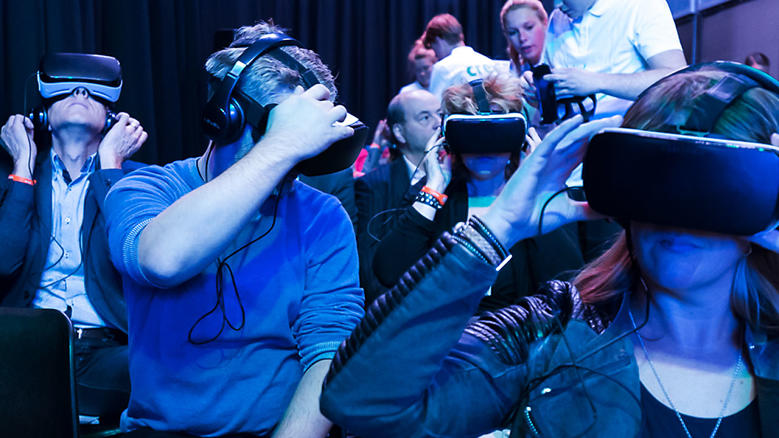
Why I Can’t Wait To Work In VR

Why I Can’t Wait To Work In VR

Startups run into countless problems, but my company recently hit one plenty would consider themselves fortunate to have. We spent millions renovating our office to accommodate up to 185 people, the highest headcount we thought we’d ever hit. Less than a year later, we now have 160 staffers and are looking at costly expansion options—at a cost of several million more.

But what if we didn’t have to pay that price, or could at least reduce it? Vidyard is in the video industry, and as its CEO and a pretty big tech nerd, I’m especially drawn to virtual reality. So I started to wonder if there'd ever come a point when our office could ditch physical walls and open up virtual workspaces instead?

Via fastcompany.com >

How We Think About Work Today Is Completely Wrong

How We Think About Work Today Is Completely Wrong

Thomas Gilovich, a professor of psychology at Cornell University, did a study along with some members of his team to find out how levels of satisfaction are affected by spending money on experiences versus spending money on physical things (I explored this at length with him during a podcast conversation). Gilovich and his team found that people who spend money on physical things such as phones, computers, houses or cars tend to have a drop in satisfaction as time goes on. On the other hand, they found that people who spend money on experiences, like skydiving, traveling or learning a new skill, have higher satisfaction levels overtime. Think about that for a minute. Overall you will be happier when you spend money on experiences versus physical things. This is a profound finding.

Via inc.com >

The Hitchhiker’s Guide to the Workplace

The Hitchhiker’s Guide to the Workplace

We know, and have for a long time, that the workplace is in a state of near constant flux and so we often fall into the trap of assuming that there is some sort of evolution towards an idealised version of it. That is why we see so many people routinely willing to suspend their critical facilities to make extravagant and even absurd predictions about the office of the future or even the death of the office. This is perniciously. faulty thinking. However we can frame a number of workplace related ideas in terms of evolutionary theory, so long as we accept one of the centralprecepts about evolution. Namely that there is no end game, just types progressing and sometimes dying out along the distinct branches of a complex ecosystem. As a nerdy sort of guy of a certain age, I’ve tended to frame my thoughts on all of this with reference to an idea from The Hitchhiker’s Guide to the Galaxy by the great Douglas Adams.

THE SHIFT FROM BLAND TO BRAND IN WORKPLACE DESIGN

THE SHIFT FROM BLAND TO BRAND IN WORKPLACE DESIGN

Forbes suggests the multigenerational workforce – with 5 generations working together – will be a dramatic change in the coming years. While traditional, standardized environments remain present in workplaces today, office design is changing as the modern workforce evolves.

Today’s employees are rejecting the monotonous offices of the past, instead searching for engaging, inspiring and purpose-driven workplaces. With this societal shift, employers are prioritizing creativity, branding, and diverse, tech-efficient spaces over standardization in design. In this month’s news aggregate, we explore the trend toward these unique spaces and the potential impacts of this transition for future workplaces.

2017 Top Workplace Design Trends

2017 Top Workplace Design Trends

Workplace design is an ever-evolving art as much as a science. From their physical layout -- closed vs. open spaces, for example -- to the color of the walls and the arc of the lighting, scientists and designers are constantly at work to improve American offices for the planet, human health, and corporate productivity. Top office designers are predicting several strong trends in the industry for 2017.

Work. Walk 5 Minutes. Work.

Work. Walk 5 Minutes. Work.

Stuck at your work desk? Standing up and walking around for five minutes every hour during the workday could lift your mood, combat lethargy without reducing focus and attention, and even dull hunger pangs, according to an instructive new study.

The study, which also found that frequent, brief walking breaks were more effective at improving well-being than a single, longer walk before work, could provide the basis for a simple, realistic New Year’s exercise resolution for those of us bound to our desks all day.

Via nytimes.com >

Ten demonstrable truths about the workplace you may not know

Ten demonstrable truths about the workplace you may not know

The science of the workplace has gained a lot of interest over the last few years, highlighting recurring patterns of human behaviour as well as how organisational behaviour relates to office design. In theory, knowledge from this growing body of research could be used to inform design. In practice, this is rarely the case. A survey of 420 architects and designers highlighted a large gap between research and practice: while 80 percent of respondents agreed that more evidence was needed on the impact of design, 68 percent admitted they never reviewed literature and 71 percent said they never engaged in any sort of post-occupancy evaluation. Only 5 percent undertake a formal POE and just 1 percent do so in a rigorous fashion. Not a single practitioner reported a report on the occupied scheme, despite its importance in understanding the impact of a design.

Via workplaceinsight.net >

How Physical Space Shapes Team Culture, and Why You Should Care

How Physical Space Shapes Team Culture, and Why You Should Care

An intangible power emanates from the spaces in which we live and work. It touches and shapes our behavior, our perceptions, and our interactions. When designed well, a space can make you feel deeply appreciative (and, in my case, perhaps a little jealous) of the amazing people who can so artfully shape that kind of visceral experience. It was this same power that touched me when I made my first recruiting trip to California to join One Workplace as their Creative Director.

5 Reasons Your Office Has Changed

5 Reasons Your Office Has Changed

Somewhere between Dilbert and The Jetsons, our workplace changed. We went from private executive office suites and rows of cubicles to open floor plans and a mobile workforce. And, the pace of change has only continued to accelerate. Recently, business leaders began moving the success conversation from wealth to wellbeing. And, as a result, offices are seeing a renaissance and changing again to support the new way work is done.

The focus is all about you. Cafes are coming to life, becoming hubs of conversation. Multi-media rooms are transforming previously static spaces to allow for real-time interaction with remote workers. And, quiet spaces are being reimagined to support rejuvenation and ideation.

Office construction numbers in the United States support the underlying feeling that changes are happening. According to the United States Census private general office construction increased 19.9 percent in one year from June 2015 to June 2016. And, those numbers have continued to rise throughout 2016. IBISWorld’s recent market research report showed the commercial property remodeling industry is benefitting from large increases in demand. In the last five years, office rental vacancies have decreased and consumer spending on office remodeling has gone up.

Office Space: New study reveals who's working happy: It's not accountants

Office Space: New study reveals who's working happy: It's not accountants

Being happy at work is something everyone wants. However, there are a variety of factors that determine who reaches workplace nirvana, including employee's age, gender and field.

In a recent comprehensive study, Robert Half surveyed more than 12,000 U.S. and Canadian workers to examine the key contributors to employee happiness.

Overall, the survey found that most professionals are generally happy. On a happiness scale of zero to 100, respondents scored a 71. Not surprisingly, results also found that employees who do not fit well with their employer are the most apt to leave. One-third of workers surveyed said they likely will leave their employer in the next six months. The survey also shed light on the top three drivers for workplace happiness, finding that having pride in one's organization is the top driver, being treated fairly and with respect is the second, and employee appreciation came in third.

Designing a workplace to keep millennials healthy and happy

Designing a workplace to keep millennials healthy and happy

“You’re only one yoga class away from a good mood,” says the lean but muscular yoga instructor, who encourages us to smile as she leads us through a flow of warrior poses. Natural light floods the room through wall-to-floor windows and a skylight that breaches the lofted ceiling. Acoustic folk songs streamfrom the sound system. As the instructor guides us to stand in mountain pose with spines tall and eyes closed, she prompts us to “find that stillness within.”

Though this seems like an upscale yoga studio, it’s not. It’s just an ordinary day at the GoPro corporate offices in Carlsbad, Calif. The half-dozen yogis that surround me are employees practicing asanas before their lunch break. GoPro, like other corporations steeped in millennial culture, has taken the route paved by Silicon Valley icons such as Google and Facebook in eschewing the old work-like-a-dog-until-you-retire (or die) ethic for a more holistic, healthful work ambiance. Productivity is still highly valued in this new corporate model, yet proponents believe that greater productivity is achieved when employees are healthier and happier.“

Here Is What Your Workday Will Look Like in 10 Years

Here Is What Your Workday Will Look Like in 10 Years

Remember when the office workday was simple? Everyone used to follow the same routine: Show up at 9, leave at 5, rinse, and repeat.

Those days are long gone, and they’re not coming back. Now, you might work 9 to 5, but you could also choose to work 7 to 3 or 11 to 7 and split your time between home and the office. Perhaps your supervisor flies in from New York to work at an unassigned desk a few times each month and some of your teammates only pop in sporadically because they’re telecommuters or freelancers.

Top Eight Workplace Trends Managers Can Expect In 2017

Top Eight Workplace Trends Managers Can Expect In 2017

Due to demographic shifts and rapid technological advancements, the U.S. workplace is undergoing exciting changes. For managers, it’s key to be informed about how these changes will affect the workplace so they can proactively harness them to their organizations’ advantage. What follows are the top eight workplace trends you can expect in 2017.

WHEN BUILDINGS INTERACT SEAMLESSLY WITH OCCUPANTS, EVERYONE WINS

WHEN BUILDINGS INTERACT SEAMLESSLY WITH OCCUPANTS, EVERYONE WINS

The workplace is undergoing profound transformations. Almost everything that was traditionally associated with “work” – desks, hierarchies, water coolers, 9-to-5 hours, and the office itself — is quickly dissolving. The mobile, creative, empowered workforce has a high demand for environments and experiences. In response, many businesses have transitioned to open offices, hot-desks, and on-demand amenities which can be dynamic… or chaotic. In some cases, corporations have reported that over one third of employee time is spent searching for colleagues. At scale, this is crippling inefficiency — and it all comes back to physical space of offices.

Via workdesign.com >

The Best Office Layouts for 4 Types of Work Environments

The Best Office Layouts for 4 Types of Work Environments

In a new study from architecture firm Gensler, there is evidence that supports that workplace performance is directly linked to the level of innovative office design. We're not talking strictly about fancy technology. Innovative office design is implemented through all areas: from how comfortable a desk is to whether the employee lounge is laid out to accommodate both large groups and private conversations, from conference room adaptability to inspirational reception areas. "We've proven that design not only influences the innovative process," writes Gensler, "But also that, done correctly, design has the power to drive new innovation forward in a direct and measurable way."

Via inc.com >

Design Ideas For A Workplace Break Room

Design Ideas For A Workplace Break Room

By law, all employees need to take breaks when their shift is more than 3 hours. Even if your employees work a regular 9-5 day, they should still take regular breaks from their desk. Since most people will not have time to go home on a thirty-minute break, it is important that they have somewhere comfortable to relax before they head back to work. Google and other Silicon Valley tech firms have a reputation for creating over-the-top break rooms, but even if you don’t want to install a ball pit or slide, there is plenty you can do to design a relaxing, enjoyable space for your employees.

Via architecturelab.com >

30 Pictures Of Airbnb’s Spacious New Office In Dublin

30 Pictures Of Airbnb’s Spacious New Office In Dublin

heneghan peng architects have collaborated with Airbnb to design their latest international headquarters in Dublin, Ireland.

The office, nicknamed The Warehouse, was once an ice and cold storage warehouse from 1865 to 1950, then from 1950 to 1980 it was a bicycle factory. After 1980, the space sat empty and fell into disrepair, and then was used as a meeting place for Mabos, a group of cultural activists, before Airbnb reinvented the space one more time, and turned it into the office that it’s used as today.

Via contemporist.com >