
Workplace

In 5 Years, Your Entire Office Will Fit In A Backpack To Take Wherever You Want

In 5 Years, Your Entire Office Will Fit In A Backpack To Take Wherever You Want

For freelancers and remote workers, the ideal office doesn't yet exist. Conference calls don't work in coffee shops, coworking spaces are expensive and often lack privacy, and working from home tends to be distracting and isolating.

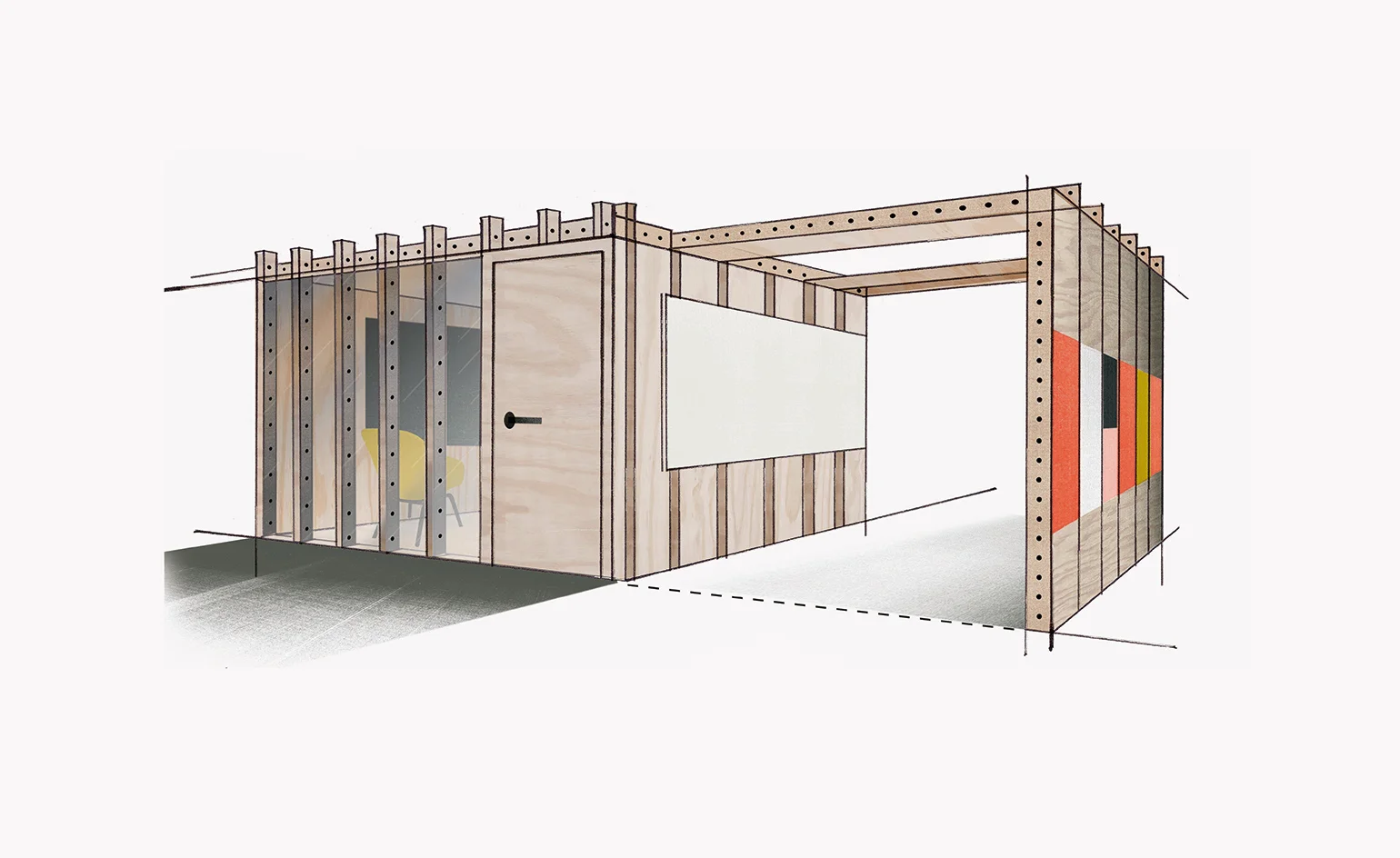
One designer has a new proposal: A pop-up personal office that you can carry in a backpack, and set up in a new type of urban park. The design was runner-up in the "Tomorrow's Workplace" competition from Metropolis magazine and Staples Business Advantage, which asked designers to imagine what offices might look like five years from now.

Via fastcoexist.com >

5 WAYS YOUR WORKPLACE WILL BE UNRECOGNIZABLE IN 2026

5 WAYS YOUR WORKPLACE WILL BE UNRECOGNIZABLE IN 2026

Buildings and space that anticipate your needs. Collaboration with robots. Cafes, parks, and airports as the new office. Sound far-fetched? Workplaces are evolving more rapidly than ever and employers have seen dramatic shifts in where, when, and how employees work. Ten years from now, your workplace may well be unrecognizable from the office you use today. Work is becoming more digital, and yet in need of a more humanized experience.

Via workdesign.com > [paywall]

Google confirms it is to go ahead with massive new London HQ

Google confirms it is to go ahead with massive new London HQ

Following the announcement in September that Apple was to reaffirm its commitment to the UK with a major investment in the creation of a new headquarters building in London, the latest global tech giant to follow suit is Google. The firm has confirmed it is to open a new HQ in the capital which will see 3,000 jobs created by 2020. In an interview with the BBC, chief executive Sundar Pichai claimed that he is confident that the UK Government will not be throwing up barriers to the movement of skilled labour in the wake of the Brexit vote. Based on this he is moving ahead with the Thomas Heatherwick designed £1 billion Kings Cross development that will allow the firm to expand its UK workforce to 7,000 people. Heatherwick has previously worked with Google alongside Bjarke Ingels Group on the design of their Mountain View headquarters in California. He was drafted in to work on the London project after a previous design was rejected because it was ‘boring’.

Via workplaceinsight.net >

Bjarke Ingels and Thomas Heatherwick team up again to design Google’s London headquarters

Bjarke Ingels and Thomas Heatherwick team up again to design Google’s London headquarters

Looks like the Bjarke Ingels and Thomas Heatherwick tag team is working out: Google CEO Sundar Pichai has announced that BIG and Heatherwick Studios will continue their collaboration to build another Google headquarters, this time in London’s King’s Cross.

If the Dynamic Duo’s Mountain View extension is any indication, the ten story, 650,000-square-foot project promises to be, at the very least, “interesting.”

It will be the first wholly-owned and Google-designed building outside of the U.S. and will be a part of the tech giant’s growing 67-acre campus, which expects to eventually accommodate 7,000 employees across three offices spanning over one million square feet.

Via curbed.com >

3 Ways to Create a Great Place to Work

3 Ways to Create a Great Place to Work

If you want to build a truly great company that will year in and year out outperform the competition, it's critical that you minimize employee turnover. And the more success you have, the more appealing it will be for other companies to poach your top talent. The way to beat this is to build an organization that your team members truly love. While there are many factors that contribute to creating a great place to work, perhaps the most powerful are ones that don't include fancy benefits packages or paying top-tier salaries.

Via entrepreneur.com >

San Diego’s burgeoning new tech hub poised to reshape downtown

San Diego’s burgeoning new tech hub poised to reshape downtown

On a quintessential San Diego day—and, this being the land of sun, sandals, and surf, there are many—one could do a lot worse than soak up the sunshine in the Quartyard. An array of shipping containers set up in a formerly abandoned lot in the East Village, a rapidly rebounding warehouse district near downtown, this 23,000-square-foot community space buzzes with activity. Locals hit up the adjacent coffee shop and dog park in the morning, freelancers tap away on laptops in the afternoon (free outdoor wifi), revelers perch on the long communal tables during happy hour. EDM icon Skrillex played a show here last year

These new developments have the potential to add thousands of jobs, according to David Graham, San Diego’s Deputy Chief Operating Officer, and help create a new tech center in the midst of downtown.

"I think we’re sitting at the precipice of a moment where San Diego gets recognized for its long history of invention, innovation, and reinvention," he says.

Via curbed.com >

Workspace as a Service: Future-Proofing Business Around the World

Workspace as a Service: Future-Proofing Business Around the World

In its recent report, “Workspace, Reworked: ride the wave of tech driven change”, JLL addresses how technological advances will transform the operations of business and the effect this transformation will have on CRE and the essence of workspaces.

As technology continues to evolve rapidly and to disrupt industries at large, companies will need to be able to reinvent their business models in order to unlock sources of growth.

One of the models that companies will need to reinvent and transform is their physical workspace model.

Via allwork.space >

Flexible working more important to employees than a company car, claims new BT research

Flexible working more important to employees than a company car, claims new BT research

Flexible working and great mobile devices top employees’ list of perks but businesses are struggling to make it a reality, according to a new study from BT. Two thirds (67 percent) of UK office workers say mobile working is more important than a company car, and half now carry most of what they need to do their job in their bag, according to our latest research. However, despite their employees’ appetite for new flexible ways of working, organisations are still struggling with technology and budget limitations to make it a reality. ‘The mobile multiplier’ research, which independently surveyed 1,500 office workers in large organisations in France, Germany, Spain and the UK, claims we are already in a new era in which mobile and flexible working is no longer a perk but a staple requirement. Results show workers are keen to break away from the static office: Today’s office workers put flexible working top of a benefits package from the ideal employer, with 76 percent including it in their top three priorities.

Via workplaceinsight.net >

Six workplace values shared by innovative companies

Six workplace values shared by innovative companies

There are few greater compliments for a company than being perceived as innovative – fresh thinking and doing things differently to stand out from the crowd.

While much of this innovation comes down to a company’s products and services to keep it at the forefront of the market in which it operates, it’s also about the company’s culture. And creating the right workplace conditions is paramount.

A new survey by the architecture, design and consulting firm Gensler, has revealed a statistical correlation between workplace design and how innovative that company’s employees believe it to be. The U.S. Workplace Survey 2016, comprised of 4,000 employees in 11 industries, found that companies with high scores for workplace functionality and effectiveness also have better innovation rankings.

Via jllrealviews.com >

Tech Companies Seeking Office Space in Cities Outside the Traditional Hubs

Tech Companies Seeking Office Space in Cities Outside the Traditional Hubs

Look out, Bay Area! You still may be the United States’ primary tech hub, but you’re not the only market that firms in the space are moving to.

Skyrocketing costs for office space, housing and skilled labor – plus the shortage of that labor – are driving some tech firms to seek locations in emerging “secondary” submarkets. So says CBRE's Tech-Thirty 2016 report.

The report analyzed North America’s top 30 tech markets and measured the industry’s impact on the office market. And what an impact it was: Tech accounted for 20% of all leasing activity this year.

But more and more of that leasing activity is taking place outside the cities that traditionally dominate tech. More firms are taking the opportunity to go into lower-cost, secondary submarkets for operations that don’t necessarily have to be at the “epicenter of innovation.” These emerging markets include places like Phoenix, Austin, Nashville, Charlotte, Dallas.

Via gethightower.com >

Office Market Sees “Fundamental Shift”

Office Market Sees “Fundamental Shift”

There is so much changing in the office market, Scott Stuckman, executive managing director at USAA Real Estate Co., said to kick off the capital markets panel at NAIOP O.CON, adding most notably that traditional office buildings aren’t as successful as they once were. Stuckman moderated the panel for panelists Jay Borzi, senior managing director, Eastdil Secured; John Miller, senior managing director and regional director of Southern California at Tishman Speyer; and Kev Zoryan, managing director at Morgan Stanley.

According to the panelists, the demand for and development of creative office is the most significant trend dominating the market. Miller says the market for creative product is frothy, and he finds the best value comes from new construction creative office because rebuilding and renovating existing office space is very expensive. He also adds that creative office needs to shift from the concept of two-story buildings to concepts that utilize high-rise space. While the office market is shifting toward creative properties, Miller says, “the rise hasn’t lifted all boats,” and there is still demand for traditional office spaces.

Via globest.com >

We shouldn’t be too quick to demonise the open plan office

We shouldn’t be too quick to demonise the open plan office

There is a witch hunt on in the workplace. “Open plan” has become a dirty word and the national press are leading the mob in vilifying this so-called scourge. The Guardian, The Independent, The Telegraph, The Daily Mail and Business Week have all reported that “we can’t get anything done in an open-plan office” as it affects our concentration, our performance and our health. These news items are all damning, but perhaps not as damming as the Wikipedia entry on open plan which states: “A systematic survey of research upon the effects of open plan offices found frequent negative effects in some traditional workplaces: high levels of noise, stress, conflict, high blood pressure and a high staff turnover… Most people prefer closed offices… there is a dearth of studies confirming positive impacts on productivity from open plan office designs”.

Via workplaceinsight.net >

What the Subscription Model Means for Office Leasing

What the Subscription Model Means for Office Leasing

In the old days, when you wanted a piece of software, you paid up front for a license that allowed you to use it forever. In other words, you pretty much owned it. But companies like Salesforce flipped the script with the software as a service (SaaS) model, allowing customers to pay a recurring fee for their tools, giving them greater flexibility and customization.

Now, that subscription model has expanded to everything from cloud infrastructure (Amazon Web Services) to razor shopping (Dollar Shave Club). And with the rise of coworking, we’re now seeing the subscription model expand to office leasing as well. It started with Regus, which pioneered the shared office concept for travellers two decades ago. Since then, companies like Alley, Industrious, and most famously, WeWork, have used the subscription model to give clients the same flexibility with their office spaces that they get with their software tools, with a community of like-minded tenants to boot.

Via gethightower.com >

Leadership Under Pressure: Inside the Executive Office

Leadership Under Pressure: Inside the Executive Office

Today’s leaders are walking a path filled with greater obstacles and more frequent hurdles than ever before. The previous top-down management style is no longer keeping up with a global business climate requiring agility and innovation.

The Steelcase Global Report: Engagement and the Global Workplace revealed that one-third of employees in 17 of the most important global economies are disengaged. Yet, traditional leadership patterns remain. The Global Report found that 58 percent of executives still work in private offices compared to only 23 percent of employees. While leadership environments such as executive suites remain the norm, Steelcase found that many leaders are taking advantage of technology and mobility to work outside of their traditional office. They know they can’t afford to be isolated from employees who have their fingers on the pulse of the everyday challenges and opportunities in the organization.

Via steelcase.com >

The Room of Requirements: is a flexible workspace even possible?

The Room of Requirements: is a flexible workspace even possible?

Many of us have ways of framing our ideas about the workplace with reference to the things we love. Because I am a Harry Potter fan that means developing notions of Hogwarts and what it says about how the school building influences teaching and learning practices. J K Rowling’s universe offers rich pickings for this sort of thing and in the case of this feature provides us with an example of how we might consider the current state of thinking about the flexible workspace. One of Rowling’s brilliant ideas is the Room of Requirements. For the uninitiated, this is a room that presents itself to someone in need in exactly the shape and form required at the time including all furniture and fittings. Most often it appeared at Hogwarts for students in need to hide stuff, but Harry and his friends also used it for their secret society meetings to practice defence against the dark arts, for example.

Via workplaceinsight.net >

The changing workplaces of Australia’s law firms; more in common with hotels than offices

The changing workplaces of Australia’s law firms; more in common with hotels than offices

Features such as baristas, sky terraces and fine dining will continue a process of transformation at the workplaces of Australia’s leading law firms over the next few years, claims a study by Melbourne based architecture practice Bates Smart. The report claims that the legal workplaces of today are are already unrecognisable compared to what was considered typical yesterday, having more in common with a five star hotel than a traditional office. Bates Smart predicts an even greater shift towards flexibility, collaboration and hospitality from legal firms in the future with the publication of four key findings in its new whitepaper, The Legal Workplace 2020, The report analyses trends in over 135,000 sq. m. of legal practice workplaces and draws conclusions that are indicative of key trends for law firms and the wider market alike.

Via workplaceinsight.net >

Office memo: the architects of a new flexibility and intimacy in the workplace

Office memo: the architects of a new flexibility and intimacy in the workplace

The dot-com boom led to the birth of the campus space, as workers lived out the bulk of their lives on company property, with their every need catered for. Yet fashion is cyclical, and demand is now spiking for smaller, more flexible spaces with built-in intimacy. The upcoming London HQ for Wolff Olins exemplifies the shift away from desks and meeting rooms towards a more collaborative spirit, reusing and recycling old office equipment wherever possible, while Morgan Lovell’s new office for Taylor Wimpey evokes the upscale domestic arrangements of the developer’s clientele.

Via wallpaper.com >

Design Leveraged Confirms Link Between Workplace Design and Employee Satisfaction

Design Leveraged Confirms Link Between Workplace Design and Employee Satisfaction

The International Interior Design Association (IIDA) and the Business and Institutional Furniture Manufacturers Association (BIFMA) have released Design Leveraged, Volume II, the second in a three-part series, which makes the case that good design makes a meaningful impact on employee satisfaction and has a positive effect on a company's bottom line. The report highlights new survey findings that provide commercial interior designers with the hard data they need to demonstrate the ROI of an office redesign to C-level executives. More than 1,200 U.S.-based office workers participated in the survey, which showcases the stark differences between employees who are satisfied with their workplaces versus those who are not.

Via dexigner.com >