More flexible hours, a more caring attitude from management, a welcoming office design and space away from the desk to take a break are much more effective ways to reduce workplace stress than expensive office overhauls or the provision of mindfulness classes, a new survey claims. A study into the measures that help reduce stress conducted by Cascade HR, explored what workers feel bosses can do to reduce their stress levels, and found that introducing flexible working hours (47 percent), early finishes on Fridays (39 percent) and a caring, friendly management style (38 percent) would have the biggest impact. The research also revealed the physical aspects of the workplace which employees believe employers could change or introduce to improve their occupational mental health. In fact, the workplace being clean and tidy was the factor that workers felt could go the furthest to reducing their stress (35 percent), while almost 1 in 3 felt having music playing would help to keep their stress at bay; as would simply having a space away from desks in which to chill out (29 percent) or to eat (27 percent) during breaks.
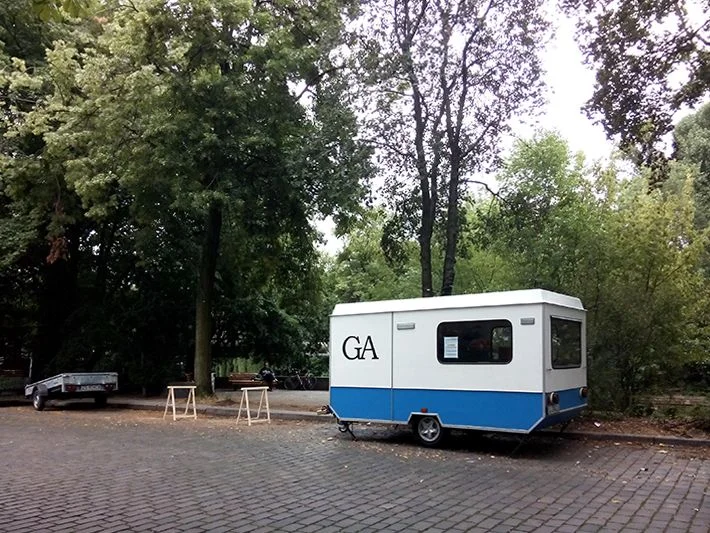
This 75-square-foot mobile office offers a coworking alternative
Coworking is all the rage—though the trend doesn’t come without its issues and challenges. By and large, coworking spaces are airy, open spaces with plenty of square footage and a sleek, glassy look common in new workplace designs. An outlier: This compact, solar-powered, 7-square-meter (about 75 square feet) mobile coworking space by German firm Guerilla Architects, which, if the photos are any indication, seats a maximum of two workers.
5 Things To Note When Deciding On An Office Fitout For Your Business
A glance of how your new office should like is the first thing you should think of. An office fitout will depend on the size of your business and staff, your budget, and preferences. All this will take a creative designer who understands your brand and the objectives you want to accomplish. Will the furniture you buy help create a good working environment? How do you get sets that fit your budget?
FITWEL: THE NEW STANDARD FOR GOOD HEALTH AND GOOD BUSINESS
On Tuesday, October 11, the AIA|DC Design + Well-being Committee hosted a panel discussion featuring Fitwel (facility innovations toward wellness environment leadership). The theme of the night was the health of our buildings, one of the biggest topics in our industry today. Fitwel is a building certification program that takes a deeper dive into the design, methodology, and certification standards that are becoming increasingly more important as the workplace shifts towards enhancing the human experience.
A collaboration between the Center for Active Design, Centers for Disease Control and Prevention, and GSA, Fitwel aims to be the right choice for your people and your bottom line by positively impacting employee productivity and health through targeted improvements in the built environment. The system has been in development for over five years, and encourages over 60 strategies that range from an openly-visible stair to the policies surrounding healthy food purchasing programs.
Flexibility in the Workplace: A ConocoPhillips Case Study
Earlier this August, I was part of a panel discussion and tour of ConocoPhillips’ most recent 500,000-SF facility in Houston, TX in the Energy Corridor as a part of CoreNet. The panel included the developer and two key ConocoPhillips team members involved in the initiative and implementation of the consolidation.
Learning from my design peers is such a fascinating way to keep abreast of all the information that is constantly being exchanged in the industry. This panel was no exception. In the discussion of this new development, we went in depth to look at one of the key drivers in the current workplace industry.
This key driver was flexibility.
FOUR KEY THEMES FROM THE CORENET GLOBAL 2016 NORTH AMERICAN SUMMIT
Each year, CoreNet Global’s North American Summit brings together the best minds in the corporate real estate world to share experiences and learn from one another. Held October 16-19 at the Philadelphia Convention Center, this year’s theme was “The Bigger Picture: Geopolitics, Economics and the Environment.” Opening and closing with inspirational speakers and filled in with extensive sessions on a broad array of topics and myriad networking opportunities, the conference is a favorite among end users and service providers alike.
The Top Four Things Millennials want from the Workplace
One of the most rewarding things about running a business is having the opportunity to help talented young people grow, develop and go on to accomplish big things within your organization. I’m proud that we are the kind of place where young people can build their careers, and that’s why Gensler is among Glassdoor’s Best Places to Work and on Forbes’s “America’s Best Employers for 2016” list. Growing talented professionals is a focus of our firm and an area that we actively invest in, and we are proud of our ever growing Millennial workforce.
VIDEO: What could the office of 2030 look like?
The way people communicate, work, shop, travel and think has changed dramatically as technology advances and becomes more widely adopted.
In addition, new working patterns and company structures are placing fresh demands on a workplaces’ ability to support flexibility and collaboration. Corporates today want to know that a building can improve and maximize employee wellbeing as well as enhance productivity and foster innovation.
As more process-driven elements of work fall to artificial intelligence, the companies of the future will be leaner and more dispersed. Many companies will need less space than in the past, owing to increasing efficiencies and maybe fewer numbers of permanent staff. Smaller firms, meanwhile, may only ever need a co-working space. In between these extremes is a need for more flexible collaboration space to satisfy the changing requirements of both corporates and start-ups.
As real estate enters a new data-defined era, driven by employees’ changing requirements, the workplace must respond rapidly. To find out how you could work tomorrow, take a look at the video.
Active Design Addresses Shrinking Office Space
The office as we know it is shrinking. Square footage allotment per employee has been on a steady decline year after year. With this comes smaller worksurfaces, employees working in closer proximity and a trend towards more open plan office environments. Needless to say, a reduction in square footage has a number of implications for employees and their work environments. 1.) Employee privacy is reduced 2.) Individual workstation square footage decreases 3.) Personal storage is limited 4.) Noise levels increase and 5.) Some may argue productivity suffers as a result of these affects.
There’s no indication that this trend will reverse itself anytime soon so organizations must get creative when planning environments for employees that align with space limitations but also accommodate their employees’ work styles. At KI, we believe Active Design not only addresses these issues but also encourages healthy, productive activity throughout the work day.
Designing a Campus to Drive a Culture of Innovation
Innovation—be it disruptive, transformative, groundbreaking, radical, revolutionary, incremental, ad hoc, or just by itself—the word is everywhere today. So ubiquitous is its use that many people argue it doesn’t really mean anything anymore; a Harvard Business Review article suggests that we should retire the term altogether
But while innovation may be overused, vague and easy to ridicule, at Gensler it still matters. It matters because innovation is what our clients expect of their real estate investment, particularly with large campuses, that it support the business leadership they strive for—new products and new ideas, speed to market, higher employee engagement, better customer relationships, and so much more.
Law Firms Keep Searching For Space Efficiency
“In many industries, the square feet per office worker continues to decline,” according to a Colliers International report on the legal sector’s office space use. “In contrast, law firms that have recently signed leases averaged 873 square feet per attorney, while law firms nearing the end of their leases averaged 790 square feet per attorney.”
The author of that report, Daniel Arends, serves as chair of the national law firm practice at Colliers from the firm’s offices in Chicago. “If there’s one thing I know from working closely with clients in the legal industry, it’s that efficiency is key for most lawyers,” he writes. “While lawyers are very deliberate about how they use their time in the office, I have noticed that many law firms are still looking for the right way to use their office space efficiently.”
Creating A Better Workplace Experience
Measuring productivity in the workplace is the Holy Grail of performance metrics. But, as CBRE points out in the second Paper in its three-part thought series, Better Business Performance Through Better Workplace Performance, it might be easier to measure barriers to getting work done than it is to measure productivity.
The trouble is, most workplaces haven’t kept up with either the technological or social changes that have redefined how we work. “In the course of a 10-year lease,” the Paper explains, “it is likely that the technology that enables our work will materially change two, maybe three, times. Occupiers coming to the end of their lease term in 2017 likely made decisions about their current work environment before the release of the first iPhone in 2007, which fundamentally changed how we consume information.”
HUMANIZING THE WORKPLACE
Traditionally, workplace design has prioritized building infrastructure and physical environment over the space’s inhabitants – the employees. Now, as employers shift the workplace experience in order to retain talent and adapt to workers’ changing needs, office design is becoming more human-centered. In this month’s news aggregate, we explore the humanization of the workplace and the implications of this trend for today’s workers.
STATE OF THE A&D INDUSTRY SURVEY RESULTS
The workplace is undergoing rapid changes and A&D firms are right at the center of it. As drivers of innovation, A&D firms are charged with satisfying their clients’ desires to incorporate all of the latest trends, now. In order to deliver meaningful solutions, new resources, and more impactful content, we teamed up with AgilQuest to better understand the state of the A&D industry today.
Who we surveyed
The majority of our 312 survey takers work in large firms. Twenty-six percent hail from firms of 250 or more, and over 63 percent of respondents work in firms of 30 or more. Responses from A&D professionals in firms of less than 30 clocked in at 23 percent.
To better understand the scope of their current work, we asked the respondents about their client base. Results showed that they primarily work with clients who have multiple locations, as opposed to 24 percent of survey takers who work mostly with clients in single locations.
Business Casual: Creating Workplaces That Foster Productivity
Over the last few years, the media has been weighing in on workplace design trends with articles like “The Open-Office Concept Is Dead” (Fortune magazine) and op-eds like “Google got it wrong. The open-office trend is destroying the workplace” (Washington Post). Unless you’ve been living under a rock, then you know these authors who may not be as embedded in our industry aren’t necessarily wrong: Research conducted and presented by office furniture manufacturers and major design firms like Gensler has suggested that open plans can actually impede productivity and employee well-being but they also point to possible solutions such as hybrid offices, where there’s compromise between open-office plans, casual lounge areas and privacy zones.
Traditional Workspace Or Virtual Office? Three Tips For Founders To Consider
You’ve taken the initial steps to get your company launched. Now it’s time to decide what type of office space you’ll need, and where. What kind of environment will fulfill your needs and be conducive to employee growth?
How to improve office breakout areas in organizations
Being a full-time employee myself I can completely comprehend with the importance of having breakout spaces in the workplace. Sometimes however, even when there is a breakout space for staff it may not actually get used simply because it’s not designed in a smart way.
I recently stumbled across a fantastic article on the http://blog.millikencarpet.com/ website that discusses this notion further. In my opinion, the type of furniture you use, the colour scheme & lighting are immensely important to get right.
Jonas van Put's Buzzijungle pushes the Traditional Boundaries of Workspaces
Created by Belgian designer Jonas van Put and presented at Orgatec, ‘buzzijungle’ for buzzispace is a project that presents a reflection of the designer’s vision on social offices, further pushing the traditional boundaries of the workplace. Its aim is it to elevate meetings and social interactions into a vertical office by encouraging users to interact with the structure and with one another. they can climb it, relax and meet in the elevated work-lounge space made from lacquered steel.
Quiet, sunny and views of the outdoors – is this America's most productive office?
It sounds more like a day spa than an office: a mile of walking trails, a cafeteria serving locally grown food, views of nature from almost every room in the building – including the stairwells – and a wood-paneled lobby designed to absorb excess sound.
Welcome to French manufacturing giant Saint-Gobain’s North American headquarters. Since moving into the Malvern, Pennsylvania building in October last year, Saint-Gobain has kept notes on the effect of these features on its employees, and compared it to its previous office seven miles down the road.
Green offices that keep staff healthy and happy
Employers, building owners, designers and developers throughout the world are showing that it pays to invest in greener offices that keep their occupants healthy and happy, a report from the World Green Building Council reveals.
Building the Business Case: Health, Wellbeing and Productivity in Green Offices highlights the global momentum behind healthy and green office design and operation, and showcases over 15 buildings that are leading the way.


