
Workplace

To Rethink Remote Collaboration, Google Takes Cues From The Analog World

To Rethink Remote Collaboration, Google Takes Cues From The Analog World

What makes an office whiteboard different from a screen? The simplest answer is that one is analog, and one is digital. But Johan Liden of New York-based brand strategy and product design firm Aruliden thinks the real answer is less obvious. At their best, "whiteboards encourage people to walk right up to them and start drawing," he says. Displays, on the other hand, don't. Even when they're big touch screens, their industrial design language somehow encourages a hands-off approach.

What makes a whiteboard approachable—and therefore, the perfect tool for brainstorming and collaboration—was the problem Aruliden needed to get to the bottom of when Google approached the firm last year to design the Jamboard. Although hardly the first digital whiteboard, Google wanted the Jamboard to be the best: a seamless physical extension of the company's G Suite of productivity and office apps, allowing people in an office to collaborate with anyone in the world, as easily as picking up a dry-erase marker.

Aruliden's solution? Borrow some of the design gestures of analog whiteboards to make the Jamboard feel more like a piece of furniture than a piece of technology.

Via fastcodesign.com >

The belly button problem and the self image of workplace professionals

The belly button problem and the self image of workplace professionals

An adherence to strongly held beliefs can make people think and behave in peculiar ways and get them tangled up in all sorts of peripheral issues that suddenly take on a great deal of significance. Early religious artists, for example, spent centuries wrestling with the intractable problem of whether to depict Adam and Eve with belly buttons or not. It’s a question that troubles theologians to this day but at least they can talk about it in metaphysical terms whereas artists have to choose whether to suggest that Adam and Eve were born rather than created, hiding the belly button completely or just going along with whatever and letting other people do the arguing. Many classical artists chose the latter although some chose to use a fig leaf to obscure both the genitalia and implied origins of their subjects.

Via workplaceinsight.net >

LEARNING FROM LEARNING DIFFERENCES: MOVING FROM TRENDS TO SUBSTANCE

LEARNING FROM LEARNING DIFFERENCES: MOVING FROM TRENDS TO SUBSTANCE

The discussion around individuals with learning differences and the importance of recognizing ones learning style as playing a role in, first, establishing meaningful ways of learning, and, later on, in self advocacy for securing a means for better performance in school and in work illustrates awareness of ones learning styles correlates to one’s performance. If designing high performance schools around learning styles as a means of achieving high performance is becoming common place, it is not difficult to then see how learning styles which inform work styles (an area of research that has been overlooked in all of the narratives around performance in the workplace) can have an equally important impact on designing and achieving high performance in the workplace.

Via workdesign.com >

Frog's New Office Is Designed To Protect Its Most Secretive Clients

Frog's New Office Is Designed To Protect Its Most Secretive Clients

Proprietary projects are part and parcel to design work—but so is collaboration. For in-house designers, those two concepts aren't necessarily at odds. But for design studios that take on outside clients, it can be a trickier line to toe.

This might be especially true for the global design firm Frog, which is so dedicated to the idea of close collaboration with clients that it has developed a habit of bringing them in-house for the duration of the project. So far, their San Francisco offices have been pioneering this way of working—most notably for an ongoing collaboration with the pharmaceutical company Pfizer—but it's spreading to their other offices as well. Case in point: the firm's new New York office, where the physical space was actually designed to complement this setup.

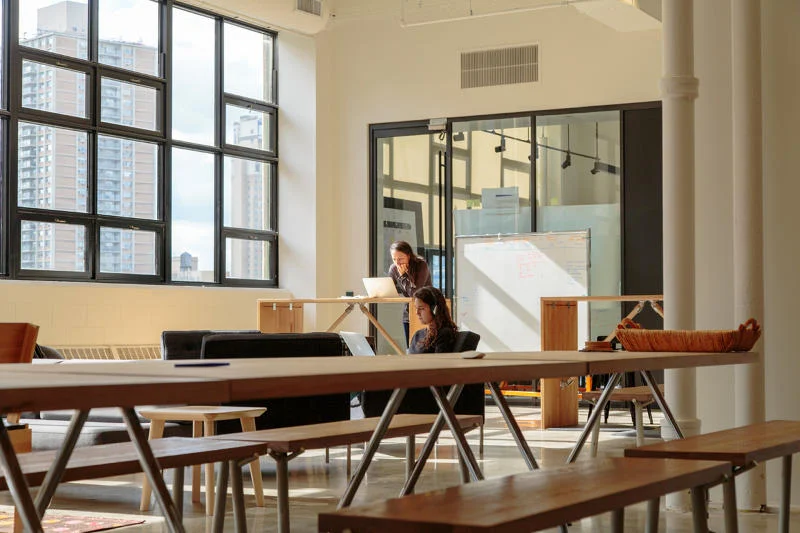
Frog found the 27,000-square-foot industrial space in the DUMBO neighborhood of Brooklyn over a year ago. Together with the New York architects SHoP, they set out to build an office that answered the question: How do you design for open collaboration as well as NDA-enforced privacy?

Via fastcodesign.com >

What the West can learn from China

What the West can learn from China

In recent years, Chinese companies have mastered the art of being bold and taking risks in their workplace design.

By applying creative thinking to ambitious projects, they’ve built a plethora of noteworthy spaces which have attracted attention from around the world.

Now, the economic slowdown and a more mature market are changing the way architects and developers approach new designs but beyond simply thinking big, there are still valuable lessons to be learnt for Western companies.

Via jllrealviews.com >

Report on coworking highlights tough realities behind new workspaces

Report on coworking highlights tough realities behind new workspaces

Coworking behemoth WeWork earned a jaw-dropping $16 billion valuation, just as the coworking economy nationwide posted a stellar 10 percent growth rate last year. And new, more specialized spaces, including The Wing, a coworking hub for women, have opened, giving freelance workers more options than ever to find a comfortable place to be creative.

While the these new types of trendy workspaces have enjoyed impressive growth, it’s not all good news in the world of coworking. A new report by global planning, design, and architecture firm HOK, Coworking: A Corporate Real Estate Perspective, looks beyond the meteoric rise and offers a sober assessment of the coworking business. The overarching theme is: don’t believe the hype. 

Via curbed.com >

What We Learned From Touring Squarespace's Gorgeous New Headquarters

What We Learned From Touring Squarespace's Gorgeous New Headquarters

Forget about perks. The founder and CEO of Squarespace says he believes that the right office design is the key to a productive workplace.

From my first step into Squarespace’s new headquarters in Manhattan's West Village, it was clear what Anthony Casalena and his team are all about. While other tech companies focus on perks such as gourmet food and massages, Squarespace’s New York headquarters reflects the company’s core values of simplicity and elegance. It’s no surprise that the company’s motto is “Make It Beautiful.”

Via entrepreneur.com >

Two-thirds of British workers more productive working in the office

Two-thirds of British workers more productive working in the office

Despite half (50 percent) of the British workforce saying they are equipped with the right tools and technology to enable them to work anywhere, half (50 percent) of respondents to a new survey stated that remote working can make them feel stressed, isolated or lonely (43 percent) and over half (53 percent) said that working out of the office makes them feel disconnected from colleagues. The survey from Peldon Rose, found that two-thirds (66 percent) of British workers say they work most productively in the office compared with a quarter (26 percent) who work most productively at home. The survey results also underline how vital close working relationships with colleagues are to employees’ happiness, wellbeing and productivity with nine in 10 (91 percent) of office workers stating they value their friendships within the workplace and 80 percent crediting their friendships with colleagues with helping them to be more productive at work – something they feel boosts their productivity even more than personal technology (66 percent).

Via workplaceinsight.net >

Millennials have just the same needs for peace and quiet as everybody else

Millennials have just the same needs for peace and quiet as everybody else

Asked for the dream millennial workplace, most people would probably envision a brightly colored open environment with pool tables, bean bag chairs and maybe a small basketball court. But it turns out that young people in the workplace have the same psychological requirements as the old crowd, and may even be more sensitive to distractions. A recent study by Oxford Economics suggests that distractions in the workplace are seriously hindering people’s ability to concentrate and perform, with little recognition from above. The transition to open offices since the end of the 20th century and the environmental factors they bring into play may be affecting people’s mental health, reducing employee happiness and thereby the bottom line of business performance.

Via workplaceinsight.net >

How tech giant EMC standardised the design and management of its office portfolio

How tech giant EMC standardised the design and management of its office portfolio

This summer’s headlines have been full of discord, a cacophony of angry voices either directed at continental Europe, or at the Brexiters who voted for Britain to leave the European Union. But EMC, a global leader in information technology-as-a-service which has recently been acquired by Dell, is a leading light of European integration through its One Team approach to workplace management and design across Europe, the Middle East and Africa (EMEA). Over the past three years, the EMC Global Real Estate and Facilities Team (GREF), which supports more than 12,000 people in around 130 office locations across 50 countries in EMEA, has transformed from a group operating independently, to a fully-aligned team which provides a uniform and standardized approach to workplace delivery and management to enable greater business success.

Via workplaceinsight.net >

Can A Building Engineer Innovation?

Can A Building Engineer Innovation?

Innovation is a buzzy thing in architecture today. It's nearly impossible to avoid projects that claim to be purpose-built to spark the invention of new ideas, from individual buildings to campuses to entire city districts. But can you actually engineer innovation? Is it something that can be designed, or is this just another clever real estate marketing tactic?

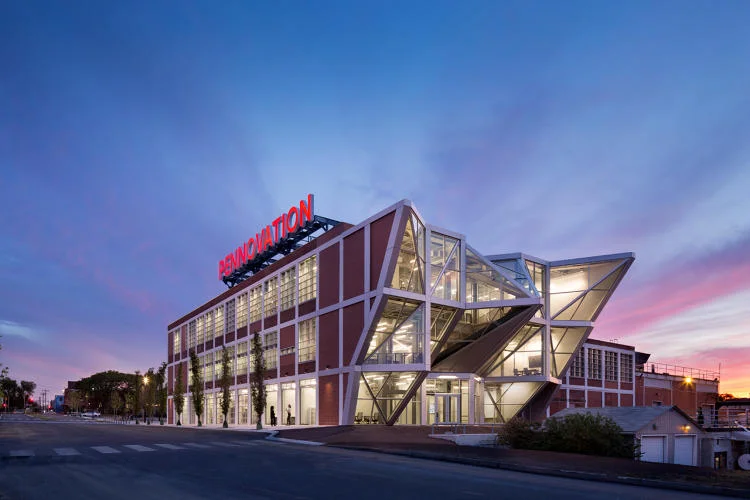
The recently completed Pennovation Center in Philadelphia is the latest to be admitted into the Innovation Architecture Class. A renovation of a former factory, the project anchors the University of Pennsylvania's 23-acre Pennovation Works district, an area of the campus specifically designed to be the site where the next big thing is invented—and turned into a business.

Via fastcodesign.com >

Workplace Strategy Isn’t Just For Large Companies

Workplace Strategy Isn’t Just For Large Companies

The elements of mobility, wellness, choice of space, amenities and technology are universal to all size companies, CBRE’s managing director Paul Komadina tells GlobeSt.com. He says that today’s workplace experience is transforming, and CBRE’s workplace-strategy services are a value-add to tenants, are scalable and help create an environment that will attract and retain a talented workforce.

Read more about this on globest.com >

New HOK/CoreNet Global Report Explores Impact of Coworking on Corporate Real Estate

New HOK/CoreNet Global Report Explores Impact of Coworking on Corporate Real Estate

Coworking is one of the fastest-growing sectors of the commercial real estate market. The new report, Coworking: A Corporate Real Estate Perspective, examines the drivers of coworking from the demand and supply sides, the industry risks and implications for corporate real estate, as well as information about the owners, coworkers and centers.

The HOK/CoreNet Global Coworking report highlights the ideas that changing business priorities and the need to attract talented people, reduce real estate costs, improve speed to innovation and increase productivity are driving corporations to consider different workplace models, including on- and off-site coworking.

Via hok.com >

IIDA DESIGN WATCH: WHAT WILL THE WORKPLACE BECOME?

IIDA DESIGN WATCH: WHAT WILL THE WORKPLACE BECOME?

Work as we know it has shifted. With evolving demographics, immersive technology, globalization, and the blur between our personal and professional lives, what endures and what doesn’t? IIDA Executive Vice President and CEO Cheryl S. Durst, Hon. FIIDA, LEED AP, shares her insights on the top topics in workplace design today, the challenges designers face with an ever-changing workforce, and the workplace as the next level of education.

Via designmatters.iida.org >

Gartner report identifies the Top 10 strategic technology trends for 2017

Gartner report identifies the Top 10 strategic technology trends for 2017

A new report from tech analysts Gartner highlights the top technology trends the firm believes will be ‘strategic for most organizations in 2017’. Gartner defines a strategic technology trend as one with substantial disruptive potential that is just beginning to break out of an emerging state into broader impact and use or which are rapidly growing trends with a high degree of volatility reaching tipping points over the next five years. They include artificial intelligence, blockchain, intelligent devices, digital technology platforms and advanced machine learning.

Via workplaceinsight.net >

Offices of the Future Won't be Modeled on Factories of the Past

Offices of the Future Won't be Modeled on Factories of the Past

Imagine someone typing at a multidirectional treadmill desk, wearing VR goggles, drinking triple-ozonized spa water, hosting a virtual meeting, all from a one-bedroom apartment.

Got that image? Well good, you’re probably not picturing the office of the future. For the next 10 years, people are still going to think, jabber and poke keyboards in shared physical spaces. But unlike the spaces we’re used to, the office of the future will have an untraditional purpose: to help you accomplish audacious, outer-space things.

Via entrepreneur.com >

Transforming The Future Of Work: Top Five Trends

Transforming The Future Of Work: Top Five Trends

Buildings and space that anticipate your needs. Collaboration with robots. Cafes, parks, and airports as the new office.

The workplace is evolving more rapidly than ever, and employers have seen dramatic shifts in where, when, and how employees work. Here are five workplace trends that organizations should know so that their facilities can best support a digital, flexible workforce, according to JLL.

Via facilityexecutive.com >

Everything You Need to Know About Building Certifications

Everything You Need to Know About Building Certifications

Today’s developers have a lot more to consider than just the local building code and the laws of physics when designing a new property or renovating an existing one. Working through the seemingly endless list of building certifications can become a massive project in its own right. That’s why below, we’ve broken down the major certifications by category and their major benefits.

Via gethightower.com >

How Microsoft Used an Office Move to Boost Collaboration

How Microsoft Used an Office Move to Boost Collaboration

What type of office design is best for productivity and engagement? Today, this common question tends to have two distinct answers. On the one hand are the tech start-ups, who advocate for open office plans that emphasize chance encounters. Google’s new campus is designed to maximize chance encounters, and Facebook’s new headquarters features the largest open office in the world. Samsung is also exploring the use of more outdoor space to encourage employee conversation. As Scott Birnbaum, vice president of Samsung, told HBR, “The most creative ideas aren’t going to come while sitting in front of your monitor.” Their new building “is really designed to spark not just collaboration but that innovation you see when people collide.”

On the other hand is research about people’s preferences, like this 2013 study in the Journal of Environmental Psychology that, according to its authors, “categorically contradict[s] the industry-accepted wisdom that open-plan layout enhances communication between colleagues and improves occupants.” Another study demonstrated that the noise resulting from open office designs is a huge drain on employee morale.

Via hbr.org >

4 office design lessons learned from Zurich North America’s new HQ

4 office design lessons learned from Zurich North America’s new HQ

Zurich North America recently opened its new Chicago-area headquarters located on 40 acres in Schaumburg. The new 783,800-square-foot HQ will be home to nearly 3,000 employees and contractors. Looking back on the experience, there are a number of lessons learned we would like to share for others tackling workplace projects.

Via bizjournals.com >