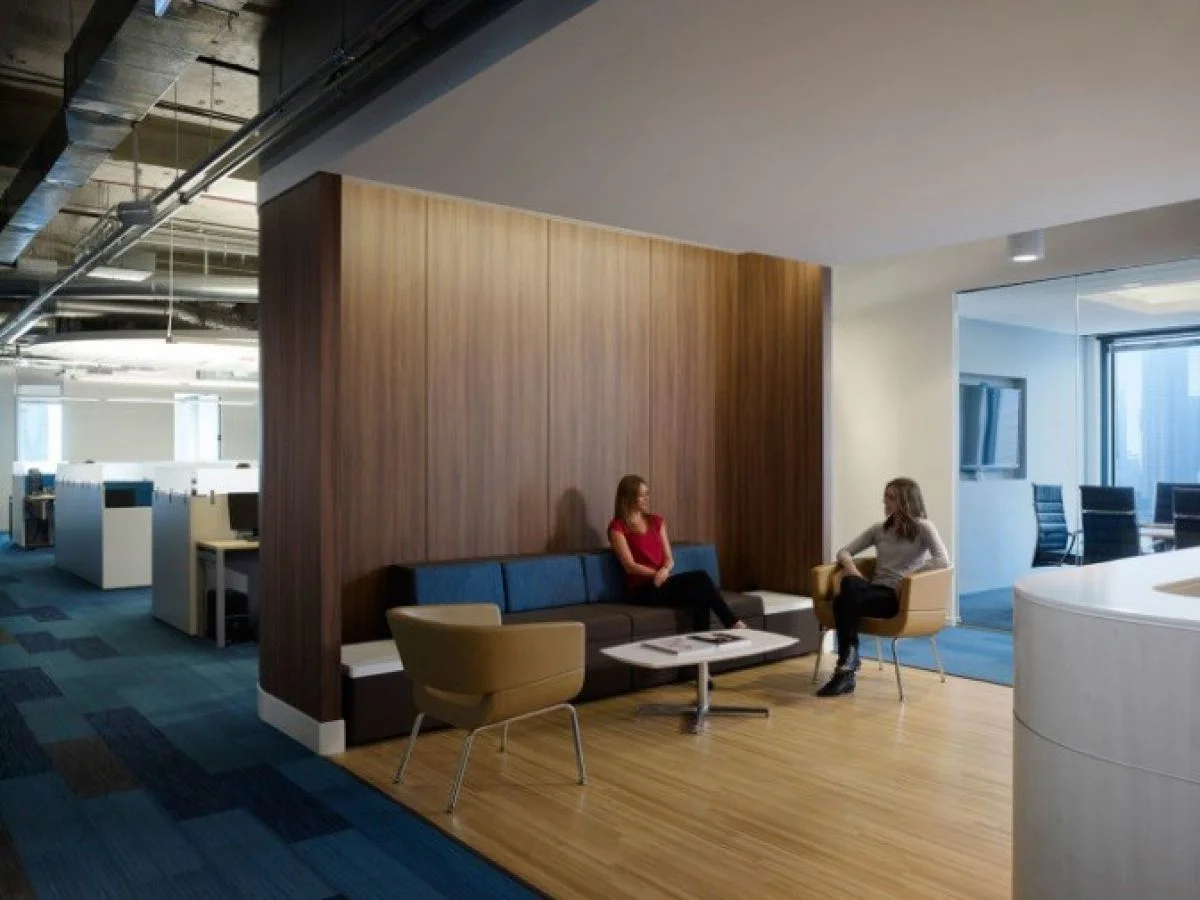
For companies, a strengthening economy has many pros and, surprisingly, a few potential cons. Booming business means increased capital and the ability to bring on new team members. At the same time, office leasing rates are climbing. Offices rental rates in downtown Fort Lauderdale have reached $36 per square foot and rates in Miami’s Brickell area are climbing as high as $45 per square foot.
1994: the year the newborn Internet set office design on a different path
Because we are now so immersed in technology, we can sometimes forget just how young the Internet is. It was only in 1995 that the final barriers to its full commercial development were removed. In 1994, the number of people using it worldwide was estimated at around 20 million, there were under 15,000 company websites and the UK had one ‘cybercafe’. Even so, there was something in the air. A sense that everything was about to change – and change pretty spectacularly. The management writer Charles Handy was outlining a new world of work in which people developed portfolio careers, organisations were formed from ‘shamrocks’ of freelancers, core staff and part time employees, a world in which half the people would work twice as hard. There was excited talk about new forms of office design and ways of working such as telecommuting and hot desking. The world that emerged has broadly followed the trajectory of these forecasts, even if the details have proved very different.
Beyond Open Plan: Bringing Privacy Back to the Workplace
Once upon a time, cutting-edge office spaces consisted of restrictive cubicle walls that hindered communication. Since then, the trends of workplace design have veered from one extreme to another: designers have been creating open plan workplaces, many with acoustic problems and a debilitating lack of privacy. Design firms and manufacturers are now attempting to scale back, searching for a happy medium that allows for both spirited collaboration and private reflection. Metropolis talked to Jennifer Wammack and Mitch Bakker from Michigan-based design studio IDa about three of their recent collections of flexible office furniture designed in collaboration with Gunlocke, to hear their insights into ways of creating seamless transitions between collaborative and private spaces in office design.
5 Office Design Trends That Will Wow You in 2017
As W. Clement Stone once said, “You are a product of your environment. So choose the environment that will best develop you toward your objective.”
That’s what employees around the world seek, and that’s what office managers responsible for creating efficient spaces strive to remember when setting up workplaces that would not be just shelters for workers but also strategic tools for their productivity and growth.
Yearly, experts take a try to predict the most useful trends in office design. These have inspired us already, but 2017 is on its way with new predictions and trends. What is more, it’s going to be a year when Generation Z enters the workforce: born between 1994 and 2010, they are even more entrepreneurial and flexible in their approach to careers compared to Gen Y. 60 per cent of them wants to have an impact on the world with their jobs, so it might be challenging for employers to create the ideal offices, which would satisfy their needs and motivate them to work.
Move Over Standing Desk: NiceBalls are the New Cure for Work Stress and Late Capitalism
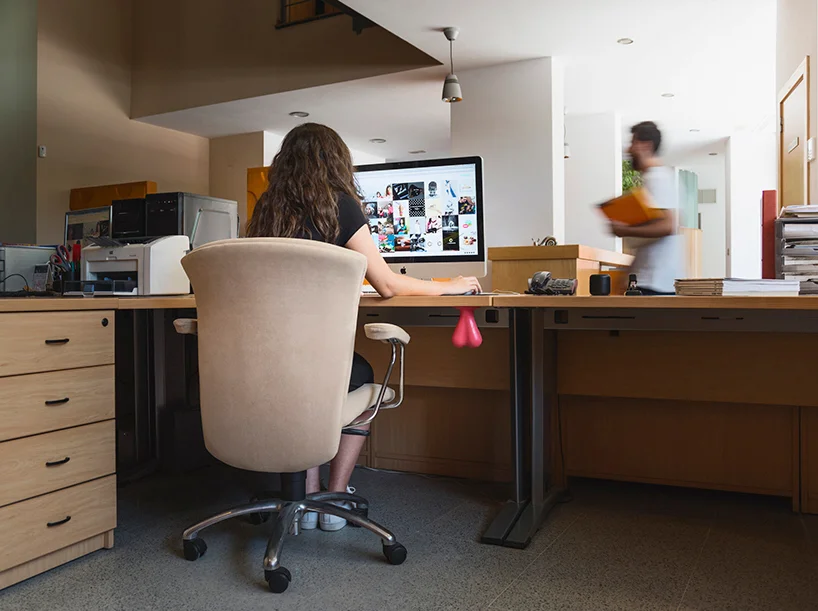
Finally, finally, they've made a pair of prosthetic balls for your desk. Why? Because you can't telecommute from your truck, and exposing your workspace to exposed pink lumps is great for de-stressing. Maybe you're exhausted by the creative industry grind, fed up with chaotic freelance juggling, or just stressed out by rampant structural sexism in the workplace. Get you a set of the ('impossibly limited edition') NiceBalls suction-stick cojones and with a few quick death grips you'll be feeling right as rain! At least you will if you can also afford healthcare.
How workspace trends, technology impact real estate decision-making for major Charlotte companies
Panelists at Wednesday’s CoreNet Global Carolinas mega event in uptown Charlotte largely agreed on one theme: evolving workspace trends have become a big deal in commercial real estate.
“We’re creating a workplace environment that allows workers to be at their most productive,” said Calvin Saboorian, managing director of real estate at Duke Energy (NYSE: DUK), speaking at one panel that examined workplace strategies in commercial real estate. “We’re starting at the bottom and going up.”
One Designer’s Vision of the Future Comes to Life
Steelcase global research shows the workplace can be an important tool in engaging employees. The workplace can do this by placing an emphasis on the wellbeing of people, considering their physical, cognitive and emotional wellbeing needs at work. There is a cultural movement in office design to create thoughtfully curated office spaces that are more human-centered — focusing on design, materiality and performance.
This interview with George Pritchard, IV, Director of Interior Design with KSQ Design is an installment in our series of interviews with architects and designers discussing this evolution of the workplace. KSQ Design restored the historic Gates Hardware Building in Tulsa, Oklahoma where they relocated their 63 person office. Here is what George had to say about KSQ and the design of his team’s new office.
This Building Certification Promises to Make Employees Healthier
Buildings with green labels are nothing new. But, a building that “cares” about your health and well-being and engages you to make healthy choices in your own space — now that’s something new.
The WELL Building Standard is a new building certification gaining traction nationally that not only focuses on the “built” indoor environment, but also emphasizes the health and wellness of people in the building.
If you haven’t heard about WELL, you will. It’s relatively new – debuting in 2013 – but it’s being touted as the first building standard worldwide focusing specifically on the health and wellness of building occupants.
Proponents of the certification say it makes sense to keep your employees happy, healthy, and more productive as it translates directly to the bottom line. Businesses should see an increase in productivity if employees are engaged and happy in their workspace, and building owners should benefit by charging top rates for these healthier workplaces, reports the Urban Developer.
Sensory response to workplace environment influences performance
Improving employees’ physical and emotional response to their working environment – from the look and feel of a workplace to non-visual sensory inputs such as smell, noise and temperature – can significantly improve productivity and cognitive performance, a new report suggests. According to Decoding the workplace experience: how the working environment shapes views, behaviours and performance the workplace experience is not just about how well the workplace satisfies functional needs, it is about the overall impression it leaves on the user; and the way an employee experiences an environment is emotional and occurs potentially at a subconscious level. Sensory influences such as the smell, noise and temperature of the working environment are among the main factors that influence employees’ experiences of the workplace and do impact productivity and performance. Expectations of the workplace also change depending on personality, background and numerous other factors; which is why understanding your workforce is the key to creating an effective workplace experience.
Can We Design for Happiness in the Workplace?
A new study out of UV Amsterdam reveals that certain genes control up to 50 percent of an individual’s happiness. But many experts agree that nearly 40 percent of our remaining happiness is a direct result of free will expressed through choices and actions. For example, some people may choose to spend time with family and friends, to volunteer for a worthy cause, or pursue physical activities that contribute to a sense of happiness and satisfaction. The common factor in most of these choices is the connection with people that creates groups or social networks. In part, it seems that we choose to participate in group activities to increase feelings of happiness.
Do’s And Don’ts Of Designing Open Plan Office Interiors
Open plan offices are becoming increasingly common in modern workplaces. Instead of workers beavering away in small cubicles, as was common in the 60s and 70s, many companies now favor open plan light, bright working areas where colleagues can collaborate on projects and the space remains fluid and versatile. Visitors can hot desk and furniture can be moved around to accommodate different needs. So what are the do’s and don’ts if you are in charge of coming up with some ideas for a company’s new office space?
A Look Inside CBRE's Incredible "Second Shift"
CBRE is known for having cool offices. Just look at its Workplace360 initiative, which transformed cubicled offices into collaboration perfection.
But, CBRE outdid itself when it opened an office in a repurposed Masonic Temple. Opened in January 2016, CBRE moved into a recently renovated Masonic Temple in Glendale, California. The new location quickly became known as one of the company’s most impressive offices, with a strong emphasis on state-of-the-art hospitality, technology, and wellness amenities.
Welcome to the World's Coolest Offices of 2016
Office Envy What's cool this year? Sustainability is key, as you'll see in these light-soaked spaces with natural materials. Flexibility is the rule. And bold patterns and distinctive architectural choices abound. Take a look inside our 10 favorites.
Productivity, And The Power Of Place
Leaders around the world know employee engagement is a serious, bottom line issue. Businesses need people who come to work energized, ready to tackle whatever tasks lie in front of them, and willing to generate new ideas and strategies. But the reality is there are not as many engaged employees as organizations need. In fact, according to Steelcase research, the number of disengaged workers outnumbers that of engaged workers. Solving for disengagement involves many variables, but recent research confirms the importance of the physical work environment on employee attitudes, behaviors, and ultimately employee engagement.
Engagement in the workplace: Workplaces designed like home
The idea of the perfect home came about over thousands of years centered around what would make a person happy if they were there all day. They have personal spaces where they rest, sleep, maybe a work room. They have common spaces where they cook food, eat food, use electronic devices, a playroom.
But now they’re not at home all day. They’re at the office.
Workplace Strategies that Enhance Performance, Health and Wellness
Smart organizations understand that their primary goal is to enhance the performance of their people. In a knowledge work economy, people are the engine that keep companies growing, adapting, improving and innovating.
Not surprisingly, thoughtful workplace design can be a powerful tool for supporting employee performance. And a collateral benefit is that what typically supports productivity also enhances employee health and wellness – it’s all interrelated.
Given the nature of today’s work processes, how can the workplace better support human performance? How can the workplace support all of the different activities involved with knowledge work – things like collaboration, creativity, innovation, deep thinking and mentorship?
One way to better understand the nature of human performance is through a definition used by organizational psychologists, who believe it is enabled through a blend of ability, motivation and opportunity.
LEARNING DIFFERENCES AND WHAT THEY MEAN FOR WORKPLACE STRATEGY
Developing workplace strategies around trends or benchmarking has always been of great concern to me. Many clients want to know what the latest trends in workplace design are, what others in their industry are doing. Workplace designers have been all too accommodating in providing this data and information, often at the expense of better research into how to quantify performance and uncovering more substantial information that better connects a particular workplace design strategy to an organization’s performance.
Retooling AI for the workplace
One of the first computers required punch cards. I repeat, punch cards. Yes, you would take a piece of paper with tiny holes and use it to interact with the device.
Now we have computers the size of soda cans that sit in your house and control your lights, provide weather updates, solve math equations and tell jokes, all by simply speaking to them… and some of them have better jokes than my actual friends.
All Wall Solutions Are Not Created Equal
The planning and construction of healthcare facilities is no small feat. From conception and construction to completion, building and designing environments for healthcare is a technically-involved process. Architects and designers must take into consideration infection control, surface material finishes, acoustics, patient privacy … the list goes on and on. They are also operating within strict budgets and timelines. One of the most important aspects in the construction process is the delineation of space -- or wall construction in a facility. While you might assume facilities put up drywall and call it a day, there are alternative architectural wall solutions that save time, money and offer benefits beyond traditional construction.
This Concrete Ping Pong Table Is A Perfect Monument To Silicon Valley
Striking minimalism meets the most cloying office trend.
Despite all of the investment Silicon Valley companies put into the interior design of their offices—from private James Turrell rooms to Dutch waffle-cookie ceilings—foosball and ping pong tables still make make our modern workplaces look like some set out of Big. Games! Tournaments with prizes! Work 80 hours a week and never grow up!