
Workplace

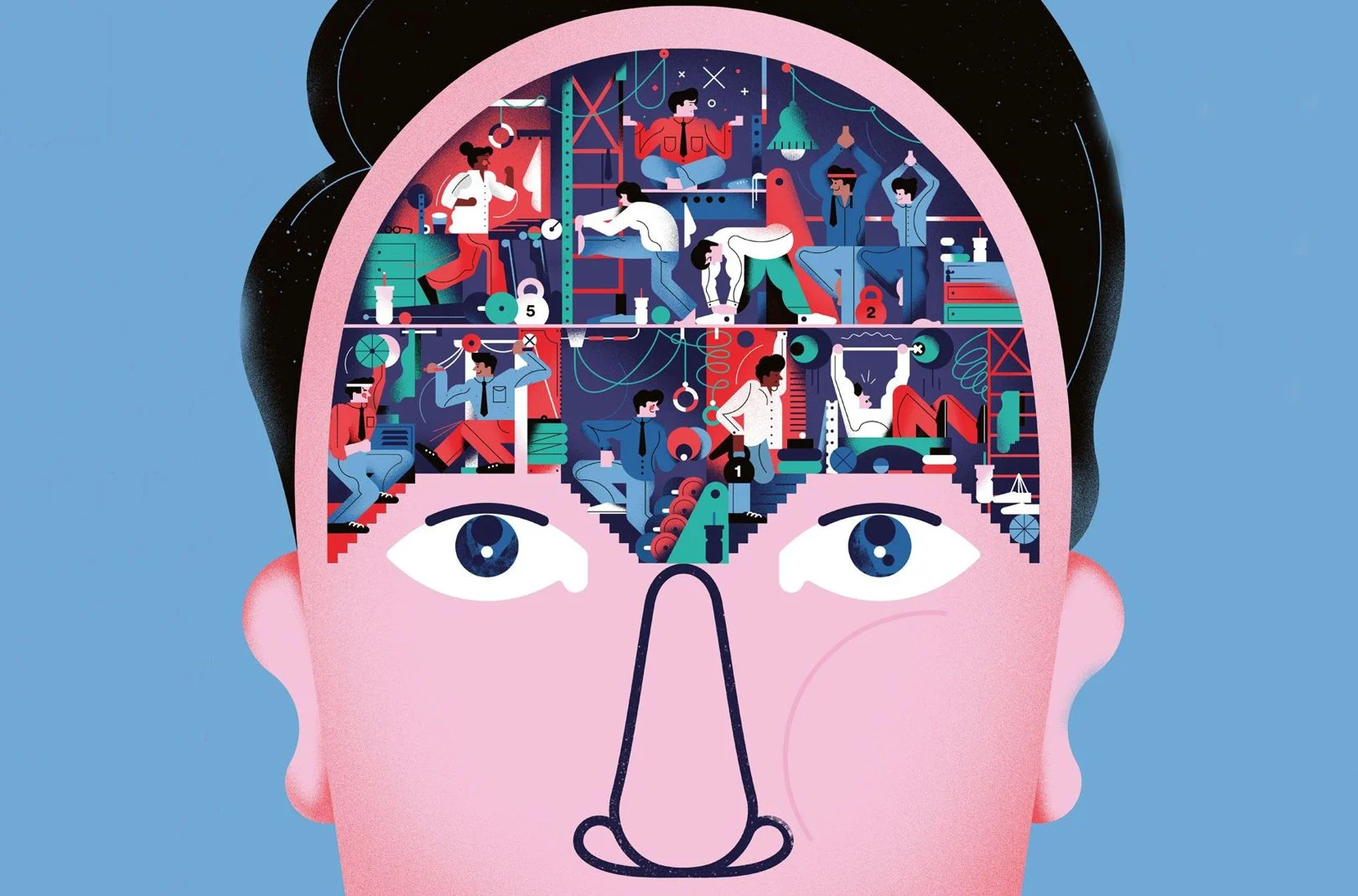
Do people really matter when we design workplaces?

Do people really matter when we design workplaces?

Some may think this question is a daft question. They’ll argue that of course people matter when we design workplaces. Granted, there are those for whom the human experience of the built environment is really important.  They demonstrate this it in their attitudes and actions. However, based on some of the attitudes and actions I have observed over the years, I would suggest that the belief that people really matter when some designers design workplaces for them is quite frankly all too often skin deep. How do we know this? And if we accept that it is true, it then begs the secondary question of why this should be the case. Is it entirely our fault? What might we do to address the issues? In part, we know that people haven’t really mattered enough in design because of mistakes of the past. Meanwhile, society is facing many pressing challenges, ranging from health to housing, work to economy and climate change to resource depletion.

Read the article on workplaceinsight.net

Office Obsessions: Bethany DeLine

Office Obsessions: Bethany DeLine

An eclectic designer at HGA's downtown Minneapolis office imparts the virtues of bold office art and forward-thinking space planning. Awesome offices support positive mood and healthy lifestyles. Designing a place where people may spend the majority of their time is a very influential position to be in - so why not make happy places? Providing as much access to daylight as possible is a primary goal when I’m space planning, and if our clients haven’t specifically requested amenities from the get-go, early planning is a great time to start conversations about how community spaces, such as a work café, can uplift corporate culture.

Read the article on kontor.com >

Flexible working patterns may make us more susceptible to infection

Flexible working patterns may make us more susceptible to infection

We are more susceptible to infection at certain times of the day as our body clock affects the ability of viruses to replicate and spread between cells, suggests new research from the University of Cambridge. The findings, published in the Proceedings of the National Academy of Sciences, may help to explain why people who work outside normal working hours are more prone to health problems, including infections and chronic disease. The time of day of infection can have a major influence on how susceptible we are to the disease, or at least on the viral replication, meaning that infection at the wrong time of day could cause a much more severe acute infection. According to the study, when a virus enters our body, it hijacks the machinery and resources in our cells to help it replicate and spread throughout the body. But, the resources our body has to fight infection fluctuate throughout the day, partly in response to our circadian rhythms – in effect, our body clock.

Read the article on fastcodesign.com >

The Number One Reason Employees Should Use Collaboration Tools

The Number One Reason Employees Should Use Collaboration Tools

When it comes to social media, are you a poster or a lurker? Do you avoid sharing blog posts, updating information on LinkedIn, or sharing your thoughts on Twitter? If so, it might be time to rethink your professional online footprint.

At the center of the future of work are workplace collaboration tools. Nearly everything else that is a part of the future of work, from flexibility to real-time feedback and gamificiation, is only possibly because of collaboration tools, or internal social media sites. There are a number of platforms to choose from, giving organizations options of what will best serve their employees and customers. These platforms are vital for forward-thinking companies, but many organizations find that their employees are hesitant to use the services. There are a lot of reasons why you should contribute to a workplace collaboration tool, but the biggest comes down to your own career: it sets you up for success. In fact, fully utilizing collaboration tools could be the single thing you could do for your career.

Read the article on inc.com >

Bringing College to the Workplace

Bringing College to the Workplace

The job market is finally looking up for college students. This year, employers expect to hire 11 percent more new college graduates than in 2015. More than four in ten employers described the job market as "very good" or better for this crop of graduates. Yet most employers struggle to integrate young hires into the workplace. The difference between the working environment of a college student and an entry-level employee is enormous. This disconnect can be costly. Unhappy workers tend to be unproductive and are more likely to leave. That forces companies to spend more on recruiting -- and harms their reputations.

Read the blog post on blog.ki.com >

The traditional office is still very much alive, but it is changing

The traditional office is still very much alive, but it is changing

A skim through workplace features in the media and you’d be forgiven for thinking that the traditional office is no longer with us. According to the narrative, we’re all now 20-somethings, working in open-plan warehouses, with table football, bean bags and comfy sofas to lounge on, while drinking our custom-made soya lattes. When in actual fact, while more relaxed, fun and funky offices tend to make the headlines, the majority of people still work in a relatively traditional way, with their PC or laptop, a desk and an ergonomic task chair. What’s more, with an ageing workforce, we certainly aren’t all 20-somethings, with DWP (Department of Work and Pensions) figures revealing that the employment rate for people aged 50 to 64 has risen by 14 per cent in the last 30 years, and doubled for over 65s. So designing with just the youngsters in mind simply doesn’t add up. Recent research by the Senator Group, backs up this view.

Read the article on workplaceinsight.net

Is Health the New Carbon?

Is Health the New Carbon?

Our built environment has a profound impact on our health, well-being, happiness and productivity. It can shape our habits and choices, regulate our sleep-wake cycle, drive us toward healthy and unhealthy choices, and passively influence our health through the quality of our surroundings.

Health and wellbeing is described by experts as the next megatrend and is rapidly approaching, if not here already. Figures from the Global Wellness Institute suggest that the global wellness industry is a $3.4 trillion market, with latest research indicating that for every $1 spent on workplace wellness programmes, cost savings of $6 are generated. New tenants from banks to barbers are putting out RFPs stipulating health and wellbeing as a central requirement.  With 92% of the cost of a company the staff working in it, maximising the health and wellbeing of the workforce – and therefore their productivity, morale, and initiative – is a massive opportunity.

Read the article on 3bimedia.com >

Healthy Workspaces Boost Employee Morale and Productivity

Healthy Workspaces Boost Employee Morale and Productivity

While most employees would agree that their environment has an impact on their health — and evidence-based research supports this — how many have considered whether the workplace promotes a healthy lifestyle and helps them achieve their wellness goals?

Janine Grossmann, Practice Leader of Interiors for the Ontario offices of Perkins+Will, works with clients in designing their workplaces and determining how to incorporate strategies that help promote health. She recently spoke to Area Development about health and wellness in workplace design.

Read the article on areadevelopment.com >

Patagonia's CEO Explains How To Make On-Site Child Care Pay For Itself

Patagonia's CEO Explains How To Make On-Site Child Care Pay For Itself

To support our families, Patagonia provides company-paid health care and sick time for all employees; paid maternity and paternity leave; access to on-site child care for employees at our headquarters in Ventura, California, and at our Reno, Nevada, distribution center; and financial support to those who need it, among other benefits. In particular, offering on-site child care, we believe, is the right thing to do for employees, working parents, and the life of the workplace.

Read the article on fastcompany.com >

THE NEW HEADSPACE HQ IS THE HAPPIEST OFFICE IN THE WORLD

THE NEW HEADSPACE HQ IS THE HAPPIEST OFFICE IN THE WORLD

Imagine an office in which health and happiness are at the core of everyday life. Wellbeing comes first, work comes second. Only one office of this kind exists in the world and it belongs to the brains behind Headspace - the meditation app dubbed "a gym membership for the mind". Headspace, along with its 80 employees, has now found some office space of its own - in the new happiness-orientated HQ in Santa Monica, Los Angeles.

Read the article on gq-magazine.co.uk >

Workplace Study Reveals Insight On Open Office Layouts

Workplace Study Reveals Insight On Open Office Layouts

Workforce resistance to open office layouts has been well-documented, and the pervasiveness of this topic requires comprehensive analysis to understand the various factors contributing to employee willingness or reluctance to working in an open plan. SCG created “The State of the Open Office” Research Study to serve as an instrument to measure workforce, organizational, and geographical sentiments and trends for open office layouts.

Read the article on facilityexecutive.com >

Google, Microsoft, and Quartz are Embracing the Makerspace

Google, Microsoft, and Quartz are Embracing the Makerspace

As startups grow, the struggle to maintain an innovative company culture never stops. In recent years, communal “rec rooms” – where employees can tinker with side projects – have become an integral element in keeping staff engaged, generating new ideas, and averting burnout.

These workshops, makerspaces, and hackerspaces (the terms are often used interchangeably, but here are some definitions) typically resemble a nerdy man cave, with tools, wires, and gadgets centered around a woodshop table.

Read the article on uncurbed.com >

Three Scenarios for the Future of Work

Three Scenarios for the Future of Work

A lot has been said about the future of work, but no one knows for sure what things will really look like. The best companies have constantly evolving strategies that incorporate talent management, human resources, and analytics. To start a conversation about the future of work, consulting giant PwC, led by Toni Cusumano, created three different scenarios for the future of work, which they broke down into worlds. These visions aren't to say that one scenario is better than the other, but rather to encourage organizations to consider what they would do if the workforce looked different and how they would adjust their strategies to stay relevant and successful.

The first world is the orange world, where small is beautiful. This world is run by companies that are broken down into collaborative networks of smaller organizations. Instead of huge conglomerates, the orange world is run by specialized smaller companies that operate on a low impact/high technology model with a goal to maximize flexibility and minimize cost. In the orange world, big businesses and corporations start to decline and are replaced by smaller, flexible organizations that provide workers with autonomy and a variety of ways to work. Instead of employees taking traditional career paths and staying with the same company for years, the orange world is ruled by a large contract workforce. This world is supported by PwC's research that found that two out of five people believe traditional employment won't be around in the future. The orange world is also reflective of the growing amount of Millennials in the workplace.

Read the article on inc.com >

The office will always live on because nothing propinks like propinquity

The office will always live on because nothing propinks like propinquity

Perhaps the most pervasive and enduring myth about the office is that it is somehow dying off. It’s a blast of guff originally farted out at the dawn of the technological revolution in the early 1990s, which has somehow lingered and been stinking the place out ever since. The essential premise behind the idea of the death of the office is that mobile technology makes it possible for us to work from ‘anywhere’ and so that must mean ‘somewhere’ is no longer needed. It’s an alluring idea, partly because it seems reasonable enough so is especially attractive if you’re looking to make some bold statement about office design based on very little evidence or if you have a vested interest in getting more people to buy into the idea that it’s a goner. That is why you’ll hear it most from PR people, journalists who haven’t the time or inclination to look into the subject properly – and technology and telecoms companies.

Read the article on workplaceinsight.net > 

Design for movement

Design for movement

At a basic level, architecture is like a shoe: a useful tool designed to protect the human body from harm caused by the natural elements.

Yet over time, we can become over-reliant on its comfort, losing our dexterity and our ability to withstand even the slightest discomforts. So what is meant to help us may, in fact, hinder us by making things too easy, removing all physical challenges and other stressors that are essential for optimal health.

Read the article on news.harvard.edu >

TRY THESE SPACE HACKS IN YOUR OFFICE!

TRY THESE SPACE HACKS IN YOUR OFFICE!

As humans, we often make modifications to the environments we inhabit to better serve our needs. In some spaces we have more freedom to make changes than others. In our own homes, the sky’s the limit when it comes to the way we customize our living spaces. But what happens when we enter the workplace? This is a space that has historically allowed for very little modification possibilities. Our human nature does not get left at the door when we walk into the office, rather we take our needs, personalities, and preferences into the workplace.

Read the article on workdesign.com > 

Designing for Focus Work

Designing for Focus Work

Employers need open and interactive spaces to encourage collaboration, and such spaces can introduce distractions. Distractions, however, sabotage focus, and focus work is a necessary part of collaborative efforts. How can we solve this conflict? Approach workplace design so that it encourages both collaboration and focus work: Offer employees a variety of workspace options, choice over where, how, and when to best work, and control over workspace features and furnishings. Make the workplace legible and clutter-free so employees won’t waste effort navigating the workplace. Lastly, include “recharge” spaces; focus work takes intense effort, and it requires breaks. 

Read this white paper from Haworth at media.haworth.com >

WORKPLACEONE: THE NEW NORM

WORKPLACEONE: THE NEW NORM

It is said that if you want to get the same results, keep doing things the same way. By inference, if you want new or better results, something has to change. There has to be a shift in one’s thinking, a change in approach, a revision of well-worn strategies.

Such is the case for high performance corporations doing business in the context of the emerging global economy – who recognize the value of the workplace as a strategic asset and also that the traditional workplace does not capture the potential of the knowledge workers who use ideas and information to create organizational value. A well-designed workplace creates a framework for creativity and collaboration; it allows an organization to realize its full potential for innovation.

Read the article on teknion.com >