As much as our productivity depends on learning how to focus our minds and mastering time-saving hacks, sometimes it’s the small—and often times unnoticed—things that boost our efficiency. I’m talking about things like room temperature, desk supplies, and that cup of Starbucks coffee you get every morning before work.
Workplace culture of wellness leads to increased employee engagement, productivity and happiness: 5 findings
The key to increasing employee engagement, health, happiness and well-being lies in employers who establish a workplace culture of wellness, according to a study released Feb. 17 by Humana and the Economist Intelligence Unit.
Why Employee Engagement Matters
There are many reasons people become disengaged, or not. At Steelcase, our research has shown that the physical environment shapes people’s beliefs and behaviors, and we wanted to understand how the workplace impacts engagement, and what kinds of changes can make a difference. So we partnered with global research firm Ipsos to conduct a study in 17 countries with over 12,000 office workers. We asked questions about their physical environment, such as the type of space they work in, the culture of their organization and what their experience is like at work.
MIPIM 2016: As it happens by the AJ bloggers in Cannes
Encouraged by conversations with architects and developers about how wellness as a building concept (especially in office space) is moving forward and gaining believers. It’s proof that we should keep doing what we’re doing. However, after four days at MIPIM we may need to reflect on that long-forgotten concept of personal wellness.
The nine workplace trends every organisation must learn to address
The latest company to set out its vision of workplace trends is food services provider Sodexo. The company’s 2016 Workplace Trends Report suggests there are nine key areas that managers should address, each linked by the common theme of striking the right balance between the organisation’s commercial objectives and the needs of its stakeholders. The report is a detailed meta-analysis based on primary research, client feedback and research from academics, trade associations and FM providers. The report covers the most talked about themes in workplace design and management including wellness, work-life balance, diversity, green building and workforce engagement. The authors acknowledge the challenge firms face in striking the balance between these complex and conflicting demands and call for an ‘holistic’ approach to resolve them (which may suggest they have as much of an idea about the right answers as anybody else).
Fewer than ten percent of business processes will rely on paper by 2018
A new report from Xerox suggests that the use of paper in business processes continues to fall away. The Digitisation at Work report claims that the move from paper to digital processes is nearly upon us although many of the 600 survey respondents admit they may not be ready for it. The report found concerns remain over paper-based processes, with cost (42 percent) and security (42 percent) cited as primary issues. Survey respondents predicted an average of nine percent of key business operation processes will run on paper in two years time. However, over half (55 percent) of the respondents admit their organisation’s processes are still largely or entirely paper-based and about a third (29 percent) are still communicating with customers via paper.This is despite the fact that 41 percent agree moving to digital workflows will cut organisational costs and 87 percent appear to have the skill sets available to make this happen.
Why buildings will become ‘sensorsational’
In many small ways, we are becoming accustomed to buildings responding to our physical presence, almost without realizing: doors open and lighting comes on in hallways, toilets flush automatically in restrooms and water flows into basins when our hands approach. Slowly but surely, we have entered a whole new wireless world of sensors.
HOW CAPITAL ONE’S WORKPLACE APP HELPS EMPLOYEES ENGAGE WITH REAL ESTATE
Last year, Capital One teamed up with Modo Labs to deploy an associate-facing mobile workplace app. The app simplifies and consolidates a whole range of real estate services for employees, from finding a conference room to submitting a work order for a burned out light bulb, and allows associates to engage with the company’s real estate in a more meaningful way.
We reached out to Samantha Fisher, the director of workplace experience for Capital One, to find out more.
The Post-Cubicle Office and Its Discontents
Beige partitions have given way to napping lofts, lunch gazebos and lots of open space. But are employees any happier or more productive?
Over the last century, the office has been continually improved upon, in an attempt to make it work better and be a better place to work. But the whimsy and extravagance of the contemporary office is something new. Even when they were luxurious, the early offices of the 20th century were never wacky. Frank Lloyd Wright’s Larkin Administration Building from 1906 contained a soaring central light court and recreation rooms for its largely female staff: amenities that were unheard-of at the time. But no one was encouraged to take naps; there were no secret doors leading to interior ‘‘speakeasies,’’ like the one at LinkedIn’s offices in New York. Early offices were designed to extract relentless productivity from workers. The prodigal offices of today are the logical endpoint of a decades-long backlash against this way of thinking.
Too much choice at work just leads to paralysis by confusion
There is a general acknowledgement within the realm of FM and workplace that its world is changing; and that organizations must be ready and able to adapt to the shifting landscape, or else slip through the cracks and go under. Various factors are contributing towards this drastic reform, including three key infrastructures: technology, corporate and social. The rise of technology will play a significant part in the inevitable workplace revolution, as will the workforce of tomorrow. In addition to these technological advancements, five generations are now making up our modern workforces. It is, therefore, imperative that organisations offer a working model and a workspace that can be tailored to suit the multitude of traditional and modern workers, in order to meet current and future needs. Embedded in our psyche is the belief that the more choices we are presented with, the better, but is that true?
The growth of agile working and the softening of workplace design
The workplace has gone soft and I mean that in a good way. Over the past fifteen to twenty years we have experienced the very welcome development of a much softer aesthetic generally when it comes to the design of offices. This process has accelerated dramatically since we came out of the recession and more and more firms have turned to models of flexible and agile working as a source of competitive advantage. Often wrongly characterised as the feminisation or domestication of design, this is linked to the way that management thinking and consequently workplace design has focussed on softer business issues such as corporate culture, the environment and knowledge management. To a large extent this has come about as a matter of necessity. At its heart are several interrelated issues. The most important is this; if your main asset is knowledge, how do you attract the heads that contain that knowledge to your organisation?
Preparing ourselves for the era of the boundless office
Ever since people first started working in modern offices just over a century ago, we’ve grown accustomed to the idea of a constantly evolving workplace. Trends in office design have tracked those in management thinking, social attitudes, technology, demographics, architecture, the economy and legislation. Yet for most of that elongated century, there were some underlying principles that remained pretty constant. This was true even in the revolutionary years at the turn of the Millennium as technology became more mobile, Internet access became ubiquitous and flexible working became commonplace. Even then, most people still worked in offices for relatively fixed periods and those that didn’t, including those that worked at home, did so in a time and place that aped the structures of the corporate HQ. Over the past ten years or so those structures have begun to crumble and fall and we are entering a new era.
The New Workplace: If You Build It They Will Come
Remember when work meant being in the office from nine to five, using a desktop computer, and sitting in a cubicle? Well, the traditional workplace is changing. Offices are no longer productivity factories designed for individual task work. They are a blend of physical and virtual environments that encourage team collaboration. And offer workers choice to work from anywhere, anytime, on any device.
Flexible working is about to reach a tipping point in the UK
The idea of flexible working has been with us ever since the advent of the Internet in the early 1990s, but it has taken until now for it to become truly mainstream. A report published today by the Work Foundation claims that the UK is on the verge of a flexible working ‘tipping point’ when over half of organisations in the UK are likely to have adopted flexible working. It also predicts that over 70 per cent of organisations will have followed suit by 2020. The report – ‘Working anywhere: A winning formula for good work?’ – is based on research with 500 managerial level employees within medium to large businesses. While growing numbers of organisations are predicted to adopt flexible working practices in the near future, the report indicates that there are still a number of issues to be addressed if employees and businesses are to fully reap the rewards of working away from the office.
Wayfinding in the Workplace
Over the past decade, workplace environments across a wide swath of industries have changed dramatically. Today’s most successful companies value non-hierarchical relationships and the flexibility to work in a variety of ways and locations. Step inside a modern office design and you see workstations blended with social spaces promoting spontaneous, free-flowing communication. Or, you see a gathering of mobile and teleworking staff hoteling in a flexible space. In these and other modern workplaces, a key to making such spaces relevant for staff is clear wayfinding.
The workplace is not just about the play, but the stage too
Why is it that just about every article I read talking about the value of workplace design, almost always ignores the broader context of the building and precinct in which the workplace is located? Similarly, almost all conversations extolling the virtues of remote working, love to predict the extinction of the office and diminish its relevance as an important contributor to the operations of a successful business. Personally, I have yet to find an acceptable substitution for face to face communication. It is just not possible for clear, consistent and unmistakeable communication to occur over email, text, phone or skype. The ability to be able to read someone’s body language, grab a pen and paper to draw a diagram, point to an example, empathise sincerely with a colleague, customer or collaborator’s struggles with complex concepts, is just not possible to do quickly, effectively and efficiently without face to face communication.
HOW MAY I HELP YOU, HUMAN?
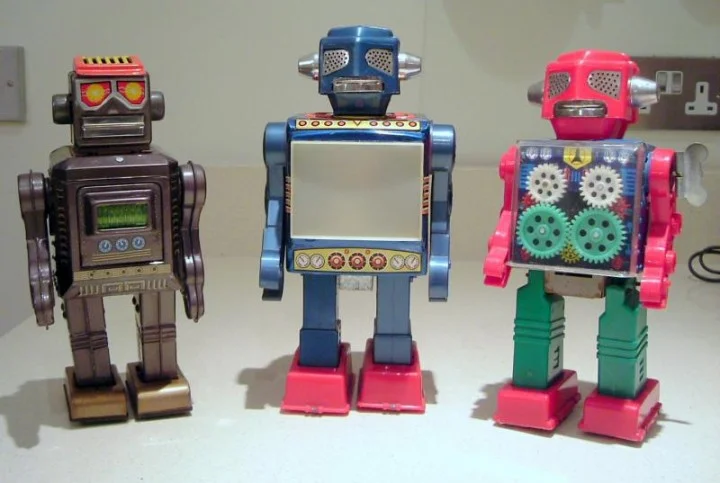
Dr. Marie Puybaraud, global head of research for JLL, explores how we can embrace robots in the workplace and compensate for the inevitable lack of face-to-face interaction. Today, our industry is contemplating how it will embrace the cyber world and compensate for the inevitable lack of face-to-face interaction. How would we feel stepping in to an office managed solely by robots? How do you feel about staying at a hotel where 90 percent of the staff is automated?
Why Baby Boomers Refuse To Retire
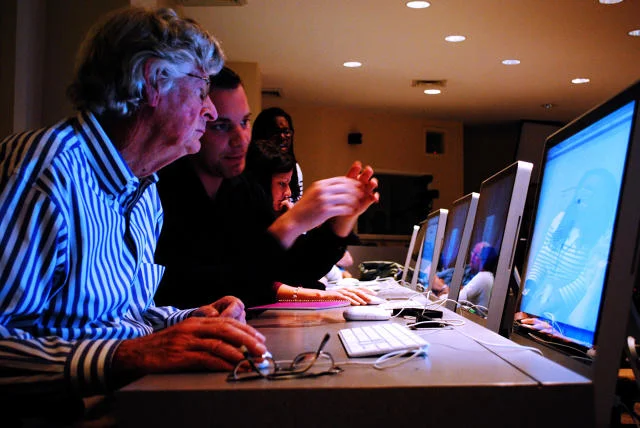
Five years ago, in 2011, the first wave of the oldest U.S. baby boomers reached the common retirement age of 65. Since then, another 10,000 each day continue to reach this stage in their lives. The U.S. Census Bureau calculates that by 2020, 55.9 million people in the U.S. will be age 65 or older, and by 2030, that number will reach 72.7 million.
Report reveals huge surge in use of flexible working worldwide
Three quarters of companies worldwide have now introduced flexible working to enable employees to vary their hours and work from home or on the move according to one of the largest global surveys of its kind conducted with 8,000 employers and employees across three continents. The Flexible: friend or foe? survey was commissioned by Vodafone and took place between September and October 2015. The countries surveyed were Germany, Hong Kong, India, Italy, Netherlands, Singapore, South Africa, Spain, the UK and the USA. A total of 8,000 employers and employees were interviewed online. The rapid adoption of high-speed mobile data services, fixed-line broadband and cloud services is playing an integral role in this workplace revolution: 61 percent of respondents now use their home broadband service to access work applications and 24 percent use a mobile data connection via their smartphone, tablet or laptop with a broadband dongle.
DESIGNING A WORKPLACE CULTURE OF INNOVATION
As the speed of business accelerates, companies are investing heavily in innovation in an effort to keep up. Creating a culture of innovation, particularly in large companies, isn’t easy though. Here are four common workplace pitfalls that stifle innovation inside companies.