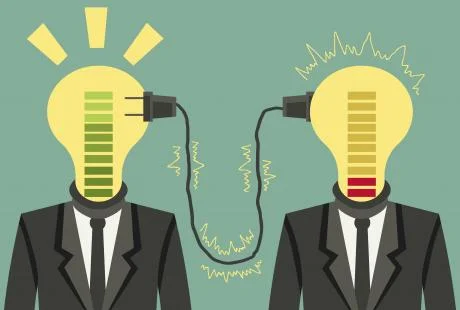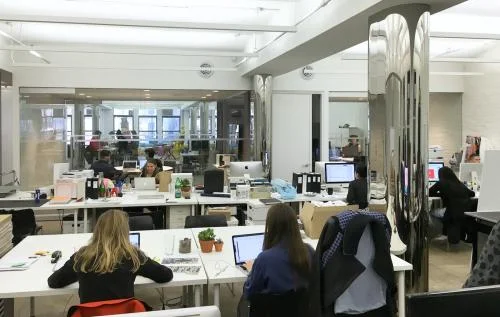

In today’s complex and collaborative workplace, the real challenge is to manage not just your personal workload but the collective one, says Jordan Cohen, a productivity expert and the Senior Director of Organizational Effectiveness, Learning & Development at Weight Watchers. “Helping your team manage its time well is a critical factor for its success.” Elizabeth Grace Saunders, author of How to Invest Your Time Like Money and the founder ofReal Life E Time Coaching & Training, agrees. As a manager, your role is to both “set the strategic vision” and serve as “the buffer for unreasonable expectations” from the rest of the organization. Here are some tips to ensure that your team works productively.
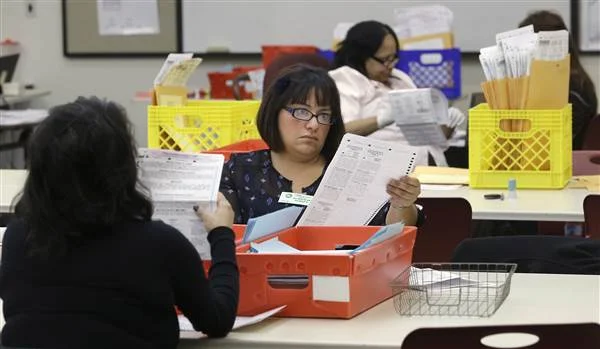
In Workplace of the Future, You're On Your Own (For Better or Worse)
While economists, entrepreneurs and policymakers huddled in Davos, Switzerland, last week to discuss the "fourth industrial revolution" and its impact on the global workforce, almost one in three American workers got up in the morning and faced their boss — in the bathroom mirror.
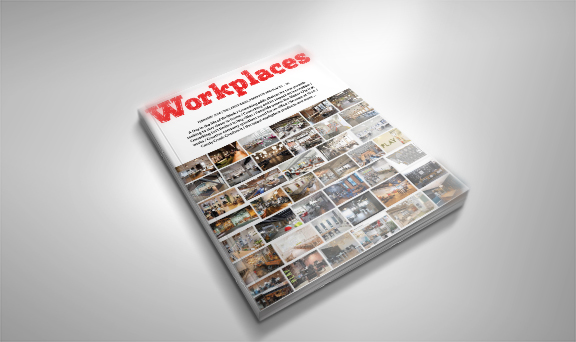
Workplaces Magazine Debuts
How do you handle working alongside a noisy neighbor in the office? What are the best chairs for a call center? How can a worker get the most from her time on a commuter train?
Work is much more than sitting at a desk or tapping away at a computer. Yes, the office remains the hub of what we call work, but it also happens at home, on the subway or airplane, in a far-flung hotel room or a nearby coffee shop. And work is being shaped by products that make the worker more efficient, comfortable, happy and connected. Workplaces Magazine follows everything that makes work happen, from the latest ergonomic office chair to the hottest mobile phone. Yet it is about much more than products. Workplaces Magazine also follows the latest trends about healthy workplaces and new workstyles.
The first issue of the new monthly magazine Workplaces is available for free.
Growth of Social Media and the Flexible Workspace
The modern office is nothing like it used to be 10 years ago. Due to advances in technology, work has become more flexible and fluid, and the ways employees and supervisors communicate is a lot more mobile thanks to social media and various communication oriented apps.
The last few years, we’ve seen how many more workers aren’t required to come in to the office anymore, and how those that do make use of flexible workspaces are a far cry from the mundane cubicles of yesteryear.
4 WAYS YOUR OFFICE MAY CHANGE BY 2025
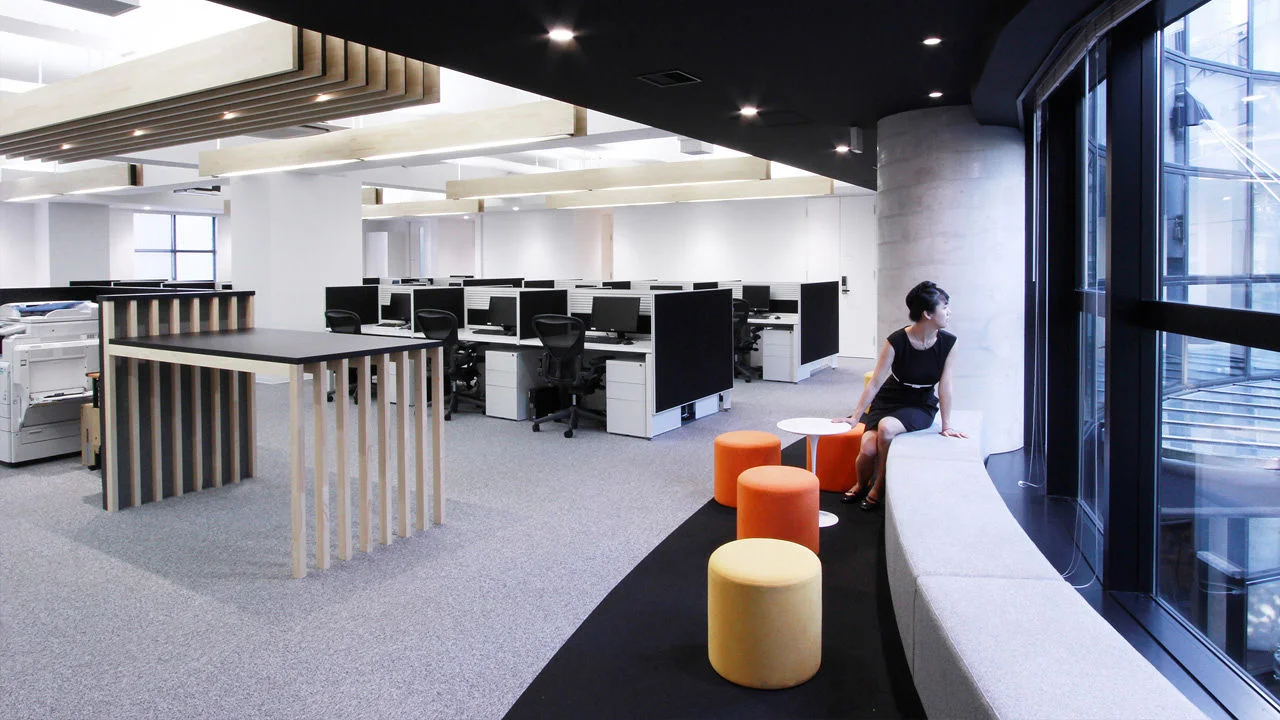
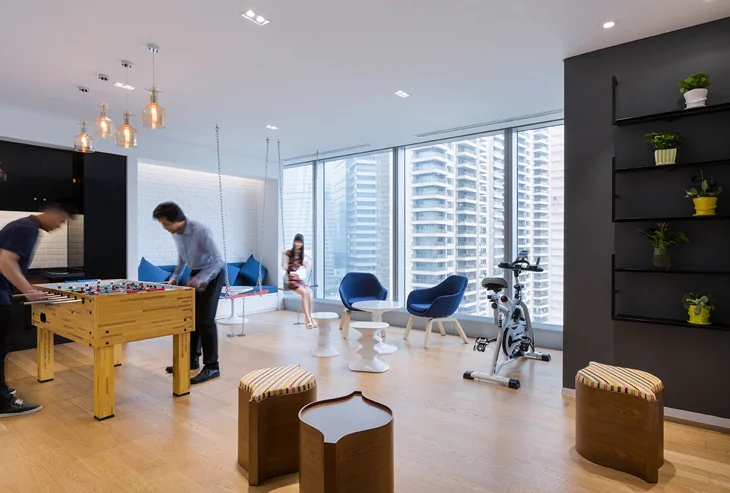
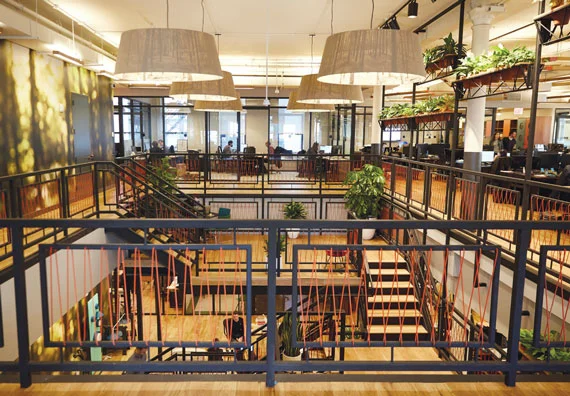
In 1999, the movie Office Space lampooned the ubiquitous grey office cubicle. Fast-forward more than a decade and a half later, and tech companies are more likely to look like sleek open warehouses with lines of workstations and Aeron chairs or standing desks.
HOW THE GENERATION BORN TODAY WILL SHAPE THE FUTURE OF WORK
Longer life expectancies and changing demographics mean potential clashes between more generations in the workplace. Demographers typically segment the world population into six living generations: GI (born 1901—1926), mature/silents (born 1927—1945), baby boomers (born 1946—1964), generation X (born 1965—1980), generation Y/millennials (born 1981—2000), and generation Z (born after the middle to late 1990s).
Coolest office spaces: Anders’ layout, amenities bring employees together
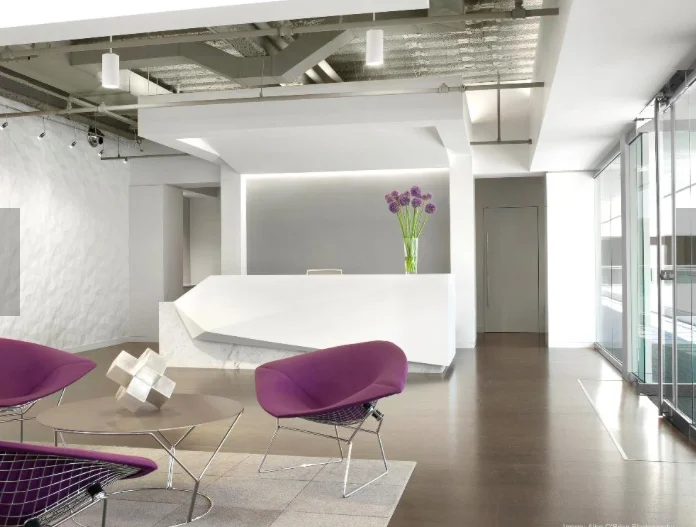
When visitors walk into the Anders CPAs + Advisors office at 800 Market St., Suite 500, they are greeted with an open layout that encourages employees to work together.
How an office switch can change everything about the way a company works
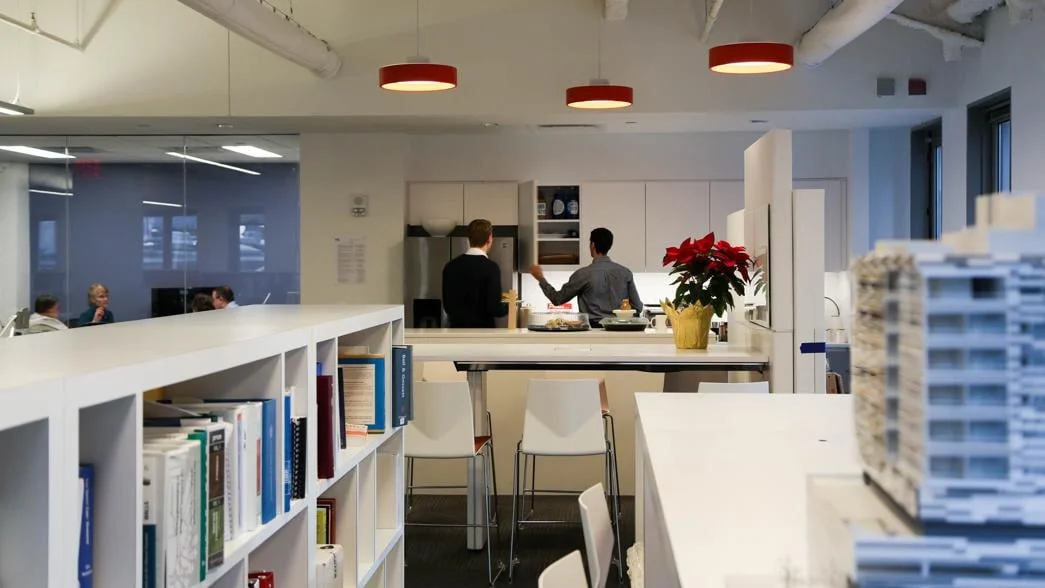
At global design firm CannonDesign, architects, engineers, futurists, and researchers create everything from college dorms and rec centers, to hospitals, baseball stadiums, libraries, and science laboratories.
7 Ways to Improve Office Productivity in 2016
It’s a measure of how much work employees are doing. The definition of “work,” of course, varies depending on your organization, your goals, and your industry, but ultimately it’s about the output of workers.
Employee productivity is one of the most important considerations within any workplace. The more productive your employees, not only the more overall work is being completed, but fewer resources are being used, and the more competitive your organization will likely be.
How workplace distractions can actually boost productivity
Recent research from BambooHR shows that breaks, small talk and socializing in the workplace can actually help bolster productivity and employee engagement. What are your employees up to when they're not actively on task? Chances are, you're thinking they're surfing the Web, doing some online shopping or banking, or posting cat videos on Facebook. But research suggests that more "traditional" distractions, like trips to the break room, watercooler chat and trading gossip with their colleagues, are actually consuming more of workers' time -- and that's not necessarily a bad thing.
The American Workplace Is Broken. Here’s How We Can Start Fixing It.
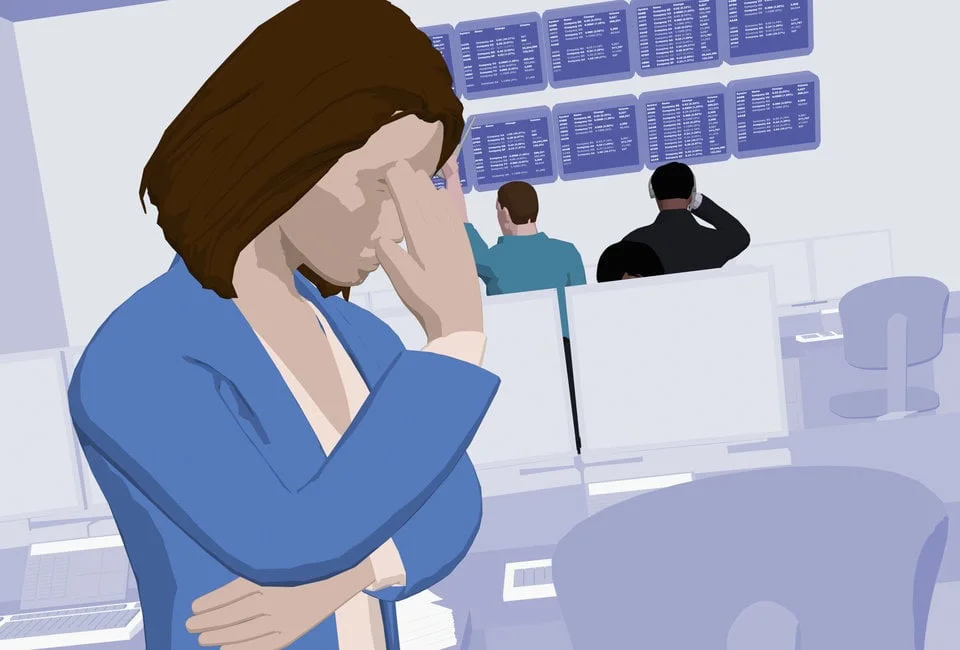
American workers are more stressed, sleep deprived, burnt out and disengaged than ever before, but the solution is surprisingly simple.
How to Find the Right Remote Work Space for Your Company
Working remotely sounds like a great idea. Who wouldn’t love the flexibility to choose where and when you work? But working remotely can come with some challenges, making choosing the right remote work location perhaps the most important business decision you’ll make.
2015 YEAR IN REVIEW: WHERE I WORK
Our Where I Work column takes us inside not only a designer’s workspace, but in their mind. These renowned creatives give us a look into their world through images and by answering all of our burning questions. Take a look as we go back through the archives of 2015 to see where all the magic happened.
DEBATE: SHOULD WE ALL HAVE CLEAR DESKS?
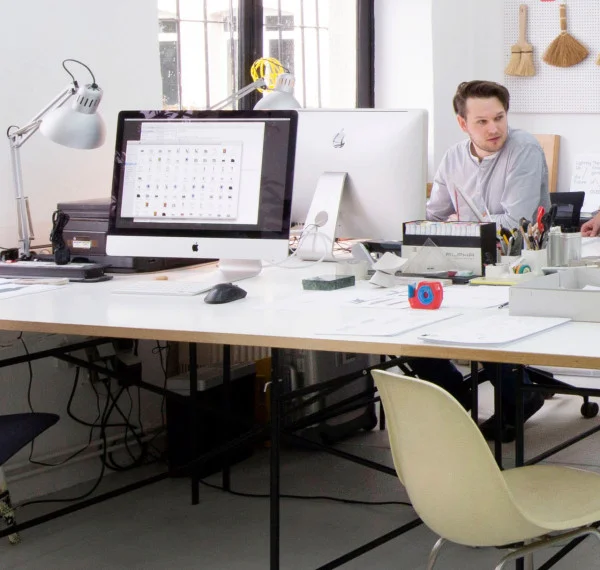
When it comes to clear desk policies, LEGO’s London office is trialling something more extreme than banning piles of paper. The toy brand has removed the notion of employees having their own desks and managers working in offices and instead is experimenting with the concept of ‘activity-based working’.
How to design workplace tools for the knowledge-sharing styles of Millennials
Sharing and distributing information efficiently is key to unlocking the potential of your staff in the knowledge economy. But do they really use the right tools, pay heed to security or tow the line of company policy in the age of the Millennials?
Agile working is increasingly popular way to reduce London office costs
Rent, rates and service charges for office space in established Greater London office locations such as Croydon, Brentford and Uxbridge are typically over 50 percent lower than the cost of equivalent space in Central London locations such as Victoria, Marylebone, St Paul’s, Liverpool Street and Canary Wharf, Carter Jonas’ latest research claims. Increases in rents and business rates costs over the last five years, and the erosion of the stock of office buildings in some areas of Central London, as a consequence of redevelopment to higher value residential uses is reducing tenant choice and these factors are leading some occupiers to adopt new strategies to reduce their property footprint. Agile working and hot-desking are becoming popular ways to reduce the amount of space required to accommodate an organisation’s business operations the Tenant Advisory and Research Teams at Carter Jonas have found.
Does Wellness Translate Across Culture?
The word wellness can be loosely translated into Chinese as 养生 (yǎng shēng), which literally means “nurturing life.” It implies a very gentle, well-rounded approach to a wholesome lifestyle. It calls to mind a sexagenarian doing tai chi at dawn or sipping herbal tea in the afternoon.
“It’s not a perfect translation,” said Cathy Gu, a Gensler design strategist in Shanghai. Because while the pursuit of longevity has a long standing tradition in China, workplace wellness is just starting to gain traction. “This is why we’re doing the research, because there isn’t a perfect translation,” said Keiko Toishi, a practice area leader for health and wellness. The two are part of a design strategy team in Shanghai dedicated to translating the wealth of knowledge in Gensler’s Workplace Performance Index for the Chinese market.
The Open Office Debate
The proliferation of open office design has had a tremendous impact on the American work experience. From Silicon start-ups to major corporate campuses, open offices have come to represent forward thinking design and the importance of fostering collaboration. However, there has been a lot of debate as to how and when to utilize the concept effectively.
The World According to WeWork
Developers and investors are quietly rushing in, spending millions to get in on the city’s next real estate frontier.
COLUMBIA UNIVERSITY GSAPP LAUNCHES AN ARCHITECTURE, CULTURE AND TECHNOLOGY INCUBATOR AT NEW INC.
The Columbia University Graduate School of Architecture, Planning and Preservation (GSAPP) inaugurates the GSAPP Incubator with its first season of members. The GSAPP Incubator is an initiative for the school’s alumni, providing a collaborative environment for exploring new ideas and developing innovative projects that encompass culture, technology and the city. The co-working space encourages discovery and an open exchange among a diverse group of participants engaging in topics and interdisciplinary methods that expand the possibilities of architecture. Directed by Assistant Professor David Benjamin, the Incubator is located at 231 Bowery along with the New Museum’s NEW INC.