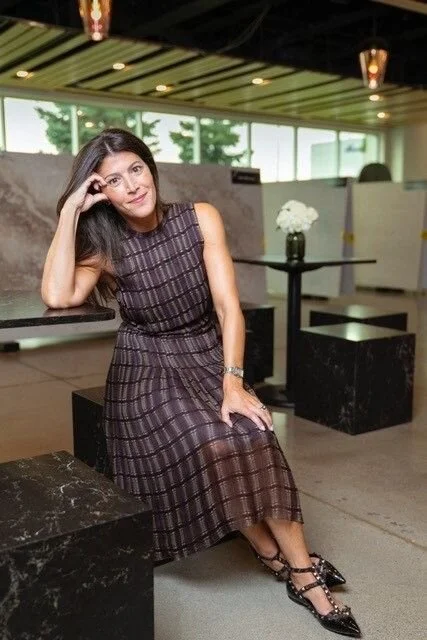
Increasingly, designers are turning their attentions towards health and wellness, finding ways to design a space that's good for its users. People become the focal point of the design: how will they use this space every day, and how can we design it to improve their lives?
This is how responsive office design affects human behavior
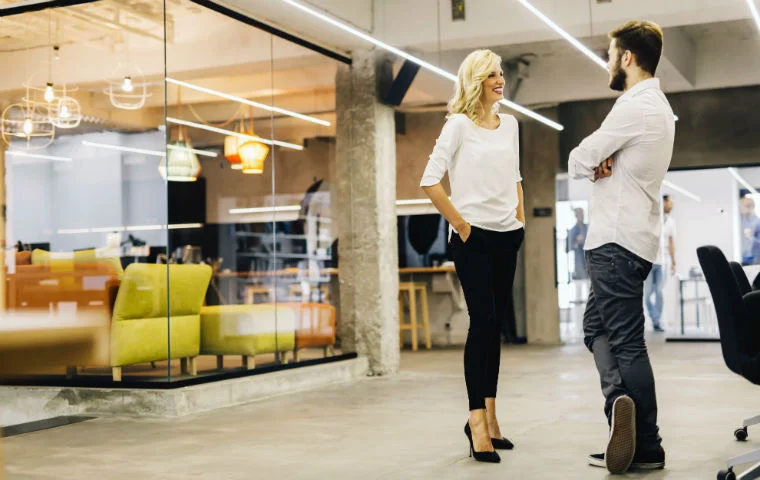
While offices with open-concept floorplans have become increasingly popular, some studies show they can be difficult to navigate for introverts, and can hamper concentration. Truly productive workspaces pair “quiet zones” designed for privacy and focus with open spaces that foster collaboration. These choices empower employees to work in whatever space is most productive for them.
How health factors into green building rating systems: LEED v4
A project pursuing LEED certification will not get a specific focus on the health and well-being of the user, as you would from newer systems such as the WELL Building Standard.
Question Of The Week: Are Open Workspaces All They’re Cracked Up To Be?
Many companies are moving toward open workspaces, but a new survey shows employees think they are among the least productive and most stressful work environments.
Why Hyatt Designed Its New Headquarters To Feel Like Its Hotels
Chicago-based Hyatt has spent the last month moving into its new location in Chicago’s downtown Loop. Designed in a collaboration with global architecture firm Gensler, the new space isn’t just built to enhance the boilerplate corporate ideals of flexibility and cross-team collaboration.
Table of Experts: Workforce
The Minneapolis/St. Paul Business Journal held a panel discussion recently to talk about the workforce in the Twin Cities. Panelists included Mary Lydon, a partner and founder at Midwest Financial Search Inc.; Sean Keating, founder of Oggi Professional Services; and Lisa Pool, a principal at Perkins+Will. Connie Ireland, executive director of the Governor’s Workforce Development Board at the Minnesota Department of Employment and Economic Development, served as moderator.
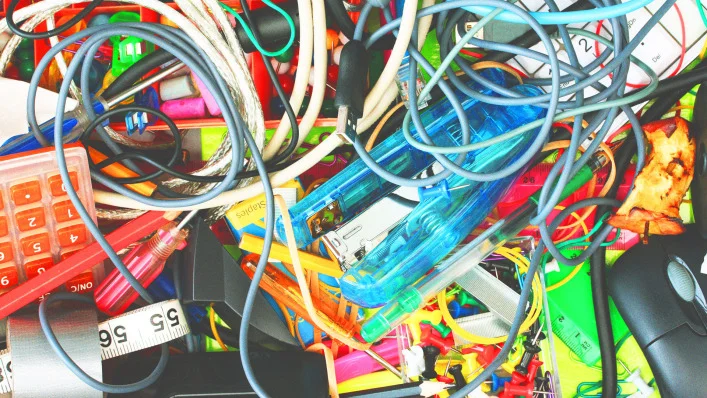
This Is How To Organize Your Messy Desk Drawers At Work
If your desk drawers are basically a garbage can you’re constantly rummaging through, these tips can fix that.
No More Ping-Pong Tables! This Designer Is Changing How Startup Offices Look And Feel.
New York-based interior designer Dani Arps is giving startup offices a chic, adult makeover. And there are no Ping-Pong tables in sight.
The latest perk from companies looking to lure millennials: offices that double as homes
Creating more cosy office environs may reflect new attitudes towards remote work. Last year, 43% of US employees worked remotely at least some of the time, according to a Gallup poll. When a company is in trouble and in need of innovative ideas, the possible productivity gains of remote work are often considered less important than the negative impact a distributed workforce can have on engagement.
Changing Your Workplace? Make it Work with a Change Management Plan
How much you engage your employees depends on the extent of the transformation and the departure from your current space. However, regardless of the size of the project, it is important to involve your employees early on. Communication throughout the process will build trust and give employees time to digest and provide constructive feedback.
Watch: Sitting May Be the Next Smoking
Is sitting as dangerous as smoking? Studies suggest that sitting too long at work could carry long-term health risks. Bloomberg QuickTake Q&A explains the dangers and how to counteract them. (video by Matt Goldman)
Vacation Season Is Winding Down, So It’s Time To Take a “Workcation”
American workers have a hard time taking vacations. Around 658 million vacation days are left on the table at the end of the year, according to Project: Time Off. And 68% of us admit to checking work email when we’re supposed to be getting away from it all. But what if the purpose of your vacation was work?
Barclays using sensors in workplace as cost-cutting measure
Barclays PLC has installed sensors in their offices in London to track how often bankers are at their desks. The devices called OccupEye, are installed under desks and use heat and motion to track office efficiency.
The 17 Things Employees Care About Most At Work
Employee experience is all about providing employees with an environment where they want, not need to come to work--a place where they can feel energized and free to be themselves to get their best work done. But what does that actually look like?
Integreon Redesign Drives Innovation
When Integreon planned a new building for Fargo, one that would bring both Fargo offices together under one roof, the initial workplace layout offered rows of workstations in a very traditional approach, hardly what a global, interconnected business needed.
Millennials Opening the Doors to Communal Modern Workspaces
Gen Y pushes the need to create a balance between traditional corporate environments and make room for remote access employees that act as a second home for creativity, productivity and engagement through technology and collaboration.
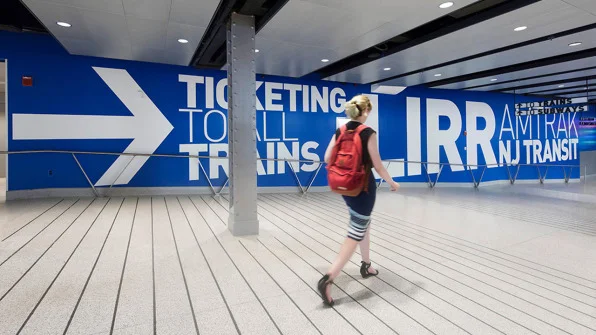
Pentagram Takes On Its Biggest Challenge Yet: Making Penn Station Less Awful
Over 650,000 people travel through Penn Station every day and the routes to get to a specific exit or transfer aren’t direct. Commuters typically have to look for signs at intermittent distances. If they miss one at a key juncture, they could head the wrong way.
How Amazon’s Nonstop Growth Is Creating A Brand-New Seattle
Today, Amazon says it has about 8.5 million square feet of space in Seattle (though some real estate sources estimates the figure as closer to 10 million). This gives it roughly 19% of all of the city’s “Class A” (high grade) office space, and about 70% of new downtown office space added in 2016 was exclusively for Amazon.
Q+A with IDEO: Six Critical Innovation Qualities
For more than two decades, IDEO has been helping organizations come up with industry-leading breakthrough ideas — famously designing the first manufacturable mouse for Apple. Now, the global design and consulting firm is providing teams with a new tool. The Creative Difference tool measures six qualities IDEO describes as critical to innovation.
It’s Not Your Imagination: American Cities Are Getting Less Livable
It’s getting harder to live in America’s largest cities. Recently, the Economist published a series of graphics showing how the quality of life in American cities has fallen over the past 10 years.