

Why is the tech industry so different than your standard insurance company or banking provider? The answer - the speed of change in the tech world!
Contract furnishings provider, Hightower received multiple awards at NeoCon 2021, including IIDA's 'Best Small Showroom' (under 4,000 sf) and 'Best of Competition' for its newly designed Chicago showroom.
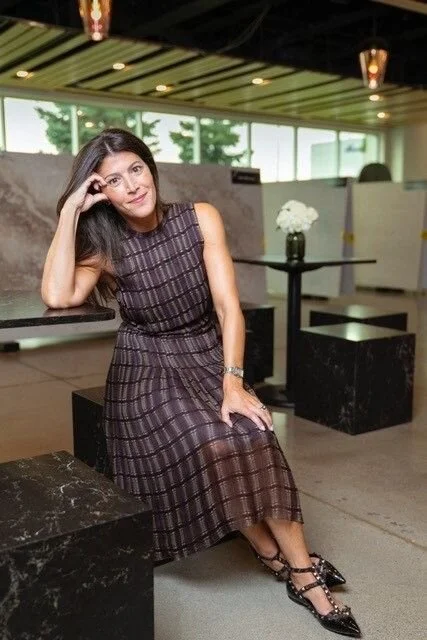
Humanscale welcomes Elizabeth Margles to its Marketing Division in the role of Chief Marketing Officer. Margles comes to Humanscale with twenty years of experience in design, fashion and retail and a background in public relations and advertising.
The exclusive relationship with Kontrol's BioCloud® Technology will provide real-time detection of airborne pathogens such as SARS-CoV-2 to help make workplaces safer as organizations return to the office.
Why is the tech industry so different than your standard insurance company or banking provider? The answer - the speed of change in the tech world!
The claim that features of the physical environment can be linked to creative thinking is supported by a handful of neurological studies, internal qualitative research, and Steelcase’s decades-long collaborations with IDEO, the IIT Institute of Design, and the StanfordD.school.
Older workers tend to be more unhappy in their jobs than their younger colleagues, according to a survey of more than 2,000 U.K. employees by human resource firm Robert Half U.K. One in six British workers over age 35 said they were unhappy—more than double the number for those under 35.
We are constantly told that real estate and technology will interact and fundamentally change the way people work. Big data, smart technology and artificial intelligence are all regularly predicted to have a huge impact on the way offices operate. Co-working and shared workspace are increasingly being touted as the next evolution in the way companies take space. But the path to the office of the future will not run smoothly, as companies are starting to find out.
These 7 famous geniuses had 7 very different workspaces. Based on your desk, what kind of genius might you be?
When I became CEO, my first priority was to accelerate decision making and innovation within our company.
Designed by Allied Works Architecture, the new headquarters of Fast Retailing–Uniqlo’s parent company–features open-plan office spaces, lounges done up with plants to resemble outdoor gardens, a library filled with books and magazines from around the world, and a room with stadium seating where all 1,200 employees can gather for company functions. While it bears the hallmarks of what we expect creative offices to look like in the West, it’s actually a first for corporate Japan.
The digital and physical worlds are colliding. How will social media platforms influence the way we design spaces?
If your employees are stuck in assigned workspaces and can't control how they work, get ready to disassemble the cubicles.
For centuries people have been getting up, joining a daily commute or retreating to a room, to work. The office has become inseparable from work.Its history illustrates not only how our work has changed but also how work’s physical spaces respond to cultural, technological, and social forces.
Offices would be better places to work if they were more like cars. New car models are embedded with technologies that make driving easier, safer and more fun. Sensors tell drivers if there is a truck in their blind spot or if they are about to back into another car when parking. Some cars allow drivers to safely take their hands off the wheel. Many are Wi-Fi enabled. The car doesn’t just provide transportation anymore—it actually helps people be better drivers.
Dean Baquet, the executive editor, and Joseph Kahn, the managing editor, have announced that a central newsroom meeting space will open this year as part of the renovation of our headquarters. They called it the “new Page 1 room.”
Today’s unprecedented talent shortage is compelling businesses and other organizations to get serious about employee attraction and retention. The current war for talent is amplified by a strong economy and a growing number of Baby Boomers nearing retirement age. In Nebraska, for example, more than 65 percent of state government employees are expected to retire in the next five years. Many private-sector businesses are experiencing similar human-resource challenges.
The reality is that today, there are enough flexible office options to supply the needs of every kind of company, whether it wants flexibility or networking.
As millennials become increasingly prominent in corporations’ influential leadership roles, the preferences of young workers for urban and creative office space is driving a reconsideration and renovation of offices.
When do you most need “quiet time” at work—time and space free from distractions and interruptions?It’s safe to say that for most knowledge workers, it’s when they’re on deadline and under pressure. A major project milestone is approaching or a proposal is due. The timeline is tight. People need time to pause, sort through problems, organize their thoughts, concentrate and crank out their best work.
What does the optimum workspace in which to do creative work look like? That’s what Creative Review magazine set out to discover when it surveyed readers of its website as part of a major new report sponsored by British Land, called Working Well: Wellbeing in the Creative Workspace.
After months of cold and dreary weather, the long-awaited arrival of summer can result in a slump in employee productivity.
Everyone is asking for the workplace of the future, but a better starting point would be to imagine the work of the future. The office of the future may not be an office at all. Clerical tasks no longer dominate the world of white collar work.