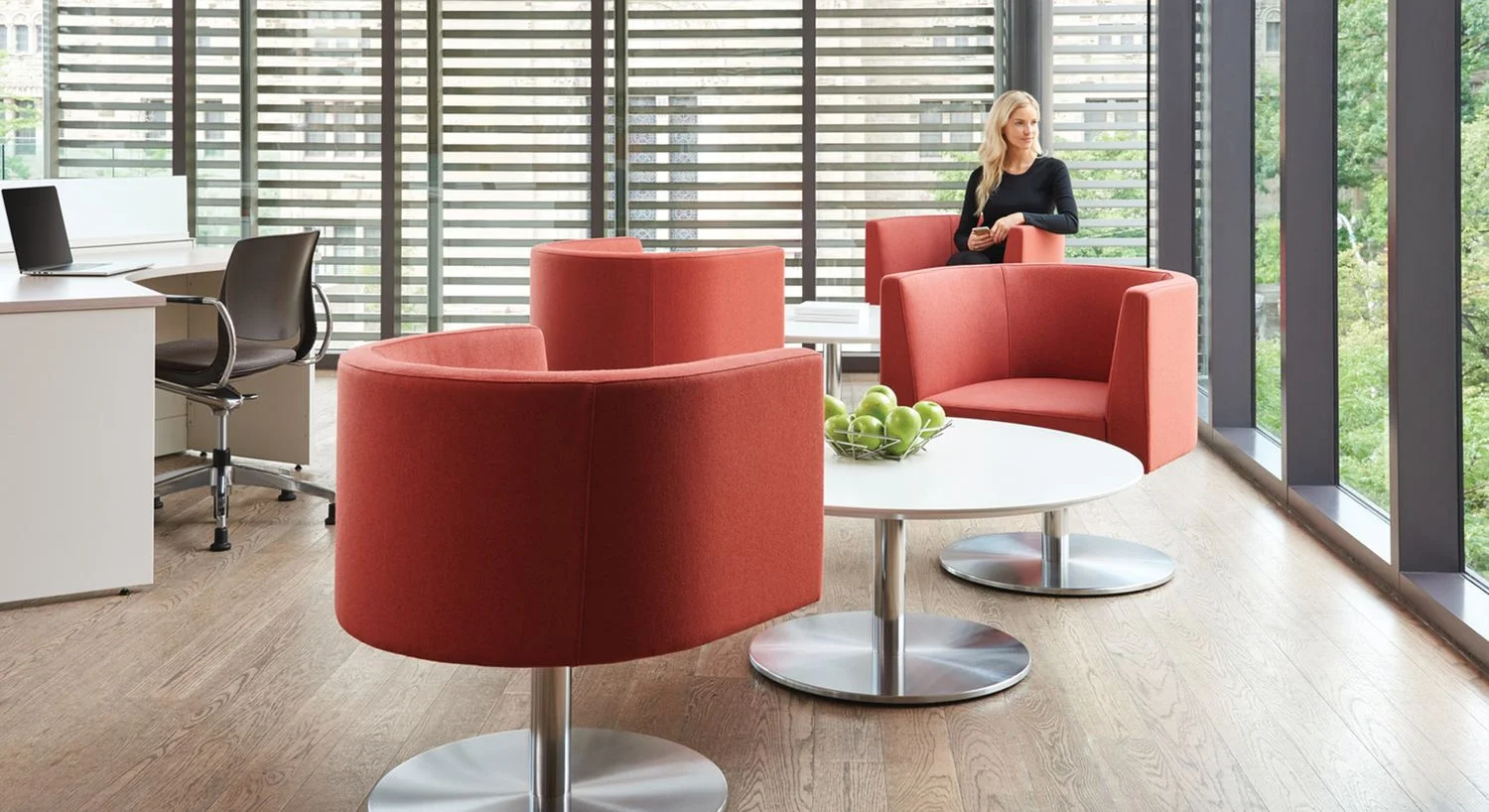
Activity-based working (ABW) is often mentioned in conjunction with cost savings. Executed well, this workplace design typology—wherein employees forego dedicated seats in favor of moving between different areas suited to particular tasks—can indeed save organizations money on real estate and office furnishings. However, ABW’s biggest benefits don’t show up on the bottom line as quickly or succinctly as those line items.
First Day At Your Remote Job? Here’s Everything You Need To Know
From creating that work/life division to being your own tech support, here are 8 tips for mastering remote work.
New Jersey Has a Millennials Problem
The state’s employers are pushing landlords to remodel office spaces with cool perks to attract younger workers.
How to build a more effective workplace
In the world of intelligent spaces, engaging experiences enable employees to maximize effectiveness, seamlessly and securely anywhere, anytime. Here's what you need to build that world.
How to Redesign Work After an Office Refresh
Engaging employees in the design process should begin long before drawing any blueprints. Businesses interested in changing their workspaces should start with employee surveys, which ask about desired elements of the space, colors, furniture and more. This helps the business gain an understanding of what their current space lacks and what they can aim for.
Why Workplace Diversity Diminishes Groupthink And How Millennials Are Helping
When you think about team dynamics and workplace productivity, it’s easy to get trapped in the idea that alignment in thinking is the best path forward; after all, the mindset unity offered by consistent corporate culture is shown to have a positive effect on productivity. But there’s a dark side to the “unified” mentality, and it’s probably infected your own boardroom, at least to some degree.
Workplace Priorities: Experience Matters
Our clients often ask us about the “workplace of the future,” but what does it mean? We use it to reference forward-thinking design solutions that address the wants and needs of tomorrow’s emerging workforce. Existing market research around future workplaces factors often reinforces stereotypes about the generation gap and Millennials in the workplace. But those assumptions can lead to ineffective, and potentially dangerous, outcomes.
HUMAN BEINGS: THE SPECIES IN THE BUILT ENVIRONMENT
Researchers, working in labs tucked into the darkest recesses of psychology department basements, and in spaces as publicly accessible as Grand Central Station, have learned that the responses of members of the sub-species Non-Designer to their habitat can differ from those of humans in the other sub-species, Designer. The most frequently identified reason for these differences is that design training influences how humans experience the world around themselves.
Men and women report similar work life balance problems
Contrary to commonly held perceptions and media narratives, women and men report similar levels of work-family conflicts, both in the form of work interfering with family and family interfering with work, according to research published by the American Psychological Association. The study found men are less likely to complain about or address the issue however. Researchers spent several years examining the findings from more than 350 studies conducted over three decades that included more than 250,000 participants from across the world.
10 WAYS TO UP YOUR FITWEL GAME
We are in the midst of a wellness revolution.With employees expressing a desire for healthy environments, there is a pressing need to measure wellness in the workplace quantitatively. We know that Americans spend on average over 90% of their time indoors, so designing to support the health and well-being of building occupants is imperative.
Watch: Meeting space leads to innovation
PDR Principal Larry Lander explains how to design for workplaces where four generations are working together.
What Will It Be Like To Have Robot Coworkers?
As robotics, AI, and machine learning become more common in the office, here’s a glimpse into the realities of working side by side with such technology.
The State of Work: Blur the Edges
Smart devices let us work anywhere. The cloud keeps information with us wherever we go. And, mobile work policies allow more and more people to choose where they want to work. But, there’s a tension bubbling up within organizations. A recent NPR report says employers are rethinking telework. They want their people to come together to collaborate, innovate, build culture and drive business forward.
WHY DON’T MORE CHICAGOANS BIKE TO WORK?
Our Chicago studio’s valiant bike riders give mixed reviews of cycling in the Windy City: “treacherous,” “scary,” “tranquil,” and “beautiful” are some words used to describe commutes. For the city at large, our bikeway network grew 135% over the last decade or so, and there was a 5.8% increase in bike commuting based on the most recent census data. Great!
The quitting economy
When employees are treated as short-term assets, they reinvent themselves as marketable goods, always ready to quit
A Not-So-Quiet Little Problem: Noise!
For companies moving from traditional office design, with workers accustomed to private offices, adjusting to an open office "can be a real shock . . . when an organization plunks people down without any change management or communication" about what to expect
THE SHIFT TOWARD EMPLOYEE-CENTRIC WORKPLACE DESIGN
Workspaces that prioritize and accommodate the diverse needs of today’s knowledge workers are becoming increasingly prominent as employers look to make the office more meaningful, personalized and enjoyable. Work Design Magazine proposes thinking of the workplace as a “people place” and discusses the importance of environments that focus on the human experience. In this month’s news aggregate, we explore this movement toward employee-centric design and how this shift is impacting modern organizations.
Listen: Inside a Fundamental Shift Happening at Work
The ways we work and, as a result, the environments in which we work are changing in ways we haven’t seen before.
New York Today: Swanky Workplace Perks
For some New Yorkers, being stuck inside the office, even on a less than splendid day, can be — dare we say it — fun.
Putting people at the centre of building design could provide large boost to the economy
More thoughtfully designed workplaces, centred around people’s needs, could improve performance and help tackle the UK’s productivity gap, according to a new report. Applying design thinking to boost workplace productivity by 5-8 per cent could contribute up to £20 billion to GDP. The potential gain in productivity, equivalent to twice the annual contribution to UK GDP made by the aerospace industry, is revealed in research conducted by researchers from Imperial College London in partnership with Atkins.