
Working Life

Three Factors Accelerating Change in the Workplace (Part Two)

Three Factors Accelerating Change in the Workplace (Part Two)

Not that long ago, segregating work from home life was accepted as a best practice, rooted in the desire to help employees maintain a healthy balance between the two.  In this, it was assumed that we could reconcile the separate demands of each and any crossover would be minimized or eliminated altogether.

Coworking Grows in 2017

Coworking Grows in 2017

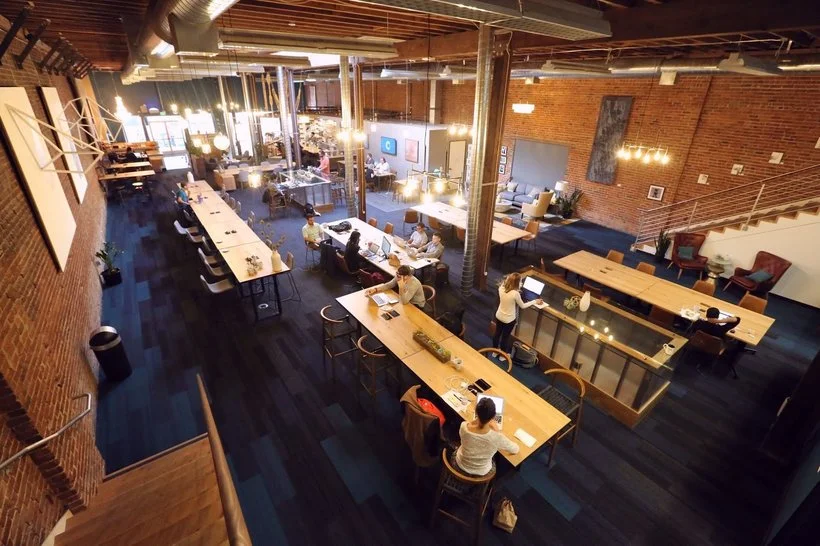
2017 saw continued growth of the flexible office industry and a broader range of offerings. While “Serviced Offices” have been around for decades (30+ years), the term “coworking” has been the media standard term for the last 10 years, and is likely here to stay according to the Global Workspace Association (GWA), a platform helping shared space operators, corporate real estate professionals, real estate investors, and service providers stay connected, current, and competitive.

Flexible working increasingly seen as top option, claims major new study

Flexible working increasingly seen as top option, claims major new study

A new report from ManpowerGroup Solutions claims that 40 percent of job candidates cite flexible working as one of their three most important career considerations. The firm polled 14,000 people in 19 countries. Among the countries surveyed, the US had the highest percentage of job candidates who want work flexibility (45 percent). A majority (63 percent) of workers said they believe they can work outside the office, and the number of men who want flexibility has significantly increased according to the study.

Watch: What makes San Francisco so innovative?

Watch: What makes San Francisco so innovative?

San Francisco is a city that likes to be at the cutting edge.

It’s part of the world’s most well-known innovation ecosystem where tech start-ups with the next big idea rub shoulders with market leading tech giants. Creativity isn’t limited to the office; it also spills on to the streets to create a diverse cultural scene.

Study reveals the importance of adopting a people-centric approach to the work environment

Study reveals the importance of adopting a people-centric approach to the work environment

Companies should aim to create a sense of ‘brand loyalty’ among their employees in the same way that consumer businesses do with their customers, according the findings of a new study by international support services and construction group, Interserve.

The Rise Of The Truly Virtual Workplace

The Rise Of The Truly Virtual Workplace

It’s the paradox of the modern workplace: Everything has changed, but somehow everything’s still the same. We have dozens of new tools for sharing our work and communicating instantly with our colleagues. We’re editing a Google Doc together and then jumping into a Slack channel to discuss a hot topic (all while responding to a text from a customer). We’re uploading files to Dropbox and texting our bosses that we’ll be working on that big presentation over the weekend. Increasingly, all of our information is in the cloud.

Three Factors Accelerating Change in the Workplace (Part One)

Three Factors Accelerating Change in the Workplace (Part One)

Successful companies are, by definition, good at optimizing resources; that’s why space efficiency and staff productivity are vital to our clients. The greater challenge is seeing into the future—the confluence of factors is altering the landscape of workplace interiors—with enough clarity and urgency to re-evaluate long-held assumptions and drive innovation.

Top performing organisations build six elements into their design

Top performing organisations build six elements into their design

Adopting agile ways of working makes a company five times more likely than competitors to be a top performer, with faster growth and higher profits, according to a new report from The Boston Consulting Group (BCG), “Boosting Performance Through Organization Design”. The report describes agile as ‘a concept borrowed from software development, describes workplace processes that emphasise speed, autonomy, and teamwork to get products to market faster’. It is one of six key factors of organisation design that set top performers apart from rivals, according to results of a BCG survey included in the report.

BCO predicts how Brexit might impact on demand for office space to 2022

BCO predicts how Brexit might impact on demand for office space to 2022

Commercial property occupiers remain cautious about the future, and hard data indicates that demand has, so far, been largely unaffected by Brexit, claims a new report from the British Council for Offices (BCO) . ‘Brexit and its Potential Impact on Office Demand’, examines how Brexit might impact on demand for office space on a national and regional basis through to 2022

WORKPLACE OF THE FUTURE, PART 5: CONCLUSIONS

WORKPLACE OF THE FUTURE, PART 5: CONCLUSIONS

What does the workplace of the future look like? How do we deal with a world where technology drives change at such an accelerated pace? What type of work will people do in the future? How will people commute? How does geopolitical unrest, climate change and Artificial Intelligence chance how we work? Can we future-proof buildings and businesses?

Moving People with +Positive spaces

Moving People with +Positive spaces

+Positive spaces™ are environments that have positive impacts. These impacts result from the attributes of the space and the people who use it. It’s important to understand that a space is not the same as a room. A space can be as small as a favourite seat in a library or as big as a city or even the whole planet. It can even be your favourite online hangout. Applying it to built space, it refers to the ability of an interior environment to provide a range of specific, spatial moments that offer people the choices, tools and permission to work as they see fit.