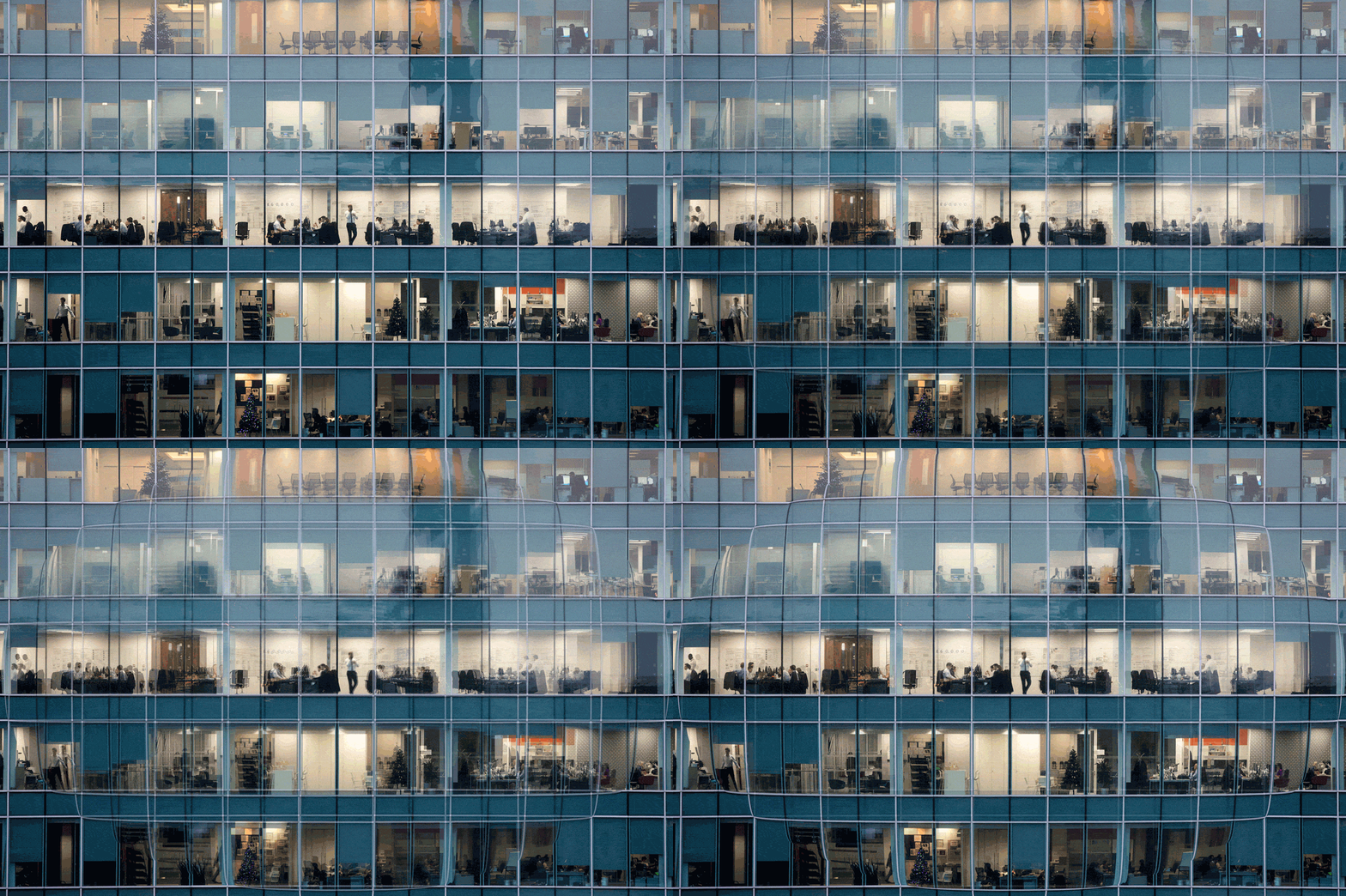


Does a workspace really need 'fun' fixtures to inspire creativity? We asked BBC Culture's architecture and design critic Jonathan Glancey for his take on the modern office.
Contract furnishings provider, Hightower received multiple awards at NeoCon 2021, including IIDA's 'Best Small Showroom' (under 4,000 sf) and 'Best of Competition' for its newly designed Chicago showroom.
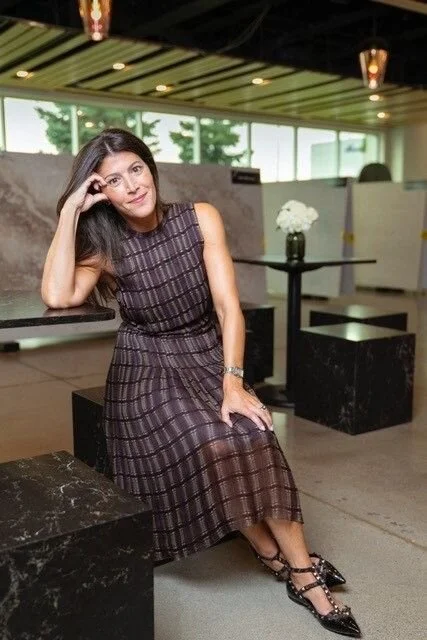
Humanscale welcomes Elizabeth Margles to its Marketing Division in the role of Chief Marketing Officer. Margles comes to Humanscale with twenty years of experience in design, fashion and retail and a background in public relations and advertising.
The exclusive relationship with Kontrol's BioCloud® Technology will provide real-time detection of airborne pathogens such as SARS-CoV-2 to help make workplaces safer as organizations return to the office.
Does a workspace really need 'fun' fixtures to inspire creativity? We asked BBC Culture's architecture and design critic Jonathan Glancey for his take on the modern office.
Alison O’Reilly, of interior design firm ID:SR, says working practices are changing faster than ever before due to technology
In the modern world, the consumer is more powerful than ever and the desire for personalisation is driving an increasingly flexible and bespoke market. This applies to all products and services we consume, and is fast becoming an important factor in the success of design.
Hydroponics, or growing plants using nothing but water, light, and air, has been hailed as the future of farming–on Earth and also in space, where size and weight are severely constrained. But hydroponic systems often require pumps, tubes, wires, and near-constant oversight, which might be feasible for researchers and scientific experiments, but not necessarily you and your home.
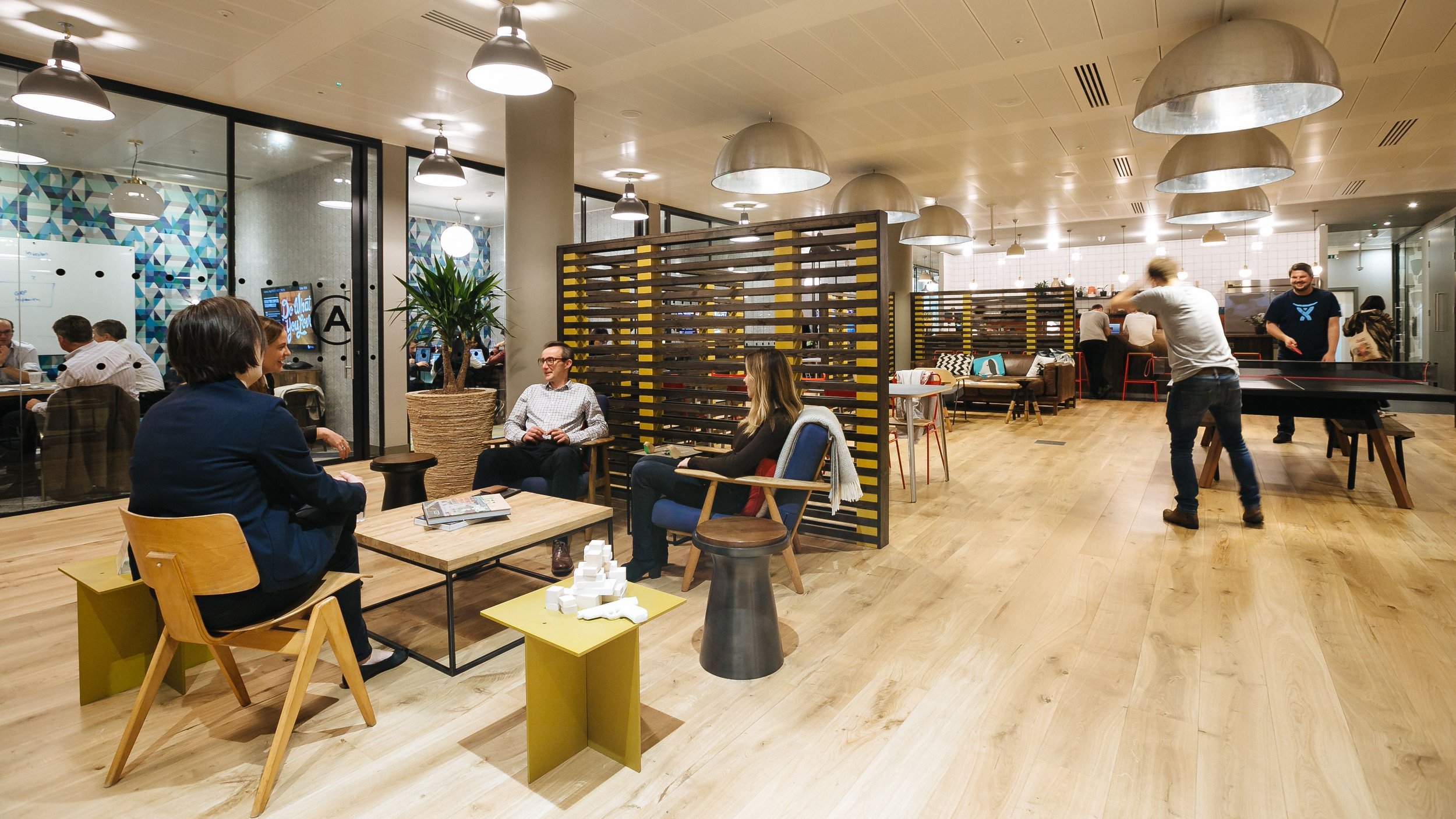
Traditionally, the workplace is the last place you should play games (yes, we’re looking at you solitaire players). However, forward-thinking organizations have introduced table tennis or foosball for employees to relax, get away from work and socialize with colleagues. But imagine if you had to play games to get work done? The term “work hard, play harder” would gain a whole new meaning.
WeWork, the office-space rental startup, has quietly started a new business related not to work, but to workouts.
Since last year, the company has offered fitness classes including spinning, yoga, meditation, dance, and kickboxing at several of its New York City locations, according to a public website for “WeWork Wellness.” Classes take place alongside WeWork’s small office services, in common areas, on rooftop decks, and in other spaces that the brand has turned into “pop up” fitness studios.
In Silicon Valley, many workers have been spoiled by sprawling campuses, free company buses, fun slides and scooters, in-house chefs and laundry services offered by prominent businesses like Google and Facebook. In New York, startup employees are accustomed to working more with less.
According to the latest data from the U.S. Census Bureau, the percentage of Americans moving over a one-year period fell to an all-time low of 11.2 percent last year (domestic migration shrunk in half since 1965). The drop is particularly prevalent among millennials. New survey data from the Pew Research Center found that 25- to 35-year-olds are relocating at much lower rates than the previous generation.
Introverts are good at being alone. Introverts are already comfortable being inside their own heads, so long hours working by themselves on a project doesn’t phase. Where an Extrovert loses steam when they are not surrounded by large groups of people, Introverts draw power from their alone time, where they can focus solely on the task at hand.
Trust falls are passé. Paintball leaves bruises. The best way to bond with coworkers now is doing an “escape room,” a game in which participants are given a set amount of time (usually an hour) to solve a series of puzzles and free themselves from a locked space. A theme or conceit gives the game urgency—players are told they have an hour before a killer virus wipes out their city, for example, or they must break out of prison before the warden returns. One particularly meta room in Florida has corporate participants escape from an office.
This is the first of a new series of Culture Chat conversations, in which we talk with people doing interesting work that has an unexpected connection to workplace culture. In this episode, we chat with Jonathan Webb and Brett Shwery, the authors of this fascinating study about the lessons companies can learn from how the next generation of workers interact in a college
GE recently appointed an executive to head up its efforts in “the future of work.” Her first task will be to figure out what, exactly, that means. GE, like other companies, has political, marketing, and practical incentives to address how work will change in the future. While it may emerge with training, technology, and culture investments, and cohesive narratives around them, it’s unlikely to emerge with all of the answers.
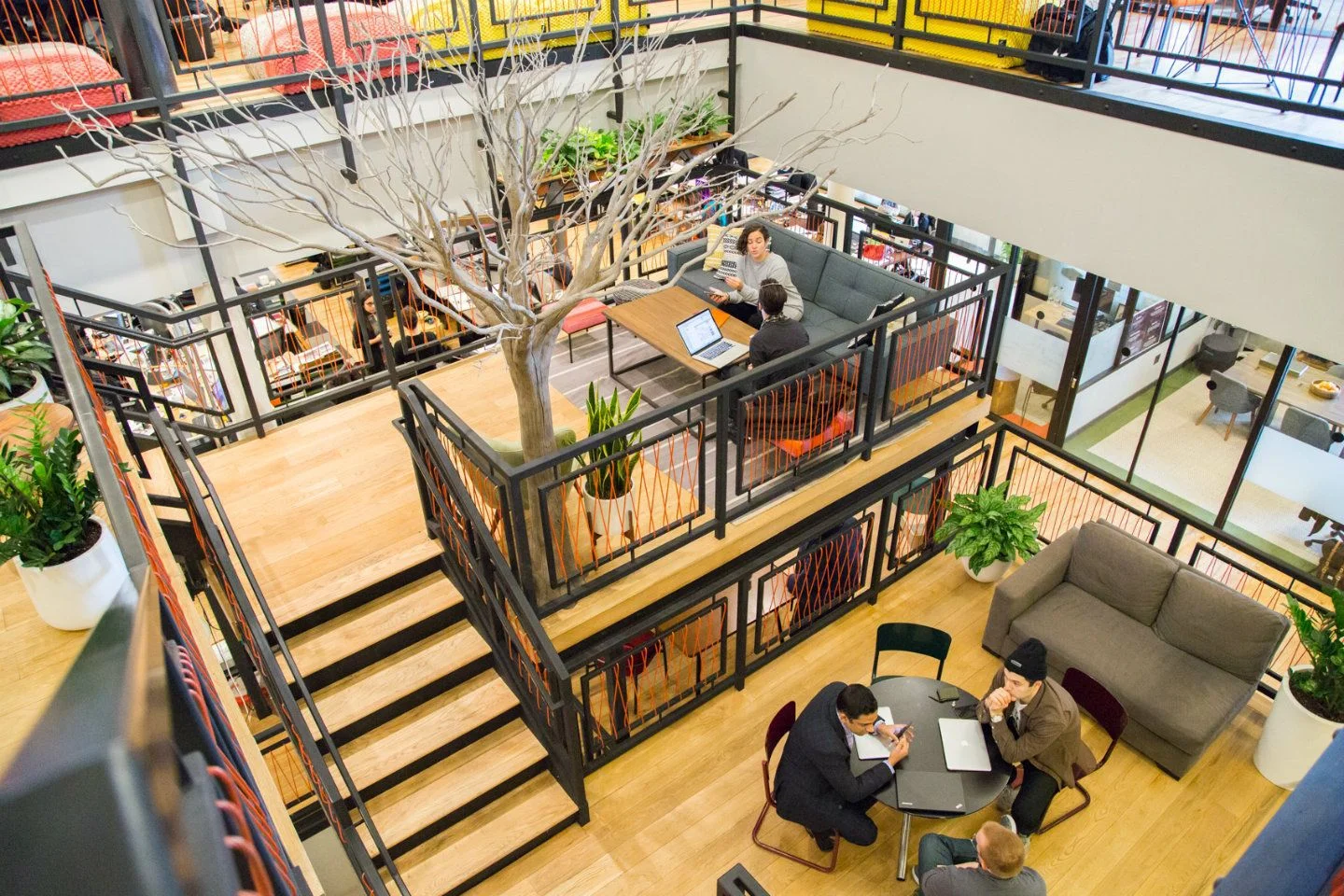
If you’ve been inside any workplace renovated within the last few years, you’ve probably noticed that once-ubiquitous private offices are giving way to open floor plans with a variety of spatial configurations, from desk clusters to counters to lounge seating. At the same time, architects and clients are finding common ground in designing for health, embracing that the places in which we work can help or hinder our wellbeing.
In 1962, a professor of communication studies called Everett Rogers came up with the principle we call diffusion of innovation. It’s a familiar enough notion, widely taught and works by plotting the adoption of new ideas and products over time as a bell curve, before categorising groups of people along its length as innovators, early adopters, early majority, late majority, and laggards. It’s a principle bound up with human capital theory and so its influence has endured for over 50 years, albeit in a form compressed by the accelerated proliferation of ideas. It may be useful, but it lacks a third dimension in the modern era. That is, a way of describing the numbers of people who are in one category but think they are in another.
Despite its status as one of the most famous rambling of a psychotic killer, “All work and no play makes Jack a dull boy,” is an important mantra to live by, especially when working at a startup. Burning the midnight oil and foregoing sleep for a little extra productivity is not only ill-advised, but also ill-conceived, as it has been proven time and time again that working tired simply isn’t worth it. So what’s the best way to make sure your employees don’t burn out? Make a commitment to work-life balance.
Today (Friday 19th May) is National Work from Home Day, held to promote the benefits of home working, which includes having more time to take exercise and eating more healthily; but new research suggests home workers might risk doing more harm than good if too little attention is paid to ergonomics. The data from Bupa found that over half of home-workers (51 percent) have sustained injuries, aches and pains as a result of their working environment with the most common being backache and neck pain, which is 10 per cent more likely than those working in a ‘traditional’ workplace. Not having the right work set-up at home could be the cause, as one in four (25 percent) home-workers do not have a dedicated workspace at home, half (50 percent) of admit to hunching over while working and 40 per cent regularly work from their bed or sofa. All of these factors increase the risk of musculoskeletal injury, with the most common problems being backache (24 percent) and neck-ache (20 percent).
One in four (25 percent) of British office workers say they would consider moving jobs (or have already moved) due to a lack of mobile coverage in their building, claims new research from Arqiva, which highlights the worrying extent of the UK’s struggle for adequate indoor mobile coverage and its potential impact to businesses in the future. The survey, conducted among 1,000 UK office workers, revealed that as many as 1 in 2 (49 percent) respondents have experienced poor mobile coverage (i.e. dropped calls or a lack of signal) within their office building. Of those, almost three quarters (72 percent) say this is an occurrence that happens every week, and a quarter (25 percent) say it is something they face daily.
The rise of the open-floor-plan office has exposed workers to many annoying habits that used to hide behind cubicle walls, from distracting personal phone calls to weird food smells. Now, at least within an emerging vanguard of music-friendly offices, add coworkers' musical preferences to that list.
The number of sick days taken by office workers could be reduced if companies implemented a better cleaning routine and staff improved their personal hygiene, finds a new academic study. The workplace is ranked as one of the unhealthiest places you’re likely to inhabit on a daily basis, says Dr Lisa Ackerley, hygiene expert and visiting professor at the University of Salford, whose study revealed that the main cause of germs at the desk and keyboard is poor personal hygiene, with nearly 50 percent of office workers responding to her survey admitting they do not wash their hands after going to the toilet. Your hands and the surfaces you touch, including your office chair are germ motorways, she warns. Crumbs and spills encourage the growth of bacteria that can lead to stomach bugs, coughs, flu and even food poisoning. Bacteria and viruses that people bring back from the toilet multiply on the hard work surfaces of the desk and chair and remain infectious for 24 hours.
From al desko to al fresco. Outdoor office spaces are popping up around the globe – but would you regularly take your business outside?






![Work-Life Balance Is More Important Than Salary [Infographic]](https://images.squarespace-cdn.com/content/v1/55b25edee4b00a6772a63fc6/1495215092131-CLAU0U6N8M5ONYTRP0V6/Screen+Shot+2017-05-19+at+12.31.11+PM.png)