
At a recent conference at the WWF’s Living Planet Centre in Woking staged by the office furniture firm Kinnarps, I had an off the cuff chat with James Woudhuysen who had just delivered one of his typically entertaining, erudite and challenging talks on the future of work alongside equally renowned speakers such as Philip Tidd and Namrata Krishna from architecture firm Gensler.
Are We Being Forced into Workplace Happiness?
Wellness programs, free lunches, employee yoga. There's lots of ways companies try to create a sense of happiness and well-being for employees. In fact, many companies have large teams dedicated to it and spend millions of dollars to make sure their employees are happy. But what if forcing employees into being happy is actually hurting their performance and overall mental health?
Trends In Workplace Design Focus On Productivity, Occupant Satisfaction
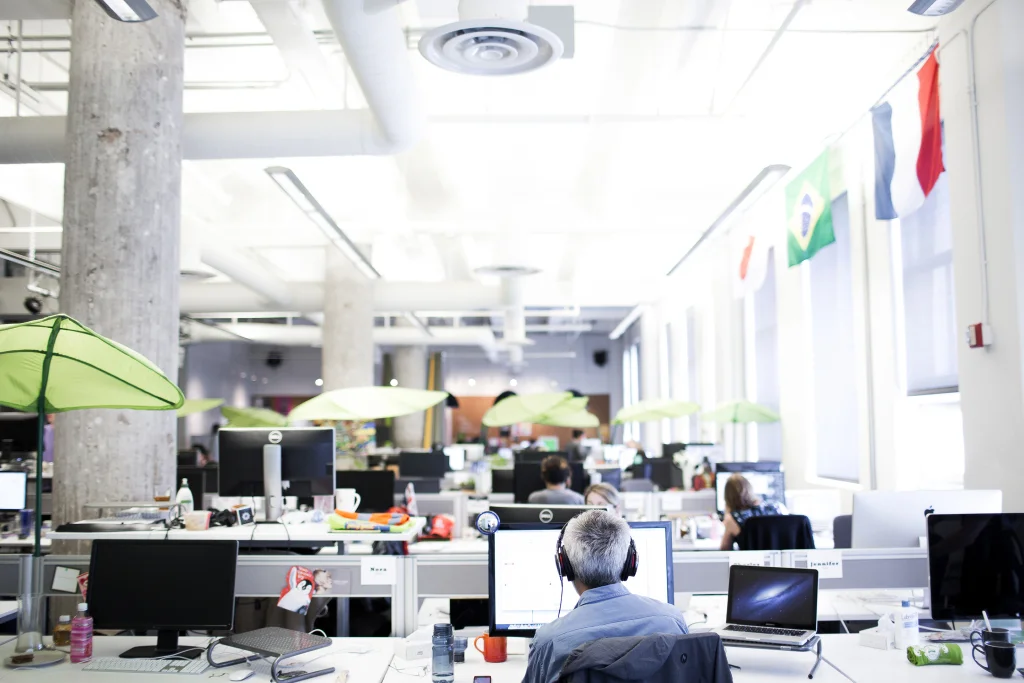
After decades of research and post-occupancy evaluations, the impacts that workplace design can have on employee productivity, satisfaction, recruitment, and retention are well-documented, understood, and accepted. Those findings have inspired numerous innovations in workplace design, from more daylighting and shared or collaborative spaces to technology-enabled and -enhanced work areas.
But how has workplace design evolved recently to meet the needs and requirements of a new generation of employees, and to address the ever-changing ways in which people wish to work? Moreover, what’s driving the latest innovations?
Employee freedom and self-regulation is the key to successful home working
The lazy assumption that employees who work from home are invariably shirking work is gradually dissipating, as flexible working becomes part of accepted working practice. Now new research suggests that to really get the best from their home workers, employers need to treat them as responsible adults who can actually be trusted. A new study, conducted by Nick van der Meulen of Rotterdam School of Management, Erasmus University (RSM) has revealed that job performance in working from home is driven by employee self-regulation and decision-making freedom rather than previous beliefs that it was achieved through managerial or peer control. In fact, any suggestion of shirking is erased by the evidence of a positive relationship between the extent of telework and number of hours worked. On average, full-time teleworkers perform just as well as those who do no telework at all — even under conditions of infrequent communication with the manager, low peer performance monitoring, and no outcome reward systems.
Physical location, proximity of employees changes productivity
Research, performed between Cornerstone OnDemand, a global leader in cloud-based talent management software, and researchers at Harvard Business School, has uncovered how the distance between two employees' desks affects various performance measures. According to the findings of this study, placing the right type of workers in close proximity to each other generated up to a 15% increase in organisational performance.
5 Things Millennial Workers Want
Millennials entering the workforce display a markedly different set of preferences from their predecessors, at times confounding the companies striving to attract and retain them. Generational attitudes may be partially responsible for their characterization as disloyal or transitory, but equally culpable are the employers that fail to understand and meet Millennials’ needs.
Longer Commutes Are Making Flexible Workspaces Solutions More Desirable
LiquidSpace, an online network for office space, recently released its Q1 2017 US Flexible Office Report.
This report further strengthens the fact that flexible workspace solutions are steadily becoming the norm in the work world.
One of the issues the report brings to light is the role of commuting times in driving the demand for flexible office solutions. According to the report, “people not only hate commuting, but there is also a significant body of evidence that commuting can negatively impact both work performance and health.”
Headspace: Where Do You Find Yours?
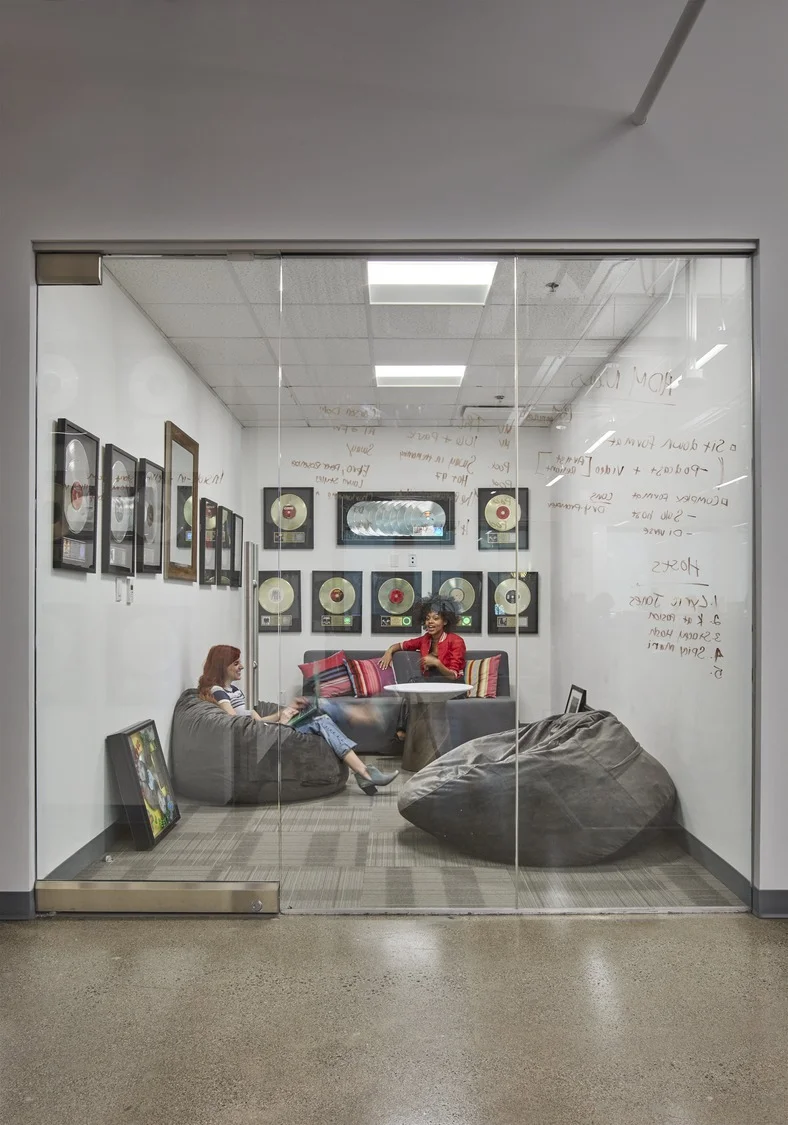
Could lack of choice and access to quiet, focus-oriented space stifle career trajectory, especially those in a creative industry or role? Most offices tend to lack a proper amount of quiet space to focus and clear your head, as well as offer shared social spaces to release, play and teach. In reality we need time and quiet ‘headspace’ between each of these phases for ideas to mature before they take off.
HOW TO CREATE MORE COLLISIONS IN YOUR WORKPLACE
Collisions can be a good thing — under the right circumstances. Nobody wants to be in a fender bender. But when unlikely collaborators and ideas collide, that’s a different story.
“Accidental collisions” play a key role in innovation and workplace satisfaction. These chance meetings encourage employees to connect in ways they wouldn’t otherwise and can lead to surprisingly impactful results. In fact, unexpected conversations create opportunities for collaboration between unlikely partners and generally foster a happier, more productive workforce.
Technology firms and the office of the future
Throughout San Francisco and Silicon Valley, cash-rich technology firms have built or are erecting bold, futuristic headquarters that convey their brands to employees and customers. Another example is Uber, a ride-hailing company, which is hoping to recast its reputation for secrecy and rugged competitiveness by designing an entirely see-through head office. It is expected to have some interior areas, as well as a park, that will be open to the public.
THIRD OF UK MANAGERS IGNORE ‘SITTING DISEASE’ DANGERS
The vast majority of office-based workers are aware of the health dangers of spending hours on end seated at their desks, but management is failing to respond to their needs, according to a survey by Active Working, a community interest company.
BIFM issues new guidance for FMs on managing the transition to agile working
New guidance to help facilities managers manage the transition to agile working within their organisation has just been published by the British Institute of Facilities Management (BIFM). The Agile Working Change Management Guidance Note is aimed at FMs working at a senior and/or operational level and covers the benefits of agile working and how to successfully plan and implement an integrated approach to deliver sustainable change in working behaviour. Agile working describes a range of work settings that allow people and organisations to make new choices about when, where and how they work. It is underpinned by mobile technology and applies to people working both in and away from the traditional office, such as at home, on the road or remotely in other locations. BIFM’s research and information manager Peter Brogan said: “As an Institute, we recognise the importance of the workplace agenda for FMs and this newly commissioned Guidance Note aims to address the current lack of knowledge around some of the emerging workplace practices.”
Remote access to the workplace may be doing staff more harm than good
Employees are divided on whether remote access to the workplace is really a positive or negative development, with almost a third of UK workers (32 percent) feeling that having remote access to the workplace means they can’t switch off in their personal time. According to the latest CIPD/Halogen Employee Outlook report, two-fifths of UK workers (40 percent) admit to actively checking their work mobile or emails at least five times a day outside of working hours. Nearly a fifth (18 percent) feel as though they are under surveillance with remote access to work, and 17 percent say it makes them feel anxious or even impacts their quality of sleep. However, almost a third (30 percent) of employees say they feel empowered by having remote access to the workplace, showing a divide in opinion. Indeed, more than half of employees (53 percent) say it helps them to work flexibly and more than a third (37 percent) say it makes them more productive.
Visionary Pulse 2017: Our Autonomous Future will be Resilient
Recently we’ve noticed two overlapping narrative threads that weave through many project categories. End users are, to an increasing degree, seeking spaces that give them a sense of agency, or autonomy; this can be expressed in the ability to choose where they sit at work or the freedom to shop at whatever hour they want.
Requests to work remotely increase as stigma around flexible working diminishes
A majority of workers (65 percent) now feel comfortable requesting to work from home, while a third (33 percent) of UK employees would decline a job offer if they weren’t able to work flexibly. This is according to a new study from Maintel which claims that today’s multi-generational workforce prefers flexible working to traditional office hours and location; with flexible work policies perceived as an important workplace benefit. Nearly three quarters (73 percent) of respondents say the company they work for has good flexible work policies in place, 64 percent of remote workers don’t feel micromanaged, and 58 percent would take the opportunity to spend even less time in an office, if it were available. Well over half (60 percent) of respondents believe technology can replace in-person interaction in the workplace. Yet there remain challenges with flexible work, including indifference regarding the security of company data (66 percent) and distractions at home (31 percent).
What to Do When Real Life Comes to the Office
It’s becoming old news, really … how our professional lives have crept into our personal ones, taking up more and more space. “We work 24/7,” many will say. “We’re never unplugged. We’re always connected.”
So, it’s no surprise that we hear very little of the reverse—how our private lives can insinuate themselves into our workday, making it easier for all of us to function, relieving at least some of the round-the-clock stress. But it’s happening and, believe it or not, it’s coming into our workplaces.
WeWork’s office takeover continues with the launch of the Services Store
WeWork, the co-working giant with more than 100,000 members, is today launching the WeWork Services store. In short, the NY-based behemoth wants to take over the world by way of the office, and is now focusing in on office tools instead of just the space. Much like your old-fashioned app store, WeWork Services Store gives members easy access to a broad suite of enterprise services, oftentimes with exclusive deals.
WeWork has long served its members with deals on enterprise software as the company leverages its massive base of members to get discounts and exclusive offers from folks like Amazon AWS and more. With the launch of the Services Store, WeWork can now serve those deals and other enterprise software as a part of the WeWork membership.
Study confirms effect of workplace autonomy on wellbeing and job satisfaction
New research into workplace culture has found that employees with higher levels of autonomy in their work reported positive effects on their overall wellbeing and higher levels of job satisfaction. Researchers at the University of Birmingham Business School examined changes in reported well-being relative to levels of autonomy using two separate years of data for 20,000 employees from the Understanding Society survey. The research, published in the journal Work and Occupations, found that levels of autonomy differed considerably between occupations and by gender. Those working in management reported the highest levels of autonomy in their work, with 90 percent reporting ‘some’ or ‘a lot’ of autonomy in the workplace. The finding backs up research from Cass Business School, the German Institute for Economic Research, Abraham Maslow and elsewhere.
The Case for Comfort
The notion of comfort goes back to when our first ancestors developed simple tools to make life easier. What may be surprising is that the idea of personal comfort at work has taken generations to become a key concern and find its way into mainstream rating systems such as LEED, WELL Building Standard (WELL), and Living Building Challenge (LBC).
ROOM TO THINK: THE RISE OF STILL SPACES IN THE WORKPLACE
Quiet is a “think tank of the soul,” says Gordon Hempton, a sound recording specialist and co-author of One Square Inch of Silence: One Man’s Quest to Preserve Quiet. It is in quiet spaces that our intuition reemerges from the intellectual chatter pervading our workdays. Hempton cautions, though, that, “Silence is an endangered species.”