
Working Life

‘Workplace Guardians’ & well designed workspaces key to boosting business performance, says Interserve

‘Workplace Guardians’ & well designed workspaces key to boosting business performance, says Interserve

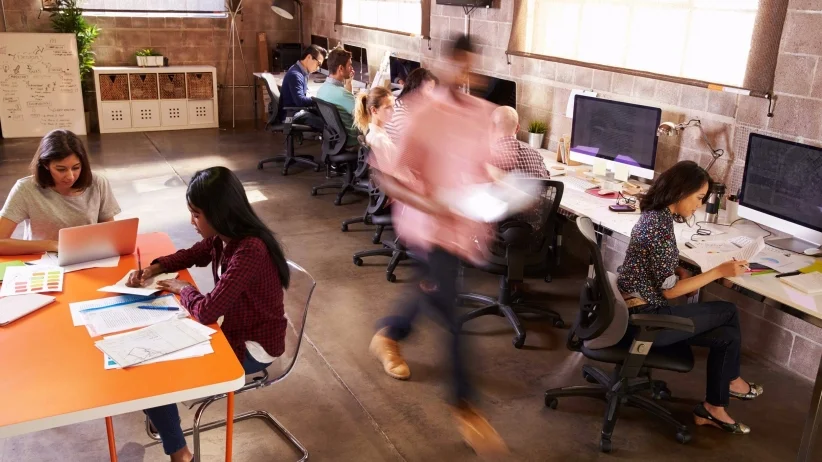
Businesses should adopt teams of ‘workplace guardians’ to curate work spaces that support employee wellbeing and overall business performance, international support services and construction group Interserve has said.

The findings come as part of a new study from the company, Designing and delivering effective workplace experiences – a practical guide, which calls on businesses to shift their focus away from functional issues, such as cost per square metre, and towards the productivity boost that can be delivered through well-designed work spaces which engage employees and make them feel valued.

Interserve’s report sets out a six-stage programme for businesses to create effective workplace experiences which it says should be led by a team of experienced workplace coordinators or ‘guardians’ – a process that sees workplaces shaped by employees, for employees.

Via hrnews.co.uk

Take it Outside

Take it Outside

Outdoor work spaces are becoming more viable and legitimate since workers have greater mobility and can connect virtually anywhere via WiFi. Designing and creating an outdoor space as an extension to your indoor workplace enables employee choice in where one works. Unfortunately, according to the Environmental Protection Agency (EPA), the average American spends 93% of their life indoors –  87% in buildings and 6% in automobiles. Sounds like we need to get outside a bit more.

Via environmentsatwork.com 

WELLNESS IN THE MODERN WORKPLACE IS A KEY TREND FOR 2017

WELLNESS IN THE MODERN WORKPLACE IS A KEY TREND FOR 2017

With the new year moving into full swing, the workplace design conversation has largely surrounded trends that will define 2017. As spaces that promote worker wellbeing particularly gain momentum, this month’s news aggregate explores how employee wellness will shape the modern office. 

Via coalesse.com 

5 Ways to Achieve Better Work-Life Balance in 2017

5 Ways to Achieve Better Work-Life Balance in 2017

Work-life balance is essential to employee satisfaction. In fact, work-life balance is more important to some employees than their salary. (Kronos Employee Engagement Infographic) For millennials, work-life balance is the most important factor to consider when choosing a job. (Forbes) It’s more important to them than finding a sense of meaning at work and having opportunities to progress.

In the United States, 60% of US workers have a poor work-life balance. (WIVB) We rank with only Japan and Australia in scoring the worst in work-life balance. (Knoema)

But it doesn’t have to be that way. Here are a few simple ways that might help you strike a good work-life balance in an always-on world. You can take action now!

Via liquidspace.com 

Six Tips To Update Your Workspace For The Office Renaissance

Six Tips To Update Your Workspace For The Office Renaissance

Take a moment and describe what comes to mind when you think of a modern room. Your brain may conjure up images of thin, sleek furniture, and minimalist decor. Now, instead of thinking about the room, turn your thoughts to the modern man or modern woman. He or she may be rushing to the next meeting, all while preparing mental talking points, answering a text message and having a “casual” yet critical off-line conversation with a co-worker. Is your image of a modern room supporting the modern worker?

When designing spaces for today’s employee, the best result is human-centered, a workplace crafted to mentally excite and engage, physically comfort and emotionally support busy workers. Mobile technologies promised workers the ability to be productive on the go. But it’s not enough. Needs for collaboration, team building and individual focus are just a few of the reasons employees are coming back to the office. The elevated importance of the workplace is creating an office renaissance.

Via entrepreneur.com

OMG! WHERE’S MY DESK?

OMG! WHERE’S MY DESK?

OMG! Where’s my desk?

Sound familiar? Maybe the phrase lands a little too close to home for you or someone you know. It does for me because my business is the business of change and how it affects people in the workplace — especially new work environments, most of which are being designed without desks for everyone.

But maybe change is exactly what we need — a little more “OMG!” in our lives to shake us up — so we can force ourselves to take back control and choose where and how we want to work. Maybe having a desk or not having a desk is not the issue. Maybe it has something more to do with our attitude. We see a change coming in people’s perspective and a new freedom of choice, replacing the thought of “losing something”.

For the past six years, Dean Strombom and I have spoken at NeoCon and we have had the fortunate experience of standing room crowds, which is more a testament to the timeliness of the topics and not to our smooth delivery. The topics are messy and require different points of entry: some serious, some humorous, some evidence-based — and all of them require each person listening to consider, Do I have this notion of workplace change right? Even if I do, is it the right thing to do? Should we give up our personal workspace or was it even ours in the first place?

Via workdesign.com [paywall]

BIOFIT: WHY BIOPHILIC GYMS ARE THE FUTURE

BIOFIT: WHY BIOPHILIC GYMS ARE THE FUTURE

Embracing a new “evolution-friendly fitness method”, Biofit is a nature-inspired biophilic pop-up gym that has opened in London’s Ladbroke Grove.

Designed by award-winning landscape architect Lily Jencks, the Biofit gym features living plants, artificial grass, natural pine essence aromatherapy and hand-made wooden workout equipment. There is nothing digital, electrical or mechanical.

Via globetrendermagazine.com

Why We Shouldn’t Tell Workers When to Unplug

Why We Shouldn’t Tell Workers When to Unplug

Every few years, there's a hot new management strategy that promises to make employees happier, healthier and more productive. To that end, we've seen the rise of positions like "chief happiness officer" as well as workplace dogs and on-site meditation. But while employers may have improved the office itself, they have not solved the stress of leaving it: the crushing tide of emails and IMs, which—thanks to the rise of smartphones can yank us back to work, anytime, anywhere.

Now, in an effort to prevent burnout, a growing number of employers have started to suggest, or even mandate, ways in which employees should unplug their connected devices. The automaker Daimler, for example, made headlines for offering its staff software that auto-deletes employee email while they're on vacation. Volkswagen, in collaboration with its union, set its servers to stop mobile email service for some workers from 30 minutes after quitting time until 30 minutes before starting time. And in January, the French government decreed that people at companies with more than 50 staffers can no longer be expected to answer email during their off hours—a policy dubbed "the right to disconnect."

Via time.com 

Global workforce fears it won’t adapt fast enough to the digital workplace

Global workforce fears it won’t adapt fast enough to the digital workplace

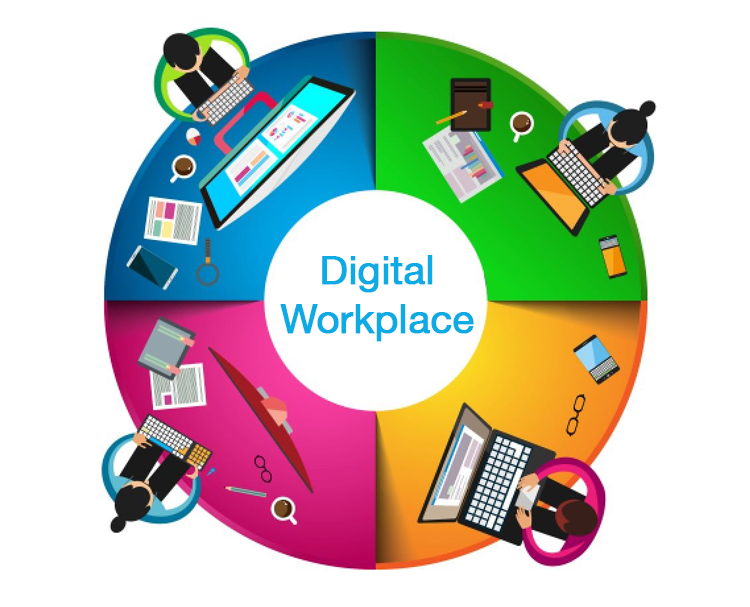
Workers across the globe are excited by the potential for technology to enhance their work lives and create new career opportunities, but over a third (40 percent) fear that they won’t be able to keep up with the rate of change required by digital business, claims a new survey. Across Europe 77 percent of workers acknowledge that disruption and increased competition will require more people with digital skills in order to compete on a global scale; however, the level of encouragement employees believe they are currently receiving to drive change in the workplace varies greatly throughout the world. Only 64 percent of respondents in the US saying they feel empowered by their company culture to lead innovation, whereas 90 percent of employees in Mexico feel their workplaces encourages them to drive change. The BMC study of over 3,200 office workers in 12 countries worldwide found that 88 percent of office workers across the world strongly believe that employers must create an innovative culture to retain staff and enable them to be successful with increasingly digital roles and responsibilities.

Via workplaceinsight.net 

Sitting All Day Makes Your Body Age Faster

Sitting All Day Makes Your Body Age Faster

If you stand up right now, you'll be extending your life. Scientists have discovered that sitting down not only causes all kinds of health problems, but it might actually also make you age quicker.

"Our study found cells age faster with a sedentary lifestyle. Chronological age doesn’t always match biological age," writes lead author Aladdin Shadyab of the UC San Diego School of Medicine in a release.

Our DNA has protective caps at its ends called telomeres. These caps deteriorate, like so much else, with age, and their decline can be accelerated by activities like smoking, or being overweight. But now Shadyab and his team have linked telomere decline with a lack of physical activity. In short, if you sit all day, then your cells will age much faster than if you are active. Your body, at the cellular level, may be older than you think.

Via fastcoexist.com 

A coworkation retreat is the new way to relax, collaborate, and get sh*t done

A coworkation retreat is the new way to relax, collaborate, and get sh*t done

When Henry David Thoreau abandoned city life, he did so with a purpose. Writing in Walden, “I went to the woods because I wished to live deliberately, to front only the essential facts of life, and see if I could not learn what it had to teach, and not, when I came to die, discover that I had not lived…I wanted to live deep and suck out all the marrow of life, to live so sturdily and Spartan-like as to put to rout all that was not life, to cut a broad swath and shave close, to drive life into a corner, and reduce it to its lowest terms…”

And that was before the introduction of cell phones and e-mail accounts.

So, in the modern era, how does one find that Walden experience for ourselves? How do we combine a restorative approach to mind, body, and soul, while at the same time tempering the need for focusing on work, including the power that comes with like-minded souls who can provide a resource for collaborative thought?

Via theamericangenius.com

Working From Home Usually Means Longer Hours For Less Money

Working From Home Usually Means Longer Hours For Less Money

Telecommuting sounds like a dream. Instead of sitting in traffic, you get to spend an extra hour in bed. The coffee is better, you don't have to listen to the inane jabbering of your coworkers, and if you get through your quota of work early, you're done for the day, instead of hanging around wasting time to fill up the remaining hours. And while that may be true for some lucky folks, the reality is quite different, especially when it comes to pay and long hours.

"Rather than enhancing true flexibility in when and where employees work," write the authors of a new study, "the capacity to work from home mostly extends the workday and encroaches into what was formerly home and family time."

The biggest problem with telecommuting is taking work home. That sounds odd when the whole point of remote working is to take your work home, but the problem starts when the usual workday ends. Even if you're forced to hang around at the office until your workaholic boss quits for the day, you know when the workday is over. At home, finding work/life balance is tricky, but what you don't often hear is that those extra hours worked at home often go unpaid.

Via fastcoexist 

Watch: Can Your Workspace Make You a Better Leader?

Watch: Can Your Workspace Make You a Better Leader?

Sara Armbruster, Vice President Strategy, Research and New Business Innovation at Steelcase, spoke at the 8th Global Peter Drucker Forum about the concept of “The Entrepreneurial Society.” She discusses her belief that the workplace itself can help leaders lead better, and, in turn, help others around them succeed.

Via steelcase.com 

Culture Beyond the Cube: Aligning Your Office Design with Your Purpose

Culture Beyond the Cube: Aligning Your Office Design with Your Purpose

When you're trying to align your culture with your purpose, one of the areas that you should consider is the way your office design reflects that alignment. If your work is creative and forward thinking, but your office environment is dull and boring, that sends mixed messages to employees and customers alike.

So how can you align your culture with office design to ensure employee engagement with your purpose and encourage customer engagement with your brand? Start by thinking beyond the cubicle to office designs that suit the cultural values you want to promote.

Via inc.com 

Transitioning to the future of work and the workplace

Transitioning to the future of work and the workplace

Embracing digital culture, tools, and approaches.

A Deloitte survey (sponsored by Facebook) asked C-suite executives for their perspectives on the future of work. Their responses reveal six themes about the future workplace—and six lessons to help leaders ease the transition.

Communication, collaboration, and connectivity are at the core of much of what the C-suite believes will drive the major changes in the future of work. The reason for investing heavily in these aspects of work is the belief they represent hard business benefits for their companies.

Via deloitte.com 

If you don’t trust your employees to work remotely, you shouldn’t have hired them in the first place

If you don’t trust your employees to work remotely, you shouldn’t have hired them in the first place

Building software for startups is a huge challenge. Not because writing the software itself is that hard, but most startups have managed to create the least optimal places to do work. In my 10+ years of experience as a software engineer at startups, I cannot trust employers to provide me with an adequate work environment, and this holds me back from doing the best possible work for them. I am an ambitious, driven individual, and I want nothing more than to provide the places I work with my best possible output. I will give whatever company I am working at 110%. Most of the places I have worked have done a great job at preventing me from doing this. That’s why from here on out, I am taking a stand and drawing a line in the sand. Henceforth I will only work in a “remote” arrangement.

Most startups nowadays are obsessed with the open office environment, and it’s nearly impossible to find companies that do not implement this type of layout. They’ll claim it’s because they want an “open and transparent culture,” but if you know anything about the subject, you’ll know this is the worst possible setup for actual work, and doesn’t improve communication or culture. You don’t have to look far to find plenty of research on the subject- and quite frankly, there is simply no debate here. There is no evidence to support the hypothesis that open office layouts foster a more collaborative environment. 

Via QZ.com

3 Incredibly Common Things Making Your Workplace Toxic, According to Science

3 Incredibly Common Things Making Your Workplace Toxic, According to Science

In a perfect world, you would love going to work and get piles of tasks, projects, and deliverables done every day. But often a company's physical environment does little to promote health and productivity. In fact, science has a few things to say about the factors undermining employee well-being, and a few ideas on what you can do to change your workspace for the better.

Via inc.com

After Two Years Of Trying 6-Hour Workdays, These Companies Say It Worked

After Two Years Of Trying 6-Hour Workdays, These Companies Say It Worked

When some city workers in Gothenburg, Sweden, switched to a six-hour workday—in a two-year experiment that recently ended—they were sick less often, more efficient, and happier. But the municipal retirement home that ran the experiment had to hire more nurses, and the extra cost meant that the shorter workday won't become permanent.

Some small Swedish tech companies, on the other hand, say that a shift to a six-hour day can make business sense.

Brath, a Stockholm-based startup that decided to limit workdays to six hours when it launched in 2012, argues that a shorter day may have made the business more successful than it otherwise would have been—in part because the work-life balance can help them attract and keep the best employees, and in part because happier employees are more productive.

Via fastcoexist.com 

Work From Home Week: 83% of UK employees want to work from home

Work From Home Week: 83% of UK employees want to work from home

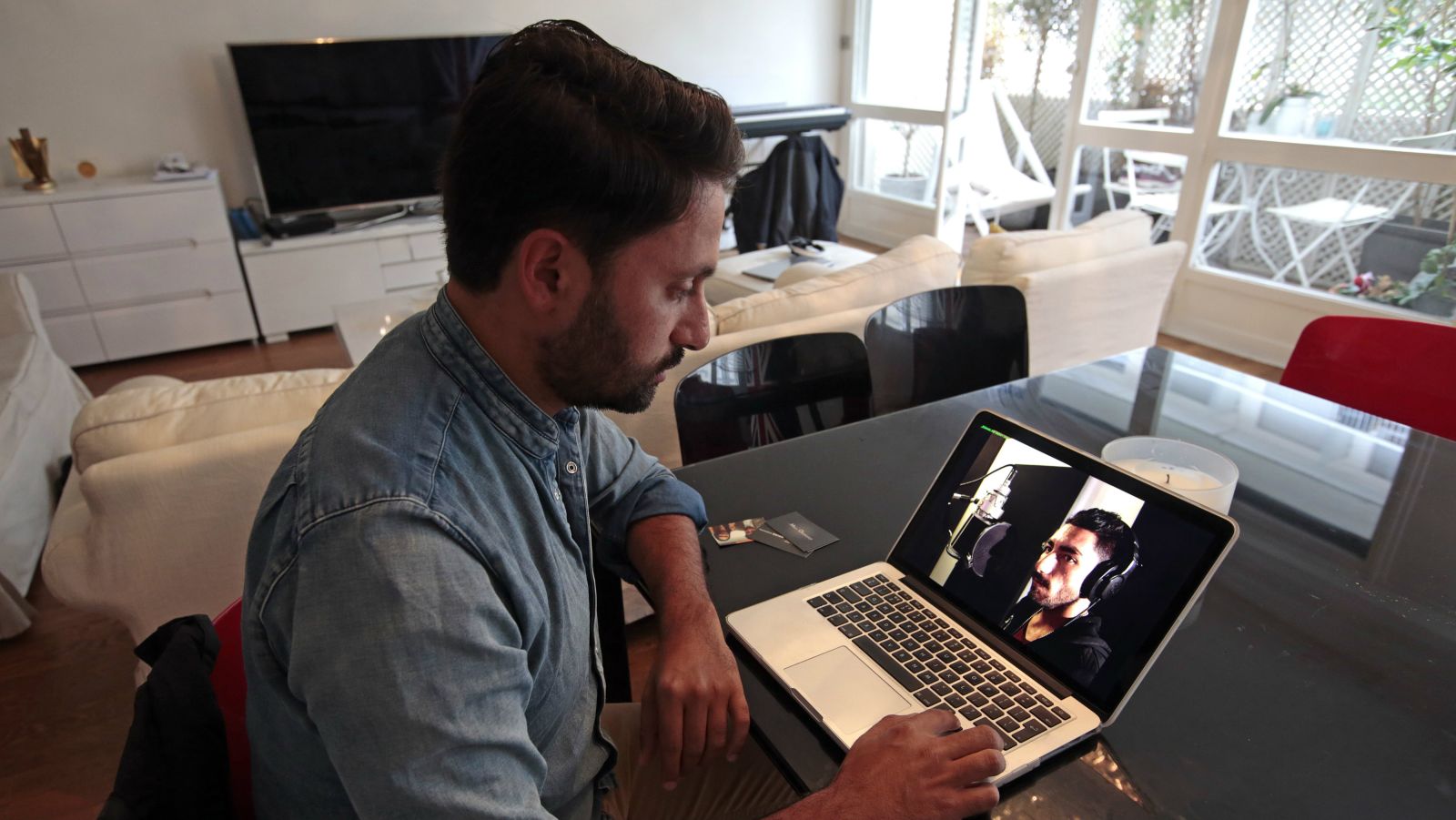
The survey of 1,000 UK workers reveals that only 36.5 per cent currently work from home for some of the time, despite 90 per cent saying they could work effectively from any location outside of the office if they had the right technology.

Moreover, the research found that 85 per cent say that flexibility in work location and hours is important to them.

83 per cent say it’s not necessary to be in an office to be productive and in fact 69 per cent believed that they had better technology at home than they do at work.

Via bmmagazine.co.uk >

A Futuristic Office Is Less Important Than An Office That's Good For Workers

A Futuristic Office Is Less Important Than An Office That's Good For Workers

According to a new report from Glassdoor about America’s labor market and job trends, "2016 was a landmark year for hiring." When measured in rising pay, unfilled jobs, and historically low unemployment, 2016 proved one of the strongest in our economy’s recent history.

Interestingly, "landmark" times for hiring also yield fascinating times to be designing and/or creating the future of workplaces. Just as Glassdoor celebrates the strength of 2016, it also acknowledges that the current 5.85 million unfilled job openings in America translate to lost productivity and increased competition for talent. It also recognizes new technologies spurring innovation will also change how we work and the tools we need. Competition for talent? Enhancing productivity? New technologies and tools? Strategic and successful workplaces can play a critical role in helping companies adapt and solve these challenges.

Via fastcoexist.com