Working Life

In the future, people will actually look forward to their daily commutes

In the future, people will actually look forward to their daily commutes

Commuting isn’t fit for today’s or tomorrow’s workforce—it’s time for a people-centric upgrade.

For transport providers, commuting used to be a question of technology-driven efficiency: “How can we get people to work quickly, safely, and cheaply?” But we should be more ambitious, aiming for a more systemic, human-centered goal: “How can we design urban mobility to support and boost people’s creativity and productivity?”

As part of an ongoing partnership with the Ford Motor Company, we interviewed and surveyed Londoners who regularly use two or more modes of transportation during their commute to work. What they told us revealed a public transportation system that is increasingly ill-equipped to cater to the new working practices, needs, and behaviors of the modern, urban workforce.

Via qz.com >

Design in 2017: An Autonomous and Resilient Workplace

Design in 2017: An Autonomous and Resilient Workplace

In the workplace—or even retail or healthcare setting—autonomy and resilience require a supportive environment, potentially achievable through an infrastructure evolution driven by emerging building technologies and construction methods.  Imagine wireless internet and charging capabilities for all your devices without any connection to wall or floor outlets. Imagine furniture performing all the functions of an electric connection— table tops as conductors, table legs as receivers for power transmitted through the floor.  Mobile tables could be almost anywhere, providing power on an as-needed basis.

How likely is this scenario? With LAN and WAN connections, it is currently conceivable. A workforce could be fully autonomous with this kind of infrastructure, able to move through a work environment completely untethered, restricted only by architecture. Although workflows typically require some degree of enclosed space, that could be addressed by the initial space construction or retrofit.

Via interiorarchitects.com >

Workplace Trends That Will Boom in 2017

Workplace Trends That Will Boom in 2017

Looking ahead to 2017, workplace trends stem to a certain degree from this accepted work and workplace flexibility. As companies and workers become more comfortable with alternative ways of working and alternative workspace options, the shift we are likely to see this year is how this flexibility formalizes itself–or so to speak.

As more workers and more companies opt into using serviced workspaces, you need to make sure that your workspace is aligned with current trends, value, and expectations.

Via allwork.space >

Designing space for virtual collaboration in an increasingly untethered world

Designing space for virtual collaboration in an increasingly untethered world

Working with colleagues across different geographies and time zones has become the norm since an increasing number of organisations now integrate and seek collaboration at a global level. Interestingly, according to Cisco, 62 percent of workers now regularly collaborate with people in other countries. These globally integrated enterprises (GIE) aim to draw in the best talent from across the world, delivering maximum innovation and efficiency. The rise of global and distributed teams has been further encouraged by the popularity of remote working, with 71 percent of office workers now choosing greater flexibility to work from various locations instead of travelling to the office everyday . And the trend only looks set to gain pace, with 56 percent of senior leaders in large global companies expecting global teams to increase in the next one to three years.

Via workplaceinsight.net >

Women report more workplace stress than male colleagues, claims study

Women report more workplace stress than male colleagues, claims study

Women in the UK report more work-related stress than men because of workplace biases, the types of work carried out, the burden of taking on extra responsibilities at home and the perception of unequal pay, according to the latest figures from the Health and Safety Executive (HSE). The HSE data suggests that women aged 25-54 in Britain are more stressed than their male contemporaries, with this pressure peaking for those aged 35-44, at a time when many are juggling family responsibilities such as caring for children and other family members. According to the HSE data for the period from 2013 to 2016, the prevalence of work-related stress as defined in the report among female workers was 2,250per 100,000, equivalent to around 270,000 workers. Among men the figures were 1,270 per 100,000, or around 200,000 workers. The HSE reported that 11 million working days were lost due to stress between 2015-2016, equating to 37 per cent of employment-related ill health and 45 per cent of days lost.

Via workplaceinsight.net >

Will there be anything we don't share in 2017?

Will there be anything we don't share in 2017?

Buying and wasting resources might one day be eclipsed by professional give and take between businesses. Consumers, of course, have already embraced the sharing economy by backing platforms like Uber, Streetbank and Airbnb, where private individuals share personal resources with unknown takers. Perhaps peer-to peer platforms for entrepreneurs and start-ups are poised to launch a similar sharing economy for the business world.

Via virgin.com >

Green Offices Make You Smarter At Work And Sleep Better At Night

Green Offices Make You Smarter At Work And Sleep Better At Night

If you're having trouble getting work done during the day, or sleeping at night, it might be your office's fault.

A new study compared workers in certified "green" buildings with workers at the same company who happened to work in a non-certified building. Those in green buildings scored 26.4% higher on cognitive function tests, after controlling for job category, education, and salary. They also had sleep scores that were 6.4% higher than their coworkers in non-green buildings.

In a previous study, researchers from the Harvard TH Chan School of Public Health studied workers in a lab, changing key factors that vary in offices: ventilation, common chemicals found in office air, and high levels of carbon dioxide. As they shifted each of these, they found that people in "green" lab environments had cognitive scores roughly double that of those with dirtier indoor air.

Via fastcoexist.com >

Why I Can’t Wait To Work In VR

Why I Can’t Wait To Work In VR

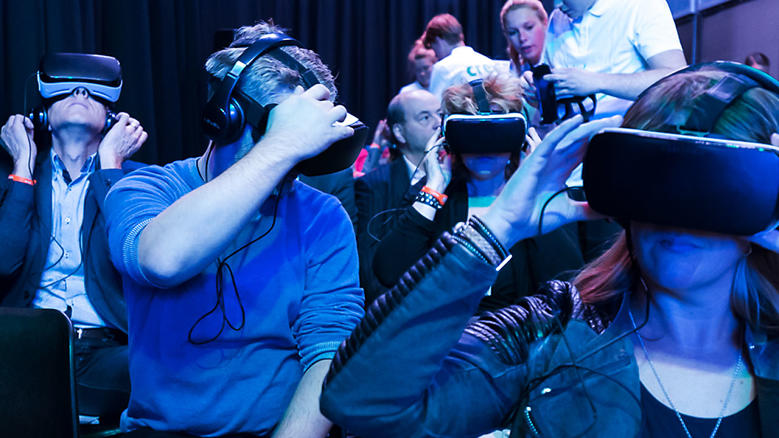
Startups run into countless problems, but my company recently hit one plenty would consider themselves fortunate to have. We spent millions renovating our office to accommodate up to 185 people, the highest headcount we thought we’d ever hit. Less than a year later, we now have 160 staffers and are looking at costly expansion options—at a cost of several million more.

But what if we didn’t have to pay that price, or could at least reduce it? Vidyard is in the video industry, and as its CEO and a pretty big tech nerd, I’m especially drawn to virtual reality. So I started to wonder if there'd ever come a point when our office could ditch physical walls and open up virtual workspaces instead?

Via fastcompany.com >

How We Think About Work Today Is Completely Wrong

How We Think About Work Today Is Completely Wrong

Thomas Gilovich, a professor of psychology at Cornell University, did a study along with some members of his team to find out how levels of satisfaction are affected by spending money on experiences versus spending money on physical things (I explored this at length with him during a podcast conversation). Gilovich and his team found that people who spend money on physical things such as phones, computers, houses or cars tend to have a drop in satisfaction as time goes on. On the other hand, they found that people who spend money on experiences, like skydiving, traveling or learning a new skill, have higher satisfaction levels overtime. Think about that for a minute. Overall you will be happier when you spend money on experiences versus physical things. This is a profound finding.

Via inc.com >

More evidence that we need to stop sitting so much — especially men

More evidence that we need to stop sitting so much — especially men

If you have a desk job, it is pretty easy to spend most of your day on your bum. Even after you punch the clock, chances are there will be more time sitting between your commute and the nightly intake of your favorite shows. You know you should at least walk a bit more during the day.

If you are like most people, it is difficult to get motivated. But recent research might push you in the right direction — especially if you are a man.

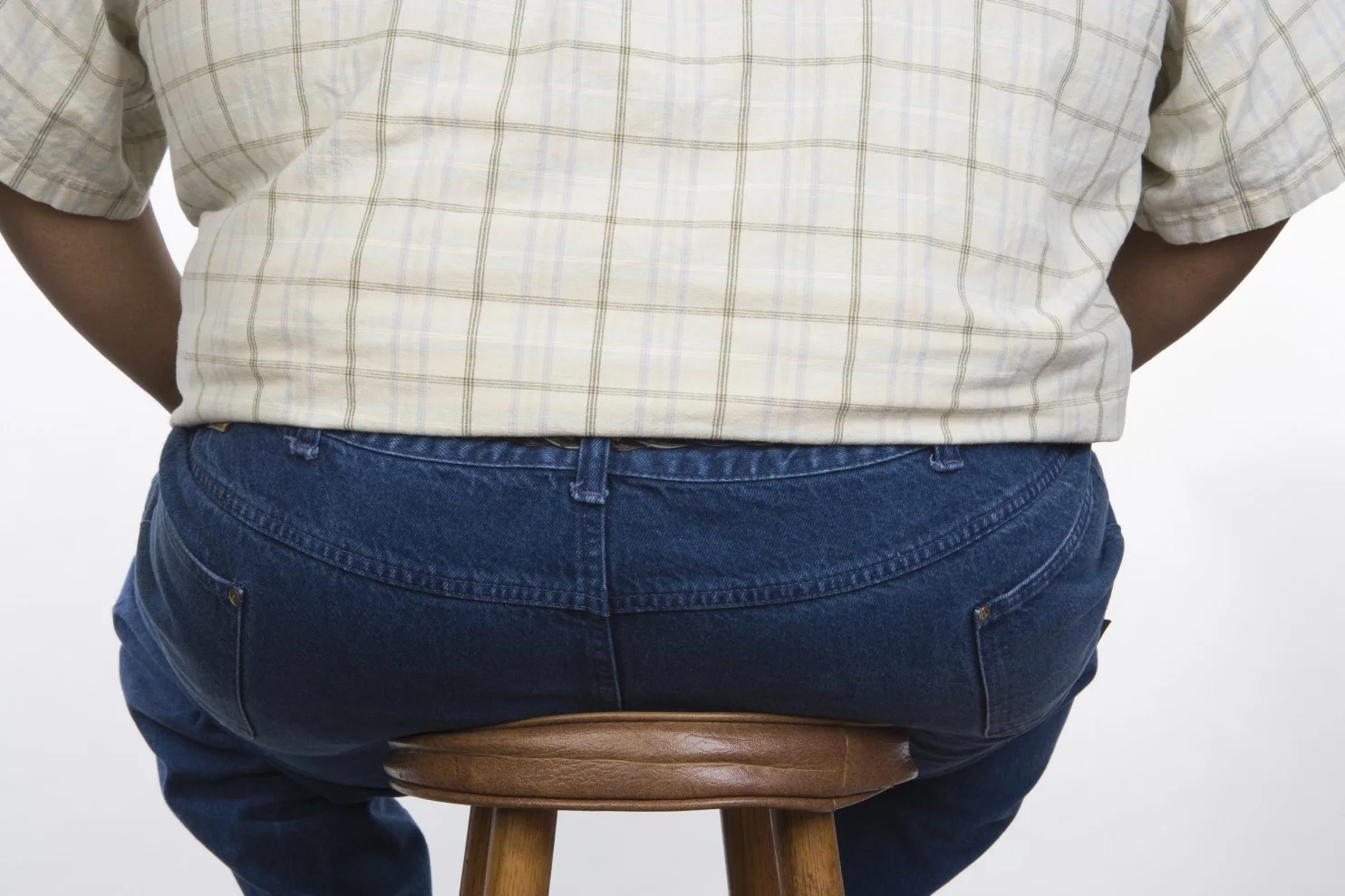
In a study published Thursday by the Centers for Disease Control and Prevention, researchers looked at the amount of time 4,486 men and 1,845 women spent sitting during work, school and at home. They examined obesity among participants, ages 20 to 79, by measuring the size of their waistlines and percentage of body fat. No matter the metric, the more men sat, the likelier they were to be obese. Via washingtonpost.com >

The Hitchhiker’s Guide to the Workplace

The Hitchhiker’s Guide to the Workplace

We know, and have for a long time, that the workplace is in a state of near constant flux and so we often fall into the trap of assuming that there is some sort of evolution towards an idealised version of it. That is why we see so many people routinely willing to suspend their critical facilities to make extravagant and even absurd predictions about the office of the future or even the death of the office. This is perniciously. faulty thinking. However we can frame a number of workplace related ideas in terms of evolutionary theory, so long as we accept one of the centralprecepts about evolution. Namely that there is no end game, just types progressing and sometimes dying out along the distinct branches of a complex ecosystem. As a nerdy sort of guy of a certain age, I’ve tended to frame my thoughts on all of this with reference to an idea from The Hitchhiker’s Guide to the Galaxy by the great Douglas Adams.

Public Art Promotes Drive for Human Creativity

Public Art Promotes Drive for Human Creativity

Paris has the Eiffel Tower, Chicago has “The Bean,” and Hong Kong has Tian Tan Buddha. Art installations on a large scale can become iconic symbols of communities and culture. Public art at any scale, concluded John McCarthy in the Journal of Urban Design, can contribute to a type of placemaking that will grow a creative element, attract investment, cultivate social unity and enhance the quality of residents’ lives. New public art installations are drawing from their local communities and delivering meaning in vibrant, long-lasting ways.

2017 Top Workplace Design Trends

2017 Top Workplace Design Trends

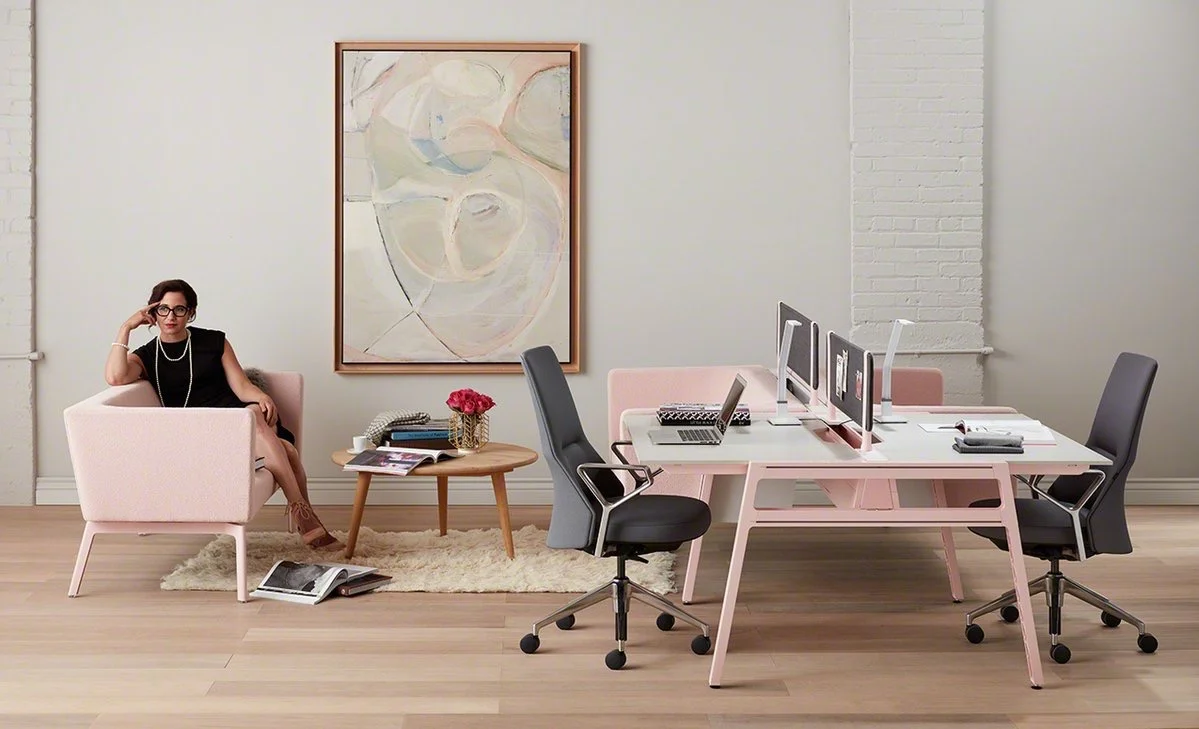
Workplace design is an ever-evolving art as much as a science. From their physical layout -- closed vs. open spaces, for example -- to the color of the walls and the arc of the lighting, scientists and designers are constantly at work to improve American offices for the planet, human health, and corporate productivity. Top office designers are predicting several strong trends in the industry for 2017.

Work. Walk 5 Minutes. Work.

Work. Walk 5 Minutes. Work.

Stuck at your work desk? Standing up and walking around for five minutes every hour during the workday could lift your mood, combat lethargy without reducing focus and attention, and even dull hunger pangs, according to an instructive new study.

The study, which also found that frequent, brief walking breaks were more effective at improving well-being than a single, longer walk before work, could provide the basis for a simple, realistic New Year’s exercise resolution for those of us bound to our desks all day.

Via nytimes.com >

How Physical Space Shapes Team Culture, and Why You Should Care

How Physical Space Shapes Team Culture, and Why You Should Care

An intangible power emanates from the spaces in which we live and work. It touches and shapes our behavior, our perceptions, and our interactions. When designed well, a space can make you feel deeply appreciative (and, in my case, perhaps a little jealous) of the amazing people who can so artfully shape that kind of visceral experience. It was this same power that touched me when I made my first recruiting trip to California to join One Workplace as their Creative Director.

5 Reasons Your Office Has Changed

5 Reasons Your Office Has Changed

Somewhere between Dilbert and The Jetsons, our workplace changed. We went from private executive office suites and rows of cubicles to open floor plans and a mobile workforce. And, the pace of change has only continued to accelerate. Recently, business leaders began moving the success conversation from wealth to wellbeing. And, as a result, offices are seeing a renaissance and changing again to support the new way work is done.

The focus is all about you. Cafes are coming to life, becoming hubs of conversation. Multi-media rooms are transforming previously static spaces to allow for real-time interaction with remote workers. And, quiet spaces are being reimagined to support rejuvenation and ideation.

Office construction numbers in the United States support the underlying feeling that changes are happening. According to the United States Census private general office construction increased 19.9 percent in one year from June 2015 to June 2016. And, those numbers have continued to rise throughout 2016. IBISWorld’s recent market research report showed the commercial property remodeling industry is benefitting from large increases in demand. In the last five years, office rental vacancies have decreased and consumer spending on office remodeling has gone up.

Office Space: New study reveals who's working happy: It's not accountants

Office Space: New study reveals who's working happy: It's not accountants

Being happy at work is something everyone wants. However, there are a variety of factors that determine who reaches workplace nirvana, including employee's age, gender and field.

In a recent comprehensive study, Robert Half surveyed more than 12,000 U.S. and Canadian workers to examine the key contributors to employee happiness.

Overall, the survey found that most professionals are generally happy. On a happiness scale of zero to 100, respondents scored a 71. Not surprisingly, results also found that employees who do not fit well with their employer are the most apt to leave. One-third of workers surveyed said they likely will leave their employer in the next six months. The survey also shed light on the top three drivers for workplace happiness, finding that having pride in one's organization is the top driver, being treated fairly and with respect is the second, and employee appreciation came in third.

Designing a workplace to keep millennials healthy and happy

Designing a workplace to keep millennials healthy and happy

“You’re only one yoga class away from a good mood,” says the lean but muscular yoga instructor, who encourages us to smile as she leads us through a flow of warrior poses. Natural light floods the room through wall-to-floor windows and a skylight that breaches the lofted ceiling. Acoustic folk songs streamfrom the sound system. As the instructor guides us to stand in mountain pose with spines tall and eyes closed, she prompts us to “find that stillness within.”

Though this seems like an upscale yoga studio, it’s not. It’s just an ordinary day at the GoPro corporate offices in Carlsbad, Calif. The half-dozen yogis that surround me are employees practicing asanas before their lunch break. GoPro, like other corporations steeped in millennial culture, has taken the route paved by Silicon Valley icons such as Google and Facebook in eschewing the old work-like-a-dog-until-you-retire (or die) ethic for a more holistic, healthful work ambiance. Productivity is still highly valued in this new corporate model, yet proponents believe that greater productivity is achieved when employees are healthier and happier.“

Here Is What Your Workday Will Look Like in 10 Years

Here Is What Your Workday Will Look Like in 10 Years

Remember when the office workday was simple? Everyone used to follow the same routine: Show up at 9, leave at 5, rinse, and repeat.

Those days are long gone, and they’re not coming back. Now, you might work 9 to 5, but you could also choose to work 7 to 3 or 11 to 7 and split your time between home and the office. Perhaps your supervisor flies in from New York to work at an unassigned desk a few times each month and some of your teammates only pop in sporadically because they’re telecommuters or freelancers.

Top Eight Workplace Trends Managers Can Expect In 2017

Top Eight Workplace Trends Managers Can Expect In 2017

Due to demographic shifts and rapid technological advancements, the U.S. workplace is undergoing exciting changes. For managers, it’s key to be informed about how these changes will affect the workplace so they can proactively harness them to their organizations’ advantage. What follows are the top eight workplace trends you can expect in 2017.