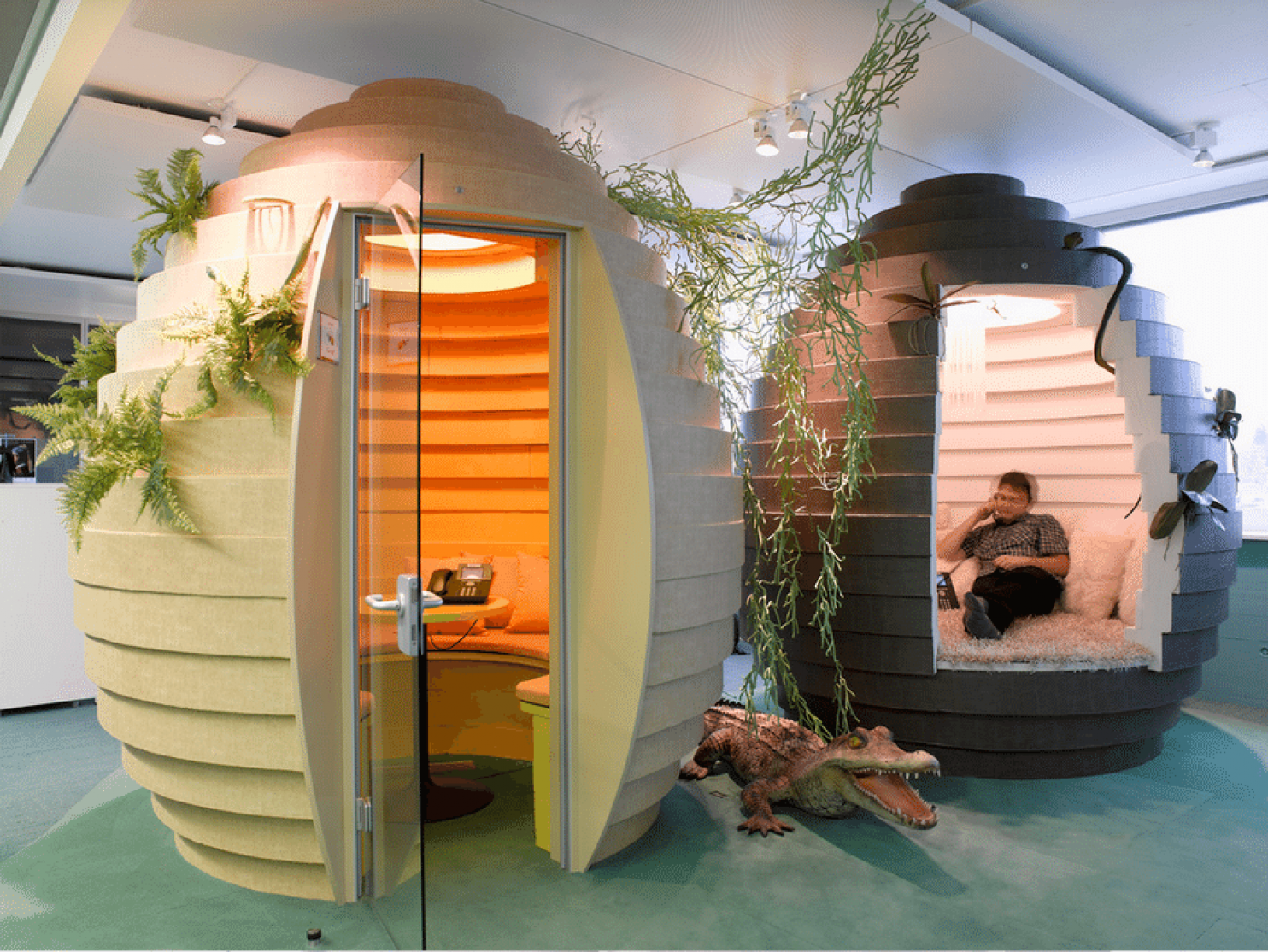

“One of the first things we did when we moved into the office was issue everyone with toy Nerf guns,” Paul Harris gleefully admits. The co-founder of BrightHR explains that he wanted the Manchester office to be an environment where if people were feeling overwhelmed, pressured or tired they could easily step away from the desk and have fun or simply relax.
The Gensler 2016 Workplace Survey Reveals Workplace Secrets of the Most Creative and Innovative Companies
Gensler today announced the results of its U.S. Workplace Survey 2016, finding that optimal workplace design is a key driver of organizational innovation. Gensler research uncovered a statistical link between the quality and functional make-up of the workplace and the level of innovation employees ascribe to their organization, and found that a high-performing workplace—one that prioritizes both individual and group work—creates an ecosystem of innovation across organizations and is a crucial predictor of how innovative an employee sees their company to be.
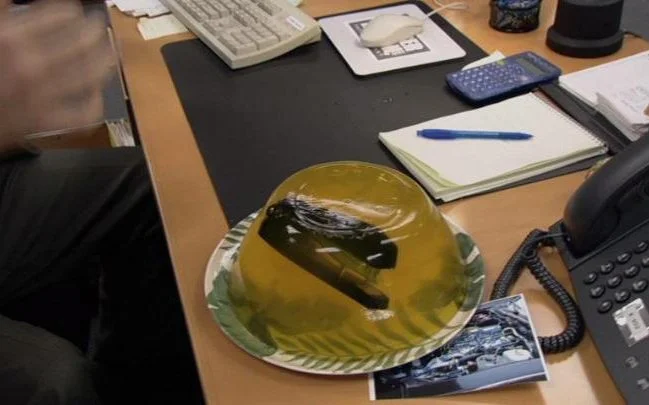
How The Office killed the workplace prank
Did you come into work last week to find someone had superglued your mouse down or covered your entire workstation in clingfilm?
Probably not. Office pranks, larking about, near the knuckle banter were all part of an era when a more laissez-faire attitude to work existed. Today’s employees are expected to be focused, industrious and responsible.
How Office Lighting Can Boost Your Productivity
Many employees take pride in personalizing their workspace. But while it’s not uncommon to see desks littered with action figures or cubicle walls cluttered with pictures, few people give much thought to the light around them. The intensity and type of light we live with during the workday can have a major impact on our health, happiness, and productivity. Even if you have little choice but to deal with the overhead fluorescents in a windowless office, there are still several steps you can take to make the light work for you.
Multi-tasking and workplace distractions don’t allow us to focus on the essentials
Although the structure of our brains is largely the same as that of our hunter-gatherer prehistoric ancestors, that does not mean they are immutable. Research shows that the way our brains change in response to technology and the changing workplace suggests they are subject to a certain degree of ‘rewiring’. For example, a recent study found that the emotional response of adults to smileys in emails and texts is exactly the same as they would have to real faces. Tellingly, however, this appears to be learned behaviour because babies do not exhibit the same response. One other aspect of working life that is now proven to change the way our brains work – and not in a good way – is multitasking. Research published by Kep Kee Loh and Ryota Kanai of the University of Sussex found that “Individuals who engage in heavier media-multitasking are found to perform worse on cognitive control tasks and exhibit more socio-emotional difficulties”.
PODCAST: How Connected Spaces Enhance Worker Performance
In this episode of 360 Real Time, Scott Sadler, manager of integrated technologies discusses the future of smart + connected spaces and how thoughtfully integrated technologies can use data to improve the experience people have at work.
Forget Beanbag Chairs. Amazon Is Giving Its Workers Treehouses.
Just off a remote stretch of road here, near wineries, horse stables and farms, Amazon is secretly growing something, but it’s not what Jeff Bezos, Amazon’s chief executive, calls the “tiny seeds” that could become the company’s next big businesses.
No, Amazon is growing actual plants, more than 3,000 species of them spread around a one-acre greenhouse a half-hour’s drive from Amazon’s headquarters in Seattle. There are carnivorous pitcher plants, exotic philodendrons and orchids from Ecuador that resemble the menacing flora from “Little Shop of Horrors.”
Why You'll Soon Be Living And Working in a More Transparent World
Glassdoor is a career website that is like a TripAdvisor or Yelp for organizations. All you have to do is search for the name of almost any company and it will reveal a wealth of information like employee salaries and reviews, pictures of offices, CEO approval ratings, and even benefit details. So nearly anything you would want to know about an organization can be seen, for free! The information on Glassdoor is shared by employees about the organization where they work. This exceptional amount of transparency is great if you have a wonderful place to work. However, if you have unethical practices and don't treat your employees well that will also be uncovered!
Gender-binary restrooms: A social problem with a design solution?
The deeply embedded practice of designing gender-segregated restrooms may feel like the norm to many, but in recent years, transgender and gender-nonconforming individuals and the organizations that support them have voiced the everyday discomfort and sense of alienation felt by those who cannot use the restroom of their choice in public spaces. They point out that gender-segregated facilities inherently exclude people who might not conform to stereotypical gender definitions or modes of expression. Moreover, research shows that transgendered and gender-nonconforming people of color specifically suffer under this status quo at disproportionately higher rates: both in terms of the health impacts resulting from not using the restroom for long periods of time and by experiencing violence in public restrooms. As this form of inequality gains a wider understanding, architects and designers must decide whether they wish to perpetuate inequality through their designs or advocate for change.
Fascinating photos show the best and worst office designs for employees
The way that office design has evolved says a lot about the way we think about company organization and work in general. In the first half of the 20th century, many white-collar workplaces in the United States were still organized into rows of corridor offices. But by the 1950s, offices had begun to shift to the kind of layout you might see in “Mad Men”: a ring of offices around the corner of the room, surrounding a secretarial pool or accountants in the middle. In this design, only a company’s higher-ups had privacy: The lower-downs lived out their working lives in plain view.
Millennials Aren't More Motivated By "Purpose" Than The Rest Of Us
Millennials are a demanding bunch, or so it would seem. Deloitte’s 2016 Millennial Survey reports that, if it were up to them, the cohort "would place far greater emphasis than current leaders on ‘employee wellbeing’ and ‘employee growth and development.’ They would be less focused on ‘personal income/reward’ or ‘short-term financial goals.’" That missing sense of meaning and opportunity appears to be lacking so grievously that, as Deloitte researchers put it, "Millennials have one foot out the door" of their current employers.
Efficiency, Productivity Critical For Office Users
SAN DIEGO—Optimizing their use of space and facilitating productivity via recruitment, retention, health and wellness are top of mind for office users in many markets throughout the country, Cushman & Wakefield’s newly appointed director of brokerage for the San Diego region Nick DiPaolo tells GlobeSt.com. We spoke with DiPaolo, formerly with CBRE’s Denver office, exclusively about his new role and what brokers need to focus on in the San Diego office market.
More People Work From Home Now Than Ever Before
Thanks to 24/7 connectivity, the boundaries between work and life are eroding, several studies have found. A survey from EY, a global assurance, tax, and advisory services organization, found that 64% of U.S. workers report they’re working two to four hours more a week, and one-third (36%) are on the job an extra five hours or more. No wonder satisfaction with work-life balance is sliding downward as well. Glassdoor’s most recent survey of employee feedback from about 60,000 company reviews revealed a drop in ratings from 3.5 (out of a possible 5) in 2009 to 3.2 this year.
How to Build a Collaborative Office Space Like Pixar and Google
When the Second World War ended, universities struggled to cope with record enrollments. Like many universities, the Massachusetts Institute of Technology built a series of new housing developments for returning servicemen and their young families. One of those developments was named Westgate West. The buildings doubled as the research lab for three of the greatest social scientists of the 20th century and would come to reframe the way we think about office spaces.
A new approach to office design is redefining our relationship with property
At the end of the 18th Century it was becoming apparent that overpopulation was something the human race would need to address for perhaps the first time. Advances in technology and the urbanisation that followed the Industrial Revolution had created a new set of challenges. These were most famously laid out in a 1798 book called An Essay on the Principle of Population, written by an English cleric called Thomas Malthus. The book helped to influence the nascent discipline of economics and informed the thinking of Charles Darwin when he wrote On The Origin of Species some sixty years later. The term Malthusian remains in use to this day when describing the central paradox laid out in the book. This paradox suggests that because population increases geometrically (doubling every 25 years by multiplication), while food production only grows arithmetically (by addition), the end result can only be depressed wages and ultimately starvation.
3 Ways Millennial Tech Talent is Shaping CRE Markets
Tech markets are growing like crazy. And not just in Silicon Valley, either—tech-talent is exploding from Charlotte, NC, to Madison, WI. Millennials are driving much of this growth, and their preferences in workplace and community are leaving marks on commercial real estate nationwide.
Despite fears that Silicon Valley and the tech boom are slowing down, tech jobs have grown by over 27% in the US over the last five years, according to CBRE’s 2016 Scoring Tech Talent report. Among the largest markets, the San Francisco Bay Area experienced the highest growth at 61.5% with Baltimore just a fraction behind. The top small tech markets grew even quicker—Charlotte, NC, saw job explosion at over 74% while Nashville came in at just under 68%.
Which aspects of workplace design are most important to personal wellbeing?
There is no doubt that the UK’s office based knowledge industry is facing a crisis in the form of a ‘wellbeing deficit’. Both the Confederation of British Industry (CBI) and Health and Safety Executive (HSE) have reported record levels of absenteeism, with the latter attributing 23.3 million lost working days to work-related ill-health, such as depression, stress, anxiety and musculoskeletal disorders. A great deal is already known about the causes of the key issues of employee stress and demotivation, but more work needs to be done to establish how organisations can meet their corporate goals with regard to these issues, whilst still engaging, motivating and nurturing their workforce. A significant body of published research has identified that a sense of ‘personal control’ can have a hugely positive impact on employee wellbeing, but how can we engender that control when it comes to creating a productive working environment?
The Chicken and the Egg, or Amenity Design and Corporate Culture
Workplace amenities, both large and small, are helping shape and define corporate culture. Amenities in the past were fairly simple—cafeteria and conference center, and maybe a fitness center or on-site childcare. Today, companies are giving more thought to extra offerings, from laundry services to bowling alleys. In addition to delighting employees, these atypical spaces are defining culture both from within and outside their building or campus.
Generation Z and the 6 Forces Shaping the Future of Business
First there were Baby Boomers, then Generation X, and then Millennials. But now a new generation is entering the workforce and shaking things up by changing the way we look at employees and work in general. Gen Z arbitrarily applies to people born between 1995 and 2005, but it actually means more than that. As more generations come into the workforce, the focus is starting to shift from the year they were born to the characteristics they deliver.
Virtual Work and the Collaboration Challenge
“However, today’s keyboard-tapping workers have very little context around who their counterparts are, how they feel about things, or what they hope for – in other words, what motivates them. Without a panoramic perspective, it’s difficult to form a sense of common purpose."