
Working Life

Graduates want meaningful work and a fully digitised workplace

Graduates want meaningful work and a fully digitised workplace

Millennials entering the workforce want employment that offers meaningful work, ongoing learning opportunities and a fun workplace culture. This is according to a new study by Accenture on the workforce of the future which reveals that new graduates are increasingly digital, embracing new technologies, both to find work and on the job. The fourth annual Accenture Strategy 2016 U.S. College Graduate Employment Study found that the majority (70 percent) would rather work at a company that provides an employee experience built on a positive social atmosphere and receive a lower salary – up 10 percent on last year’s graduating class. Almost all (92 percent) of 2016 graduates said it is important to be employed at a company that demonstrates social responsibility. They are also three times as likely to prefer to work for a small or medium-sized company (44 percent), versus a large company (14 percent), indicating their preference for a smaller team environment.

Read the article on workplaceinsight.net > 

How fitness amenities can help offices lead the pack

How fitness amenities can help offices lead the pack

Water-cooler conversations used to focus on last night’s TV. Now they’re less about watching sports and more about last night’s training session.

Companies are responding to a growing number of fitness-minded employees by improving their health and wellness amenities. State-of-the-art office gyms, locker rooms and lunchtime fitness classes are becoming key amenities for helping attract and retain workers—particularly the fitness-focused Millennial generation.

Read the article on jllrealviews.com >

Hotel Lobbies – the preferred workplace

Hotel Lobbies – the preferred workplace

There is little new about working in hotels, says Alex Gifford, Brand & Communications Manager from Allermuir. For a long time they have had meeting rooms and conference facilities, while lobbies have always been used for meeting clients or colleagues.

Read the article on hotel-magazine.co.uk >

How the New Emotional Workplace Affects Hiring, Retention and Culture

How the New Emotional Workplace Affects Hiring, Retention and Culture

Do you want to attract and retain top performers? It might be time to start looking more closely at how you foster relationships. Candidates are driving the job market in 2016 and they are increasingly making professional decisions based on emotional compatibility with their prospective employer. In fact, according to a recent survey of American office workers, positive emotional connections and work relationships are no longer just a luxury for employees and job seekers -- they’re a necessity. This priority on relationships is forcing employers to rethink their strategic approach to hiring, candidate retention and growing corporate culture. Relying on emotional intelligence factors and personality data are driving the American workplace to become a new emotional workplace.

Read the article on entrepreneur.com >

Workplaces of the Future Will Feel More Like 'The Matrix' Than 'Office Space'

Workplaces of the Future Will Feel More Like 'The Matrix' Than 'Office Space'

The cliché workplace environment of the 20th century makes me think about dull neon lights, desk cubicles, stale air and large IBM computer monitors. I cannot imagine how this would stimulate productivity, innovation and a sense of community for today’s office workers or generation.

Read the article on entrepreneur.com >

HOW TO ENABLE MORE TRANSPARENCY AT WORK

HOW TO ENABLE MORE TRANSPARENCY AT WORK

The topic of transparency is met with widely varied responses in the built environment. In workplace design, the conversation can quickly turn to negative associations with privacy and distractions. However, these concerns are not intrinsic to transparency itself. Through well-considered environments, the benefits of transparency across social and spatial realms can be realized.

Read the article on workdesign.com > [paywall]

Shuttleworth on offices: 'Forget the money – remember the human'

Shuttleworth on offices: 'Forget the money – remember the human'

BCO CONFERENCE PREVIEW: We need to throw out the rule book on conventional office design to put the well-being of occupants first, says Make founder Ken Shuttleworth 

The final plenary session at the 2016 BCO conference in Amsterdam will argue that ‘anarchy’ is the only way forward when it comes to creating the workplace of the future. By anarchy, we mean a disavowal of old modes of thinking, adopting totally new ideas that challenge convention, turning accepted norms upside down and throwing out the rule book.

Read the article on architectsjournal.co.uk >

The Evolution of Workplace Dress and How it Affects Company Culture

The Evolution of Workplace Dress and How it Affects Company Culture

Thirty, and even twenty, years ago workplace attire wasn’t even a discussion. Men came to work in a suit and tie and women wore dresses and skirts. Everyone “dressed for success” regardless of what position in the company they held or who they interacted with daily. This was also a time when each individual sat at their desk all day and connecting with co-workers was reserved for lunch breaks. My how things have changed!

Read the article on iofficecorp.com >

Why Congress Should Co-Work

Why Congress Should Co-Work

I’ve worked in both a Capitol Hill cubicle, as well as an open co-working space at a startup and I can tell you both Congress and the tech community can learn a thing or two from each other. Taking a page from innovative industries can radically transform the way elected officials represent their constituencies and change the way policy gets made. By physically bringing staffers together we could break down the partisan barriers that often keep staffs from communicating across the aisle, all while simultaneously creating a more representative constituent experience.

Read the article on huffingtonpost.com >

How a new type of coworker is changing office life

How a new type of coworker is changing office life

Your coworkers sitting nearby probably know how you take your coffee or the song you play when you need creative inspiration.

However, in the modern office you are engaging more than ever with a different, quieter teammate that also recognizes your preferences, from email spam to office temperature. This colleague doesn’t gossip or eat lunch with you—but they greet you every morning, and sort your emails overnight.

Read the article on jllrealviews.com > 

LinkedIn's new office wants you to get the f*ck back to work

LinkedIn's new office wants you to get the f*ck back to work

In between its 10,000 daily posts cheerleading for Donald Trump, Business Insider still occasionally finds time to publish some of the journalism that made it famous. That is, slideshows of fancy tech offices.

This week it was the turn of LinkedIn’s new San Francisco skyscraper at 2nd and Howard. BI’s Matt Rosoff took his camera on a tour of the building, which he described as “unlike anything else we've seen.”

I agree. Judging from BI’s slideshow, LinkedIn’s building is markedly different from other tech company headquarters. In so far as it’s extraordinarily, aggressively dull...

Read the article on pando.com > [paywall]

The digital future of work is more about humans than machines, claims study

The digital future of work is more about humans than machines, claims study

The claims that robots will render the human species redundant are largely exaggerated suggests a new report from Cognizant’s Centre for the Future of Work and the Economist Intelligence Unit. But we will have to find a new path and it may be one that emphasises human strengths and characteristics working alongside robots. The study of 420 managers in Europe and the US explores the future of the workplace in an increasingly automated world and suggest we will also see the emergence of new jobs involved in the design of augmented reality and avatars as well as a generally greater emphasis on robot-human partnerships in an increasingly digital world. The study claims, unsurprisingly, that the reliance on physical office space will recede, forcing businesses to employ intelligent workplaces which will monitor workers’ environment, needs and even moods.

Read the article on workplaceinsight.net >

New partnership to encourage creation of age friendly workplaces

New partnership to encourage creation of age friendly workplaces

Between 2005 and 2015 the number of people working over the age of 50 in the UK increased by 2.5 million, while those working over the age of 65 more than doubled. By 2022, there will be 12.5 million job vacancies that need to be replaced due to people leaving the workforce in addition to the two million new vacancies that will be created. However, there are estimated to be just seven million younger people to fill them. Recruiting and retaining older workers will be critical to closing this gap. Now in a major new initiative, the Centre for Ageing Better has gone into partnership with Business in the Community to identify and test what works to recruit, retrain and retain older workers. Through this partnership, it wants to hear from employers across the country who see the benefits of older workers and who are implementing changes to create age friendly workplaces.

Read the article on workplaceinsight.net >

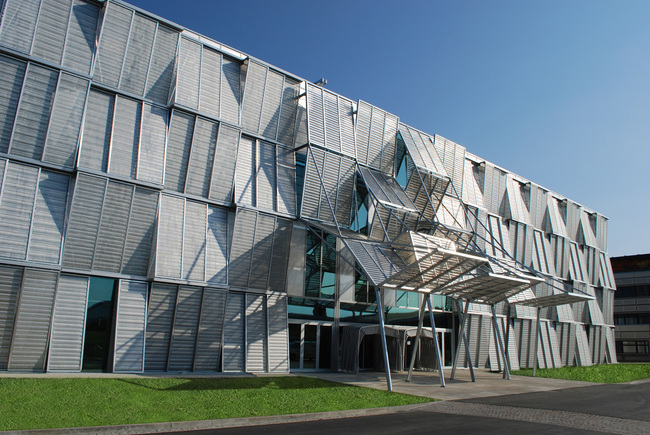
The Proven Benefits Of Daylighting On Employees And The Environment

The Proven Benefits Of Daylighting On Employees And The Environment

There are many benefits produced as a byproduct of incorporating daylighting into an office building design. Access to daylight throughout the day improves employee well-being and overall health, even after leaving the office. Besides creating a pleasant working environment for employees, solar protection also plays a key part in supporting sustainable energy efficiency concepts.

Read the article on archinect.com >

A WORKPLACE THAT DOUBLES AS A WELLNESS SPACE: THE NEXT BIG THING?

A WORKPLACE THAT DOUBLES AS A WELLNESS SPACE: THE NEXT BIG THING?

Is having a yoga studio, meditation classes, and fresh smoothies in your office going to be commonplace in the near future? Two former staffers at WeWork—the coworking mega-company valued at $16 billion—think so, and they’re making that endorphin-boosting dream a reality in New York City.

Read the article on wellandgood.com >