

The key to increasing employee engagement, health, happiness and well-being lies in employers who establish a workplace culture of wellness, according to a study released Feb. 17 by Humana and the Economist Intelligence Unit.
Contract furnishings provider, Hightower received multiple awards at NeoCon 2021, including IIDA's 'Best Small Showroom' (under 4,000 sf) and 'Best of Competition' for its newly designed Chicago showroom.
Humanscale welcomes Elizabeth Margles to its Marketing Division in the role of Chief Marketing Officer. Margles comes to Humanscale with twenty years of experience in design, fashion and retail and a background in public relations and advertising.
The exclusive relationship with Kontrol's BioCloud® Technology will provide real-time detection of airborne pathogens such as SARS-CoV-2 to help make workplaces safer as organizations return to the office.
The key to increasing employee engagement, health, happiness and well-being lies in employers who establish a workplace culture of wellness, according to a study released Feb. 17 by Humana and the Economist Intelligence Unit.
Joel Pavelski, 27, isn’t the first person who has lied to his boss to scam some time off work. But inventing a friend’s funeral, when in fact he was building a treehouse — then blogging and tweeting about it to be sure everyone at the office noticed? That feels new. Such was a recent management challenge at Mic, a five-year-old website in New York that is vying to become a leading news source created by and for millennials. Recent headlines include “Don’t Ban Muslims, Ban Hoverboards” and “When Men Draw Vaginas.”
There are many reasons people become disengaged, or not. At Steelcase, our research has shown that the physical environment shapes people’s beliefs and behaviors, and we wanted to understand how the workplace impacts engagement, and what kinds of changes can make a difference. So we partnered with global research firm Ipsos to conduct a study in 17 countries with over 12,000 office workers. We asked questions about their physical environment, such as the type of space they work in, the culture of their organization and what their experience is like at work.
Encouraged by conversations with architects and developers about how wellness as a building concept (especially in office space) is moving forward and gaining believers. It’s proof that we should keep doing what we’re doing. However, after four days at MIPIM we may need to reflect on that long-forgotten concept of personal wellness.
Open spaces, water cooler talk, and allowing employees to update Facebook are often more effective in creating a collaborative workplace than all the team-building exercises your consultants can dream up. Here's a look at what works in the real world.
Flexible working is on the way to becoming the norm in financial services with the average employee spending 39 percent of their time working remotely, according to new research from tech consultancy Intercity Technology. The company surveyed a mere 100 employees from different organisations within the financial services market to gain insight into their workplace habits so you may want to treat this carefully. The respondents also thought this proportion of time spent remote working would increase in the next two years to 41 percent, with an ever increasing adoption of technology-led solutions in the workplace. Additionally, the surveys suggests that 70 percent of employees believe using a device of their own choosing positively impacts the way they work with their colleagues, with the biggest specific benefits identified as flexibility (51 percent), more productivity (42 percent) and improved collaboration (33 percent).
A new report from enterprise software firm Samanage, claims that US businesses are wasting up to $1.8 trillion annually on repetitive and mundane tasks that could easily be automated, leaving people free to carry out more productive and creative work. The Samanage State of Workplace Survey, polled around 3,000 US working adults and claims that workers spend an average of 520 hours a year – more than one full day’s work each week – on repetitive services and tasks that could be easily automated, such as, password reset requests, contract reviews and approvals, office supply requests and performing other simple administrative tasks. In addition to lost time and money, the survey also claims employees are skirting organisational IT policy. Outdated technology is holding employees in the modern workforce back from driving process efficiency and identifying ways to make their work life better.
One of the main reasons why books such as Catch 22 and 1984 make such mediocre films, is because celluloid struggles to capture the books’ preoccupation with the ways in which language can be used to subvert meaning and rationality. We don’t always have to lean on the bookcase to see how this works. It’s been evident recently in the coverage of the massive growth of zero hours working worldwide, although they have now been banned in New Zealand. There are now up to 1.5 million people on zero hours contracts in the UK and the adjective most commonly associated with the practice in the media coverage has been ‘flexible’, despite the fact that from the perspective of the majority of the people working on such contracts they are anything but. It’s yet another example of the subversion in our use of the term flexible working. It’s Doublespeak; an expression which means something completely different to, or indeed the opposite of, the thing it is describing.
Evidence keeps piling up that healthy workplaces produce big benefits for employers. Studies show offices and other work areas designed to enhance worker health and wellness not only reduce employee absences and reported illnesses, but also improve productivity and help to attract and retain employees.
The two most common factors influencing work related stress levels are unpredictability (26 percent) and workplace environment (21 percent) according to a poll by US jobs site CareerCast.com. The results, based on 834 respondents found that most of the respondents (62 percent) rated their jobs as highly stressful, while just 11 percent felt the amount of stress on the job was low. Other key stressors were deadlines (20 percent) and safety of others (16 percent). Interestingly, few people felt that length of work day/week (7 percent), personal well-being in danger (5 percent), potential for promotion (3 percent) and travel (1 percent) were major job stressors. Any number of factors can contribute to an unpredictable workplace; either the flow of responsibility changes from day-to-day with new tasks added or changed at random intervals or expectations may change. Running a close second is the workplace environment and culture, which includes interactions with bosses, co-workers and clients/customers.
In 2016, 3.6 million baby boomers will retire, one fourth of millennial workers will become managers, and Generation Z (those born in 1994-2010) will be entering the workforce. How will this change the workplace?
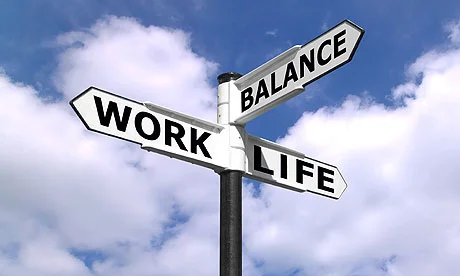
The latest company to set out its vision of workplace trends is food services provider Sodexo. The company’s 2016 Workplace Trends Report suggests there are nine key areas that managers should address, each linked by the common theme of striking the right balance between the organisation’s commercial objectives and the needs of its stakeholders. The report is a detailed meta-analysis based on primary research, client feedback and research from academics, trade associations and FM providers. The report covers the most talked about themes in workplace design and management including wellness, work-life balance, diversity, green building and workforce engagement. The authors acknowledge the challenge firms face in striking the balance between these complex and conflicting demands and call for an ‘holistic’ approach to resolve them (which may suggest they have as much of an idea about the right answers as anybody else).
Is the nine-to-five grind approaching monotony? has your workmate’s consistent sniffing reached murderous levels? Are the passive-aggressive post-its on the fridge piling up? To even the playing field and invoke mirth for your co-workers, arrive at the office early to set up some of these dastardly deeds.
Ernest Hemingway never ate at his desk. He also never read the newspaper, talked on the phone, or opened his mail at his desk. He wrote at his desk. That’s all.
Phyllis Moen, a sociologist who was widowed when her two children were young, has made a career studying the challenges of working full time while raising a family. She was an early voice calling for the government to provide paid maternity leave and offer benefits for part-time workers, but eventually, when she saw no signs of progress, she began considering instead the ways that corporations could reconfigure work to address the realities of the modern employee, who was more likely than ever to be a single parent or part of a dual-income couple. ‘‘We wanted to do a field experiment at a corporation that reduced its hours,’’ she said, ‘‘but realized nobody would let us do that. We thought they would be more willing to experiment with giving workers more control.’’
Although a quarter of UK workers now regularly work out of the office, there is a still a significant number (39 percent) who don’t know they have the right to request flexible working. Yet according to new research from UC EXPO, conducted amongst 1,000 UK office workers, job roles offering flexible working are more likely to attract a better candidate, with 82 percent of workers saying they would be more likely to take a job that offered flexible working benefits. An additional 71 percent said that the offer of flexible working would help businesses to attract a greater international talent pool. The research finds that the benefits of flexible working are more widely recognised than a year ago, with a fifth (22 percent) of those surveyed having worked at home or remotely more throughout 2015 than in 2014. Productivity concerns around employees working from home is decreasing, with over two-thirds (67 percent) believing that productivity levels either increase or stay the same when they work remotely.
Businesses that seek to occupy premium or grade A office accommodation are traditionally seduced by the next big thing. What was once a bespoke architectural design, then became an icon, a taller building, one made of glass and finally the inevitable iconic, tall, glass tower. Now it seems a good number of those businesses have moved on to green buildings as a must have upgrade to the skyscrapers of glass and steel. Green, it appears, is the new black. But is that really the next big thing or is being green merely the last big thing? Even worse, does going green in terms of building design actually deliver the types of benefits that an occupier or landlord was anticipating, beyond the significance of branding and an alignment with grade A quality office space? The green building narrative is a particularly powerful one and the growth of LEED and BREEAM rated buildings over the last decade is proof of that power.
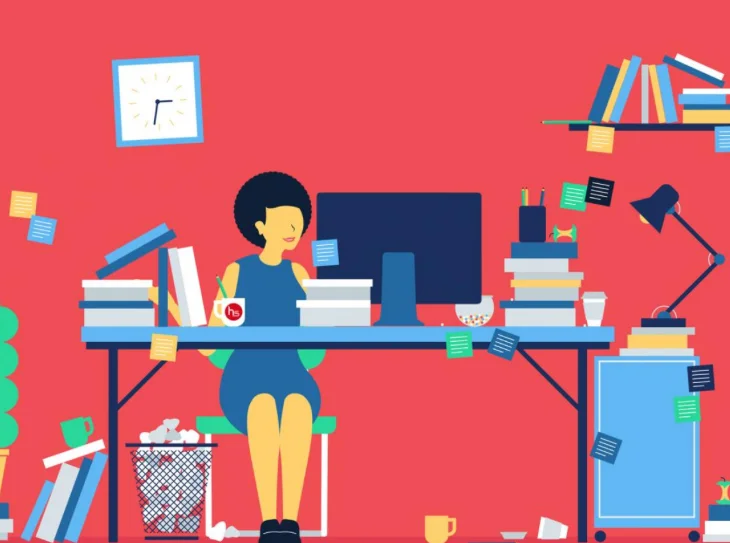
Are you messy? Obsessively tidy? Do you customise your office space? You can learn a lot about yourself - and your colleagues from how you keep your desk, apparently. Here, environmental pychologist and author Lily Bernheimer shares her analysis on what your desk says you about you.
New research released today shows that workers at a Fortune 500 company who participated in a pilot work flexibility program voiced higher levels of job satisfaction and reduced levels of burnout and psychological stress than employees within the same company who did not participate.
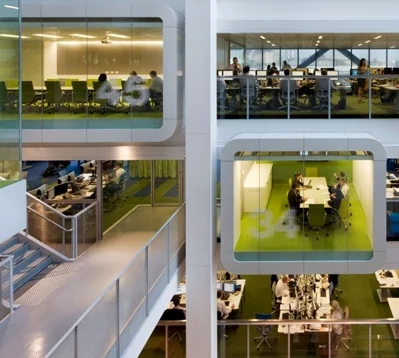
Beige partitions have given way to napping lofts, lunch gazebos and lots of open space. But are employees any happier or more productive?
Over the last century, the office has been continually improved upon, in an attempt to make it work better and be a better place to work. But the whimsy and extravagance of the contemporary office is something new. Even when they were luxurious, the early offices of the 20th century were never wacky. Frank Lloyd Wright’s Larkin Administration Building from 1906 contained a soaring central light court and recreation rooms for its largely female staff: amenities that were unheard-of at the time. But no one was encouraged to take naps; there were no secret doors leading to interior ‘‘speakeasies,’’ like the one at LinkedIn’s offices in New York. Early offices were designed to extract relentless productivity from workers. The prodigal offices of today are the logical endpoint of a decades-long backlash against this way of thinking.