
Working Life

Too much choice at work just leads to paralysis by confusion

Too much choice at work just leads to paralysis by confusion

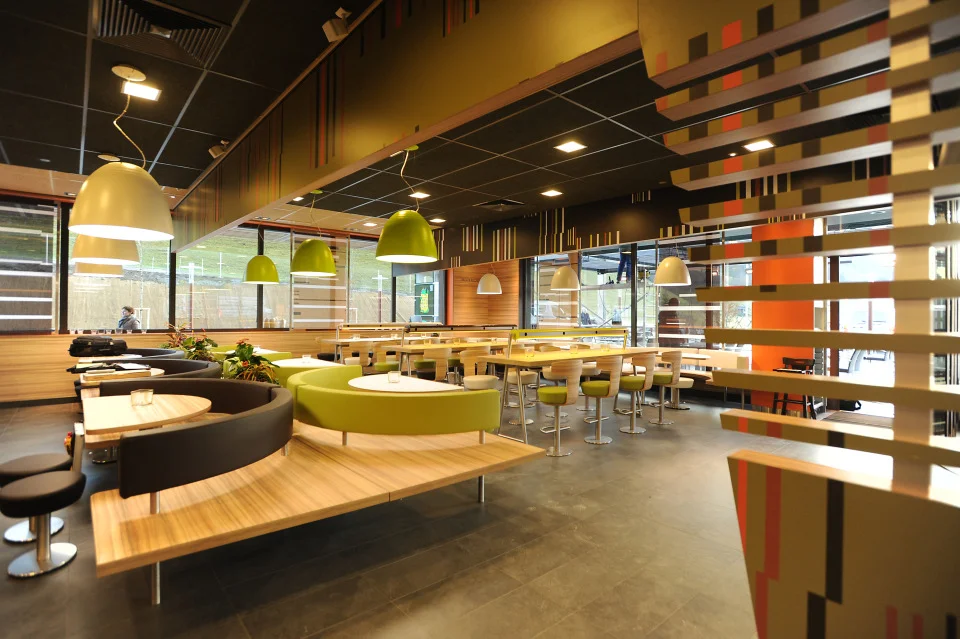
There is a general acknowledgement within the realm of FM and workplace that its world is changing; and that organizations must be ready and able to adapt to the shifting landscape, or else slip through the cracks and go under. Various factors are contributing towards this drastic reform, including three key infrastructures: technology, corporate and social. The rise of technology will play a significant part in the inevitable workplace revolution, as will the workforce of tomorrow. In addition to these technological advancements, five generations are now making up our modern workforces. It is, therefore, imperative that organisations offer a working model and a workspace that can be tailored to suit the multitude of traditional and modern workers, in order to meet current and future needs. Embedded in our psyche is the belief that the more choices we are presented with, the better, but is that true?

Read the article on workplaceinsight.net >

Over half of UK employers will implement flexible working by next year

Over half of UK employers will implement flexible working by next year

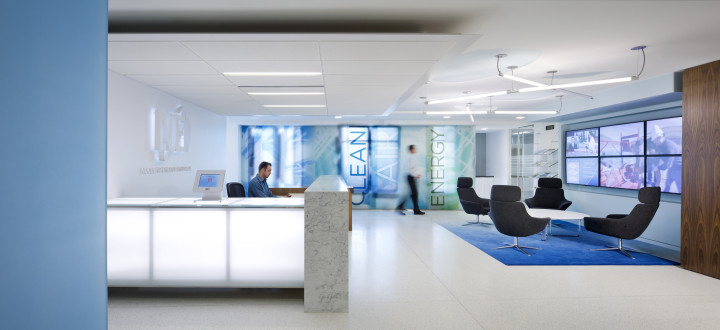
The UK is on the verge of a flexible working ‘tipping point’ with more than half of employers offering staff more choice of where to work. Working anywhere: A winning formula for good work? produced by Lancaster University’s Work Foundation, and commissioned by Citrix, reveals that 2017 will be the time when over half of organisations in the UK are likely to have adopted flexible working. It also predicts that over 70 percent of organisations will have followed suit by 2020. The Work Foundation, which hosted interviews with academics, business leaders and the public sector to glean insights around the theme of flexible working, supported by research with 500 managerial level employees within medium to large businesses, warns that there is still much to be done to address attitudes towards flexible working, from ensuring people don’t end up working longer hours to dealing with feelings of ‘disconnect’.

Read the article on workplaceinsight.net >

Preparing ourselves for the era of the boundless office

Preparing ourselves for the era of the boundless office

Ever since people first started working in modern offices just over a century ago, we’ve grown accustomed to the idea of a constantly evolving workplace. Trends in office design have tracked those in management thinking, social attitudes, technology, demographics, architecture, the economy and legislation. Yet for most of that elongated century, there were some underlying principles that remained pretty constant. This was true even in the revolutionary years at the turn of the Millennium as technology became more mobile, Internet access became ubiquitous and flexible working became commonplace. Even then, most people still worked in offices for relatively fixed periods and those that didn’t, including those that worked at home, did so in a time and place that aped the structures of the corporate HQ.  Over the past ten years or so those structures have begun to crumble and fall and we are entering a new era.

Read the article on workplaceinsight.net >

Flexible working is about to reach a tipping point in the UK

Flexible working is about to reach a tipping point in the UK

The idea of flexible working has been with us ever since the advent of the Internet in the early 1990s, but it has taken until now for it to become truly mainstream. A report published today by the Work Foundation claims that the UK is on the verge of a flexible working ‘tipping point’ when over half of organisations in the UK are likely to have adopted flexible working. It also predicts that over 70 per cent of organisations will have followed suit by 2020. The report – ‘Working anywhere: A winning formula for good work?’ – is based on research with 500 managerial level employees within medium to large businesses. While growing numbers of organisations are predicted to adopt flexible working practices in the near future, the report indicates that there are still a number of issues to be addressed if employees and businesses are to fully reap the rewards of working away from the office.

Read the blog on freshworkspace.com >

3 Ways Nomads Are Staying Connected and Productive Wherever They Go

3 Ways Nomads Are Staying Connected and Productive Wherever They Go

When possible, it is always nice to be able to work from home, but what if you could do so every day, and be certain that you could maintain a high level of work and productivity? A new group of transient professionals are spending less and less time at the office, and instead are bringing the office with them wherever they go. This is part of a larger theme from the Nomad Class Debrief, a new report from PSFK Labs, which examines the needs, behaviors and emerging trends of these untethered creatives.

Read the article on psfk.com >

Does a pretty office make a productive workforce?

Does a pretty office make a productive workforce?

Offices with scenic views, as well as high-quality indoor environments, could help employees become more productive, research suggests. 

The view from office windows is rarely the stuff of picture postcards. Yet the scenic quality of our daily environments has a direct correlation on our personal wellbeing, researchers say.

Read the article on theguardian.com >

The Rise of Coworking Spaces

The Rise of Coworking Spaces

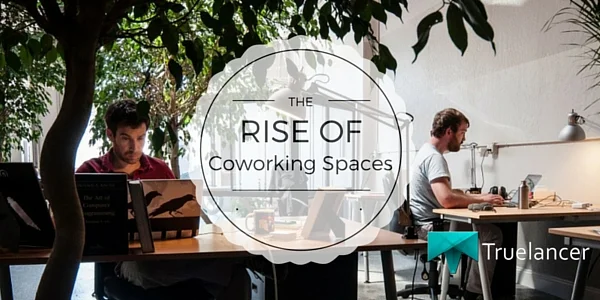
Freelancers often have a hard time finding an appropriate place to work from. After all, hotel rooms can be isolating and hostel rooms can be noisy. Apartment walls can be so paper-thin that you have to bear with your neighbors shouting at each other all the time. In such cases, coworking spaces are the ultimate solution.

Read the article on truelancer.com >

THE FUTURE OF WORK IS NO LONGER IN THE FUTURE

THE FUTURE OF WORK IS NO LONGER IN THE FUTURE

It’s well documented that there are persistent digital forces in business today: millennialization, globalization, and virtualization, to name a few. But none are more powerful than the “millenialized” workforce that is currently reinventing how you do business from the inside out. Generations Y and Z have always been digital citizens: they have maintained friendships remotely, massively multiplayed remotely, loved, lost, and learned remotely their entire lives. They will virtualize your business by breadwinning remotely, too. Your millenialized workforce will globalize and virtualize how you work by single-handedly introducing your larger team to the attitudes, tools, and services they love.

Read the article on workdesign.com >

Younger workers more engaged at work than middle aged staff

Younger workers more engaged at work than middle aged staff

Companies with stronger financial performances and better customer experience have employees who are considerably more engaged than their peers, a new survey by Temkin Group claims. The research also shows that out of all the industries, the construction sector has the highest percentage of engaged employees. Organizations with 501 to 1,000 employees have the highest percentage of engaged employees and companies with 10,000 or more employees have the lowest level of engagement. Employees who are highly educated, high-income earners, executives, male, and have very good bosses tend to be the most highly engaged. 63 percent of highly engaged employees always try their hardest at work, compared with 42 percent of disengaged employees. And for those who doubt the commitment of millennials – 25- to 34-year-old employees are the most engaged group, while 45- to 54-year-old employees are the least engaged.

Read the article on workplaceinsight.net >

HOW MAY I HELP YOU, HUMAN?

HOW MAY I HELP YOU, HUMAN?

Dr. Marie Puybaraud, global head of research for JLL, explores how we can embrace robots in the workplace and compensate for the inevitable lack of face-to-face interaction. Today, our industry is contemplating how it will embrace the cyber world and compensate for the inevitable lack of face-to-face interaction. How would we feel stepping in to an office managed solely by robots? How do you feel about staying at a hotel where 90 percent of the staff is automated?

Read the article on workdesign.com >

How Changing Your Workspace Can Boost Creativity

How Changing Your Workspace Can Boost Creativity

What if a simple thing like decluttering your desk could result in the next big idea for your company? Or adding a green leafy plant could bring more “green” into your business? When it comes to boosting creativity in the workplace, the right office environment may generate more “Aha!” moments and happier days.

Read the blog post on salesforce.com > 

Why Baby Boomers Refuse To Retire

Why Baby Boomers Refuse To Retire

Five years ago, in 2011, the first wave of the oldest U.S. baby boomers reached the common retirement age of 65. Since then, another 10,000 each day continue to reach this stage in their lives. The U.S. Census Bureau calculates that by 2020, 55.9 million people in the U.S. will be age 65 or older, and by 2030, that number will reach 72.7 million.

Read the article on fastcompany.com > 

Hire the Best People, and Let Them Work from Wherever They Are

Hire the Best People, and Let Them Work from Wherever They Are

Most organizations say they are more open-minded than ever about virtual teams, and yet they still have old-school systems in place for hiring people across the country or around the world. From where I sit, the overlapping barriers come down to structure, culture, and mindset.

Read the article on hbr.org >

How to regain time in the workplace

How to regain time in the workplace

Organizations constantly monitor how they can improve their daily business operations to increase work productivity and employee satisfaction. One kind of low-hanging fruit they might be missing is meetings. More than 30 percent of all scheduled meetings don’t happen at all in today's workplace. Data from many of our customers showed that 15 percent of meetings were still reserved by employees who were no longer at the company!

Read the article on bizjournals.com > 

Why It Might Be Time to Abandon the Office

Why It Might Be Time to Abandon the Office

With the growth of the internet and mobile and its continued integration into our daily lives, society has moved its work channels from the physical to the digital, erasing the lines between work and life in the process. And with it, perhaps we have created a unique problem: We are trapped between the demands of the nontraditional and traditional office space.

Read the article on entrepreneur.com >