
Working Life

Coworking is shaping office design in more ways than you might think

Coworking is shaping office design in more ways than you might think

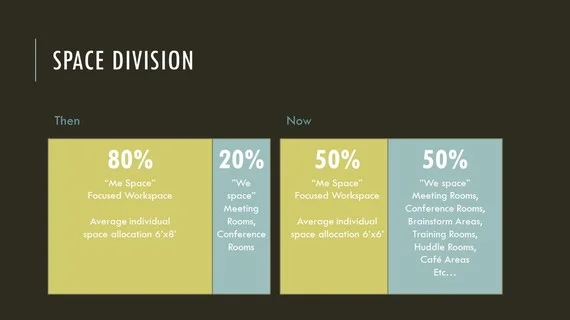
In his book How Buildings Learn, the author Stewart Brand outlines the process whereby buildings evolve over time to meet the changing needs of their occupants. He describes each building as consisting of six layers, each of which functions on a different timescale. These range from the site itself which has a life cycle measured in centuries, through to the building (decades), interior fit out (years), technology (months), to stuff (days). The effectiveness of a design will depend on how well it resolves the tensions that exist between these layers of the building. The principles behind this complex situation have been known to us for a long time, at least since the 1970s when Frank Duffy first introduced the world to his ideas about the physical and temporal layers of the building – in his terminology the ‘shell, services, scenery and sets’ which anticipates Stewart Brand’s own take on the interplay of building layers.
Read the article on workplaceinsight.net >

ADP Workforce Vitality Index Climbs in Q4 2015

ADP Workforce Vitality Index Climbs in Q4 2015

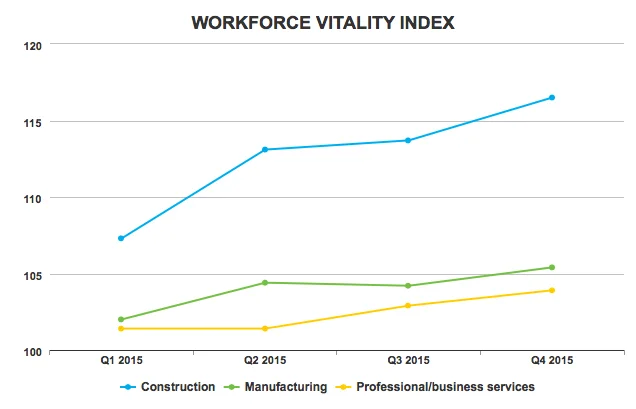
Today, payroll-processing firm ADP released its quarterly Workforce Vitality Index (WVI), which reflects wage growth for the fourth quarter of 2015. The index rose to 106.8 during the quarter, up from 105.2 in the previous quarter and 104.2 in the second quarter. The WVI grew by 4 percent from the year-earlier period.

Read the article on architectmagazine.com >

4 WAYS YOUR OFFICE MAY CHANGE BY 2025

4 WAYS YOUR OFFICE MAY CHANGE BY 2025

In 1999, the movie Office Space lampooned the ubiquitous grey office cubicle. Fast-forward more than a decade and a half later, and tech companies are more likely to look like sleek open warehouses with lines of workstations and Aeron chairs or standing desks.

Read the article on fastcompany.com > 

How To Future Proof Yourself For Tomorrow's Workplace

How To Future Proof Yourself For Tomorrow's Workplace

Oxford Dictionaries defines the word stretch as follows: “To be made or be capable of being made longer or wider without tearing or breaking.” I can think of no better word to describe how we might go about future proofing ourselves for tomorrow’s workplace. Indeed, the authors of the new book, Stretch, agree. Authors Karie Willyerd and and Barbara Mistick want employees to stay relevant in their working lives. By introducing the concept of stretch, the authors have provided a compelling answer.

Read the book review on forbes.com >

9 ways the workplace will be different in 2050

9 ways the workplace will be different in 2050

Over the years we've seen the workplace go through a number of dramatic changes: The dress code has shifted away from the suit and tie. There are entire jobs devoted only to the strategic use of social media. People are "job hopping" every year or two, rather than committing their careers to one company.

Read the article on businessinsider.com >

The Open-Office Backlash

The Open-Office Backlash

Ever since companies began tearing down walls to replace private offices with open space, there have been plenty of naysayers, and the latest is Maria Konnikova in The New Yorker. Earlier this month, she declared that “the open office undermines the very things that it was designed to achieve” (better communication and idea flow). Pointing to old perceptions — noise and lack of privacy — she calls the open office a “trap” that “may be ingraining a cycle of underperformance.” Yet, in her criticism, Konnikova overlooks the greatest value of the open office — it’s dramatically more sustainable.

Read the article on architecturelab.net >

Generation Z are preparing themselves for an automated world of work

Generation Z are preparing themselves for an automated world of work

The automated world is far closer than many people suppose. Yet one demographic group that is less fooled than others on that particular score is the one now starting to make its mark in the workforce, suggests a new report. Amplifying Human Potential: Education and Skills for the Fourth Industrial Revolution, commissioned by Infosys from researchers Future Foundation, claims that 42 percent of 16-25 year olds worldwide feel their education did not prepare them for the world of work they are encountering for the first time with over three quarters having to learn new skills to meet the demands of employers. The report also claims that 40 percent of young workers believe their current job could be replaced by automated systems including robotics within 10 years. The report lands in parallel with a cluster of stories which highlight just how quickly the world is moving towards an automated future.

Read the article on workplaceinsight.net >

More than half of US firms allow smoking in the workplace, study finds

More than half of US firms allow smoking in the workplace, study finds

It appears that more than half of American workplaces continue to allow smoking in the workplace. That is the possibly surprising finding of a new study from the US based Society for Human Resource Management, in spite of the facts that there are laws prohibiting the practice in many US states, the majority of employers have formal smoking policies and that a 2012 report from  the Center for Disease Control and Prevention declared a majority of US workplaces to be smoke-free. 

Read the article on workplaceinsight.net >

Third of firms introduce flexible working to cut absenteeism, claims study

Third of firms introduce flexible working to cut absenteeism, claims study

Over a third of UK employers have introduced flexible working to reduce absenteeism, claims research from insurance industry trade association Group Risk Development (GRiD). Its survey of 501 employers also found that a quarter (25 percent) have seen absence rates improve over the last 12 months, compared to 40 percent last year. One in ten have actually seen rates worsen over the same period and 54 percent of employers say their absence rates have remained the same, which the report’s authors claim suggests a general slow-down or even complacency when it comes to managing absence. The report found that 57 percent of businesses said absence cost them up to 4 percent of payroll, but employers are using a range of initiatives to address this. This includes introducing flexible working (36 percent – up by 4 percent from last year),  return to-workinterviews (28 percent) and disciplinary procedures (17 percent).

Read the article on workplaceinsight.net >

The secret to workplace happiness

The secret to workplace happiness

Office interior design practice devises equation to calculate staff wellbeing.

Happiness = (T9+A8) + (F7+HC6) – B7

This, according to an office design specialist, is the formula to apply if you want to know how happy your staff are.

Peldon Rose conducted a survey of almost 1,000 people to formulate the equation, under which F means “frolleagues” – a portmanteau of friends and colleagues – HC stands for home comforts, A is appreciation, T is trust and B is Boredom. The equation aims to reflect the relative importance of each of these factors.

Read the article on onofficemagazine.com >

Forget all the talk of Blue Monday; work is still (largely) good for us

Forget all the talk of Blue Monday; work is still (largely) good for us

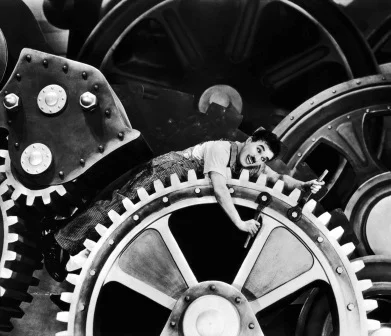
Today is Blue Monday, supposedly the most depressing day of the year. But for many people, work always appears to get them down. Negative attitudes to our working lives have been consistent in the way work has been reflected by artists for at least the past hundred years. From Charlie Chaplin’s oppressed and endangered little tramp in Modern Times to Terry Gilliam’s fetid offices in Brazil. From Edward Hopper’s portrayals of the distances between workers to the cool symmetry of Andreas Gursky’s photography of offices and factories. From Orwell’s depiction of the future as a human face under a patriarchal jackboot to Tom Wolfe’s rich, successful but miserable and amoral masters of the universe in Bonfire of the Vanities. It is a worldview reflected in the media, where happiness writes white and what news there remains, is generally bad news fed by the agenda-furthering doom-mongering press releases of vested interests.

Read the article on workplaceinsight.net >

Three quarters of Millennials will change jobs over the next five years

Three quarters of Millennials will change jobs over the next five years

It must be the time of year but we are suddenly awash with surveys and reports suggesting that pretty much everybody in the UK is about to change their jobs. Following our report earlier in the week that suggests older workers are perfectly prepared to just give up on work completely, it was inevitable that we were about to hear something from those pesky Millennials. Sure enough, along comes a report from Deloitte that suggests that nearly three quarters of Millennials plans to leave their jobs over the next five years. Millennials and their employers: Can this relationship be saved? found that the UK has a higher than average percentage of Millennials planning to change jobs in the next five years, with the average in developed economies standing at 61 percent. Worldwide, forty-four percent of Millennials say, if given the choice, they expect to leave their current employers in the next two years.

Read the article on workplaceinsight.net >

Improving workplace culture worth the effort, experts say

Improving workplace culture worth the effort, experts say

The idea of culture in the workplace has been around for a long time, but in the past it was usually the domain of human resource managers who handled whatever issues might come up. Today, workplace culture is a front-and-center business issue that can profoundly affect a company's bottom line.

Read the article on inforum.com > 

HOW THE GENERATION BORN TODAY WILL SHAPE THE FUTURE OF WORK

HOW THE GENERATION BORN TODAY WILL SHAPE THE FUTURE OF WORK

Longer life expectancies and changing demographics mean potential clashes between more generations in the workplace. Demographers typically segment the world population into six living generations: GI (born 1901—1926), mature/silents (born 1927—1945), baby boomers (born 1946—1964), generation X (born 1965—1980), generation Y/millennials (born 1981—2000), and generation Z (born after the middle to late 1990s).

Read the article on fastcompany.com >

THE INTERNET ISN'T WHAT'S DISTRACTING US THE MOST AT WORK

THE INTERNET ISN'T WHAT'S DISTRACTING US THE MOST AT WORK

How we spend time at work not working is changing the way we manage work-life balance, and it might not be what you think. Raise your hand if you think a quick scan of Facebook or the news is the most common source of distraction at work. Turns out, social media and web surfing still don’t hold a candle to chitchat or a coffee break as the biggest time sucks in the workplace.

Read the article on fastcompany.com >