

Working Life

Will Robots Save The Future Of Work?

Will Robots Save The Future Of Work?

Is a robot coming for your job? It’s not a novel question, but if Gartner’s predictions are correct, the answer could be leaning more definitively toward yes. The analyst firm’s research suggests one in three jobs will be converted to software, robots and smart machines by 2025. What is new, however, is that the influx of robots in the workforce is no longer just a concern confined to manufacturing floors filled with mechanized assembly lines, one of Google’s driverless concept cars passing by or the notion of a drone soon replacing the friendly UPS delivery man.
Read the article on techcrunch.com >

THE CHALLENGE AND PROMISE OF THE VERTICAL CAMPUS

THE CHALLENGE AND PROMISE OF THE VERTICAL CAMPUS

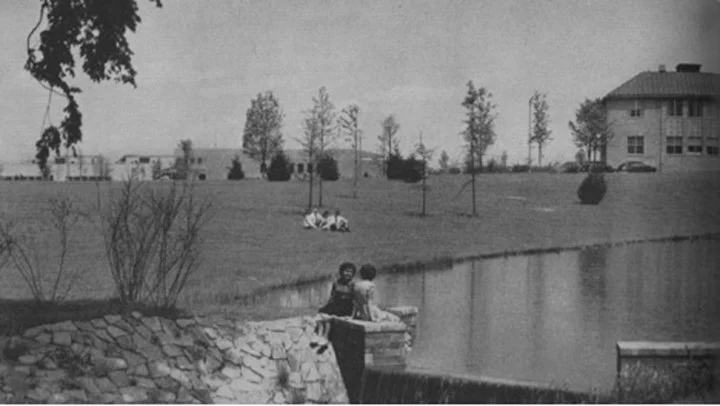
Kay Sargent, director of workplace strategies at Lend Lease, explores why the vertical campus — as opposed to the suburban corporate campus of yesteryear — is the natural outcome of both urban regeneration and new city development.

Read the article on workdesign.com > [paywall]

Employees speak out about what they want in an office

Employees speak out about what they want in an office

Some 73 percent of surveyed staff in four major Czech cities would appreciate to have the opportunity to see their potential workplace prior to signing an employment contract. “This corresponds with the general perception of the industry that employees are educated about their rights and privileges, and pay attention to the general working environment,” Petr Kareš, head of tenant representation at JLL, said in a news release.

Read the article in praguepost.com >

7 Ways to Improve Office Productivity in 2016

7 Ways to Improve Office Productivity in 2016

It’s a measure of how much work employees are doing. The definition of “work,” of course, varies depending on your organization, your goals, and your industry, but ultimately it’s about the output of workers.

Employee productivity is one of the most important considerations within any workplace. The more productive your employees, not only the more overall work is being completed, but fewer resources are being used, and the more competitive your organization will likely be.

Read the article on business2community.com >

How workplace distractions can actually boost productivity

How workplace distractions can actually boost productivity

Recent research from BambooHR shows that breaks, small talk and socializing in the workplace can actually help bolster productivity and employee engagement. What are your employees up to when they're not actively on task? Chances are, you're thinking they're surfing the Web, doing some online shopping or banking, or posting cat videos on Facebook. But research suggests that more "traditional" distractions, like trips to the break room, watercooler chat and trading gossip with their colleagues, are actually consuming more of workers' time -- and that's not necessarily a bad thing.

Read the article on cio.com >

The six things all people need from their workplace

The six things all people need from their workplace

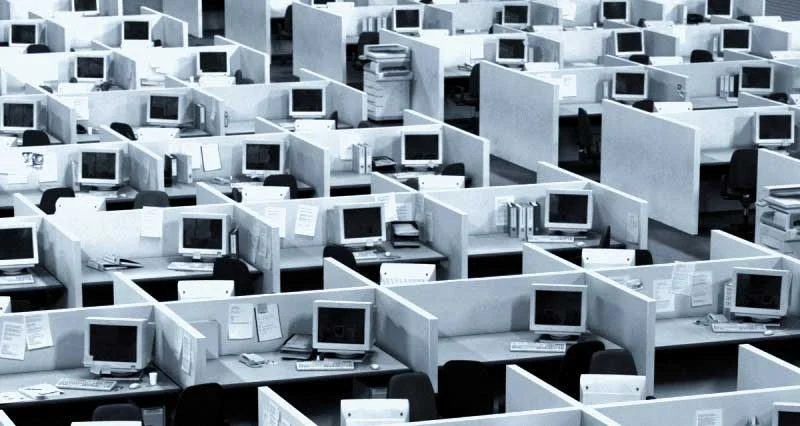
Whether we like it or not, we all have to work for some, or more usually, most of our adult life. During this time, many of us will work in an office, which is a place that has changed immensely – not only in the last ten years or so, but almost entirely since the start of the twentieth century. The management structure and style of companies, the tools available to the workforce, and the places within the office buildings have been changing and evolving. There has been a shift from hierarchical management structures to a more diverse and organic model. The tools of work have changed from the humble typewritten letter and Bakelite telephone to 24/7 access to emails though laptops and smart phones. And finally the workplace itself has evolved from one with enclosed offices for the senior managers, or a sea of cubicles to workplaces that encourage creativity and collaboration.

Read the article on workplaceinsight.net >

Modern office design principles favour extroverts, study claims

Modern office design principles favour extroverts, study claims

This week’s British Psychological Society Occupational Psychology Division annual conference in Nottingham has proved to be a fruitful hunting ground for insights into the nature of modern work and workplaces. The week culminates today with the presentation of a new study from business psychologists OPP which claims that personality has a big impact on the type of office environment people prefer to work in. Modern features such as shared space and open-plan floors appeal mainly to extroverted workers and made introverts uncomfortable. Over 300 people (71 per cent female and average age 47 years) completed an online survey about their current workplace. The participants had previously completed a personality test to ascertain their personality type. The results showed that many features of the modern office were more likely to be preferred by extroverts than by introverts.

Read the article on workplaceinsight.com >

Workplace Stress: The Health Epidemic of the 21st Century

Workplace Stress: The Health Epidemic of the 21st Century

It's no surprise that workplace stress is a bigger problem today than even 10-years ago. In the 1990's the term work-life balance was coined to describe the solution for being able to "have it all" and manage it with ease. Time management courses popped up all over Corporate America in effort to help people balance their family, career, health and social life; promising a golden solution via setting priorities, maintaining a schedule and creating time boundaries. People everywhere jumped at the chance to bring solace to their life by way of this new buzzword, but rather than balance many found themselves taking on more and feeling greater pressure to perform better in all areas of life. The result...more stress.

Read the article on huffingtonpost.com >

8 ways to increase wellbeing at the office

8 ways to increase wellbeing at the office

Though ergonomics and sustainability have long been influencing workplace design, wellbeing is the most recent consideration making headlines when planning your space. Wellbeing is a holistic design focusing on the user, aiming to encourage healthy living by providing wellness programs, social interaction and supporting cognitive activities.

Read the blog on myturnstone.com >

Design in 2016: The Workplace Anchors Social Communities

Design in 2016: The Workplace Anchors Social Communities

As the lines between when and where work happens continue to blur, the office will serve as a hub for colleagues, peers, and friends. Each January, at the outset of each new year, we stop to ask ourselves the same question that always yields a different answer: Where is the future of office design headed? In a recent IA survey, over 75 percent of participants stated that their office reflects the company culture for whom they work, and that their individual work space reflects their individual interest in some way. But does the workspace really just reflect the individual, or is the individual increasingly defining the workspace?

Read the article on interiorarchitects.com >

15 Key Moments in Flexible Workspace in 2015

15 Key Moments in Flexible Workspace in 2015

What a year! 2015 has been a fast-moving 12 months of furious activity in flexible workspace, with countless expansions, mergers, and outside-the-box thinking. There have been closures, challenges and departures too. But above all, 2015 has seen yet another spectacular flurry of growth and change within our industry, which has laid yet more strong foundations for 2016 and beyond. It’s time to look back and celebrate as OT counts down 15 momentous moments in 2015…

Read the article on officingtoday.com >

How to Find the Right Remote Work Space for Your Company

How to Find the Right Remote Work Space for Your Company

Working remotely sounds like a great idea. Who wouldn’t love the flexibility to choose where and when you work? But working remotely can come with some challenges, making choosing the right remote work location perhaps the most important business decision you’ll make.

Read the article on entrepreneur.com >

Neuroscience: the next great source of competitive advantage

Neuroscience: the next great source of competitive advantage

The average worker is interrupted or distracted every three minutes and it takes them fully twenty-three minutes to return to a task after being interrupted. Office workers are overwhelmed by distractions, due mainly to a lack of understanding of how to manage attention. Distractions and the inability to focus negatively affects productivity, engagement, wellbeing and overall performance in organisations. We long to be more effective, but the harder we try, the more tired our brains become. Attention meltdowns are epidemic because workers do not understand what attention is, how to manage it or have access to the best places to support their tasks. In workplaces throughout the world scenarios of near constant distraction have become the norm, to such an extent that often people do not even feel compelled to comment on them and their consequences.

Read the article on workplaceinsight.net >

Telecommuting Can Make the Office a Lonely Place, a Study Says

Telecommuting Can Make the Office a Lonely Place, a Study Says

Ever since telecommuting became a viable option for a broad spectrum of workers, some companies have offered it as a tempting perk. Why not make workers happier by allowing them to spend more time with their families, avoid long commutes and exert more control over their schedules? Plus, off-site work enables businesses to save money on real estate and hire talented people who live in far-flung locations.

Read the article on nytimes.com >

If You Work From Home (or Aspire to) You Must Read This

If You Work From Home (or Aspire to) You Must Read This

Let’s face it: long commutes, office politics, and the nine-to-five grind are quickly becoming obsolete. According to a recent report, fifty-three million Americans (34 percent of the U.S. workforce) work from home as freelancers and home-based business owners. Many predict that number will increase to 50 percent of the workforce by 2020.

Read the article on Medium.com >