

Americans make nearly one billion trips to the doctor every year, nearly three trips annually for every man, woman and child. It’s a universal scene—the exam table with its crinkly paper, the iconic doctor’s stool and a stiff chair for a family member. Maybe there’s a computer mounted to the wall or on a desk.
Replace the computer with a paper chart and this could be straight out of the 1950s—an era of booming healthcare construction. Nearly 70 years ago, the types of care patients needed were different. Expectations were different. Technology was different. Even the way clinicians and patients interacted was different. Yet many exam rooms today still reflect these outdated needs, failing to deliver optimal experiences for patients, family members and clinicians alike.
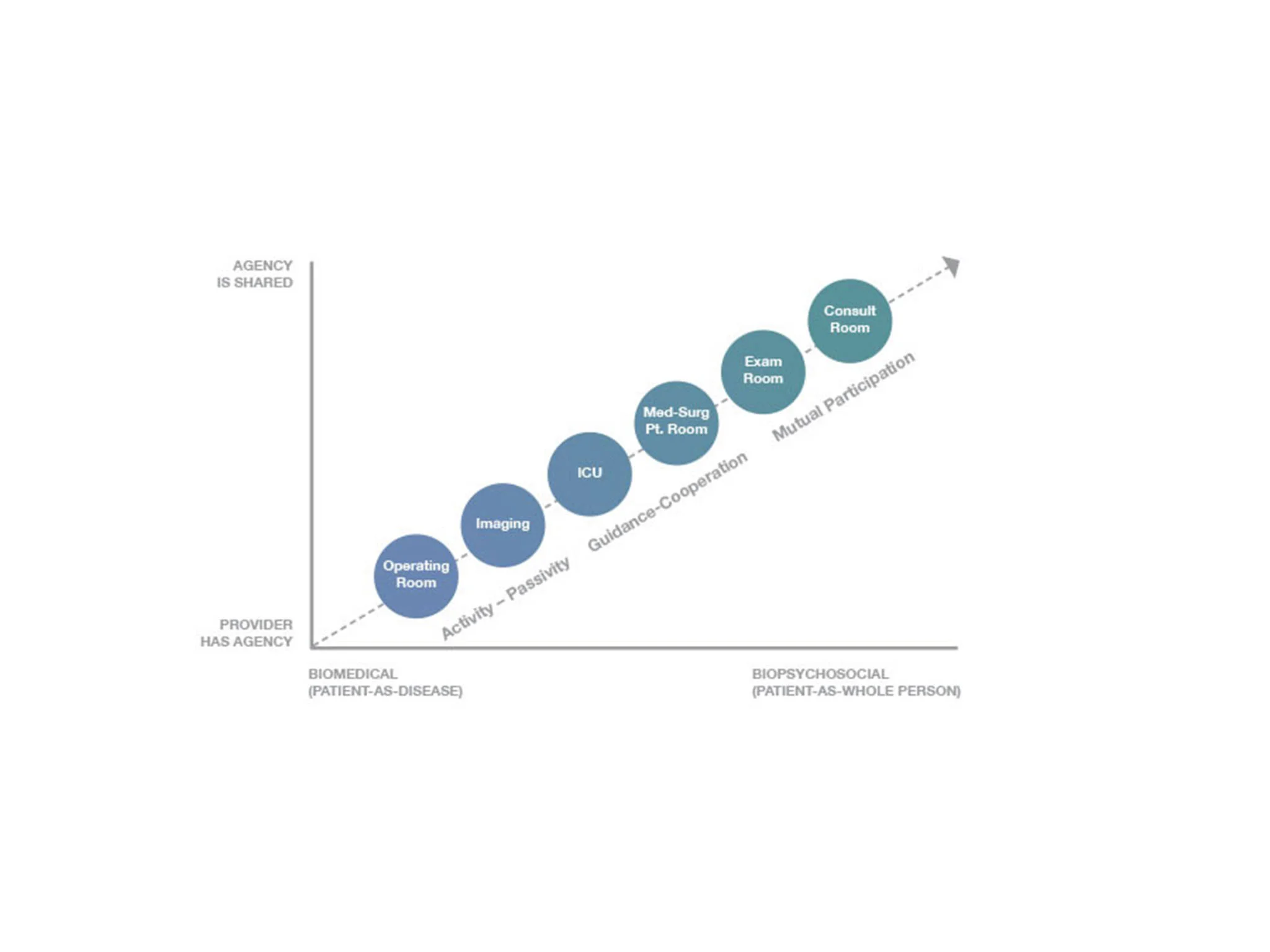
One model, known as Mutual Participation, is the focus of a study by Steelcase Health researchers and led to a new set of design principles, exam room concepts and ultimately to new product ideas, all created to transform exam rooms into spaces that meet today’s needs. Typical exam environments enable a fading model of care, despite clinicians’ desire to partner with patients and families, and the need for families and patients to be active participants. Let’s investigate the factors driving the need for change, and set the scene for the exam rooms of tomorrow.